Stirling Castle
Stirling Castle
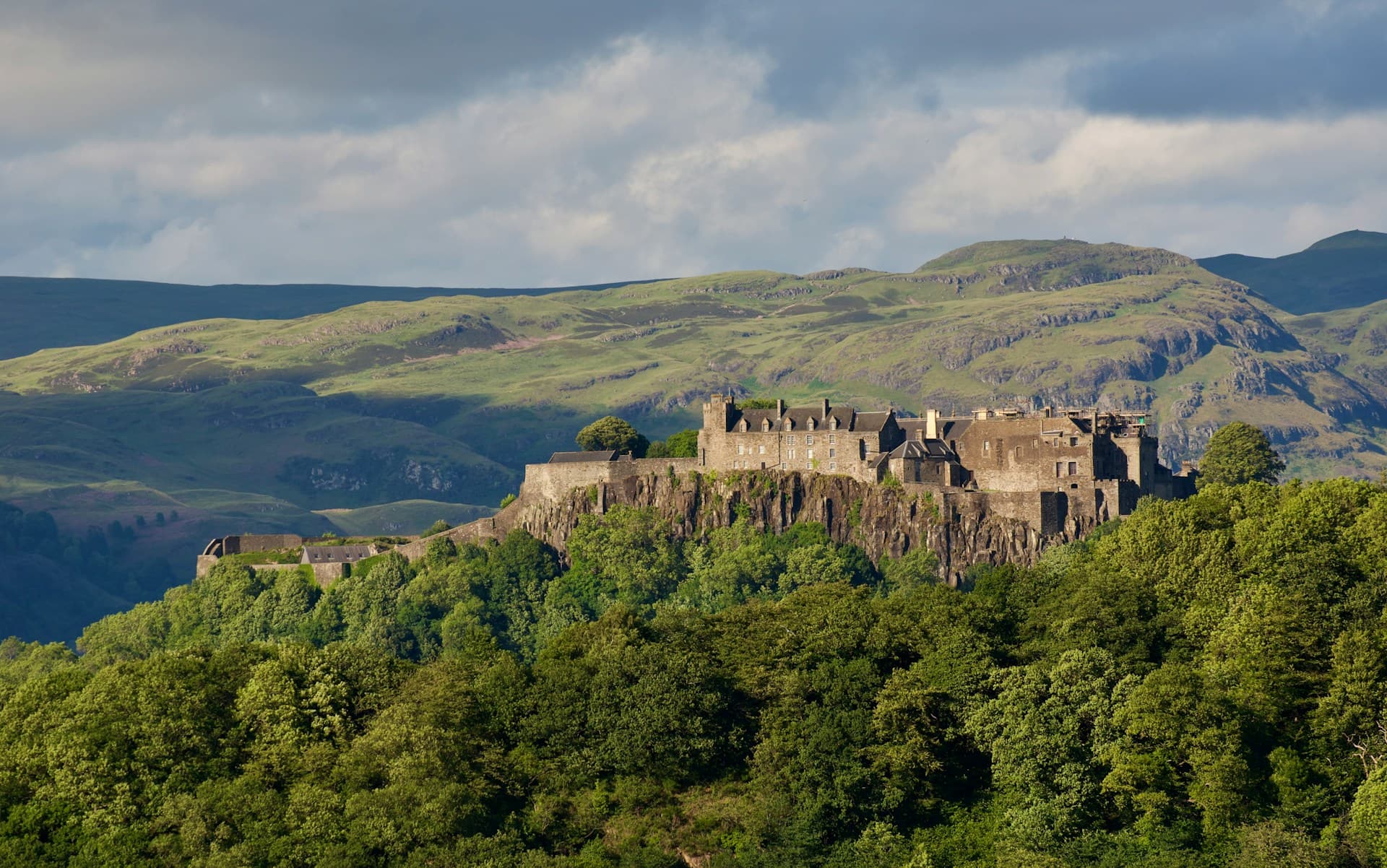
Perched on a volcanic crag, Stirling Castle was the favourite residence of the Stuart kings. A Renaissance palace, medieval Great Hall and Highland vistas make it one of Scotland's greatest historical sites.
Perched on a volcanic crag at the heart of Scotland, Stirling Castle dominated the routes between Highlands and Lowlands for centuries. The favourite residence of the Stuart kings, theatre of decisive battles, it preserves one of the finest Renaissance palaces in Britain. Its strategic position makes it both a major historical monument and an exceptional vantage point over the Forth plain.
Practical Information at a Glance
- Entry: paid admission; discounted rates for children, seniors and Historic Environment Scotland (HES) members
- Recommended duration: 2 to 3 hours to explore the entire site
- Access: on foot from Stirling station (approximately 20 minutes walking uphill through the old town) or by taxi
- Dress code: no restrictions; wear comfortable shoes for cobblestones and sloping terrain
- Wheelchair accessibility: partial access — some medieval areas remain challenging for wheelchair users
What You'll See
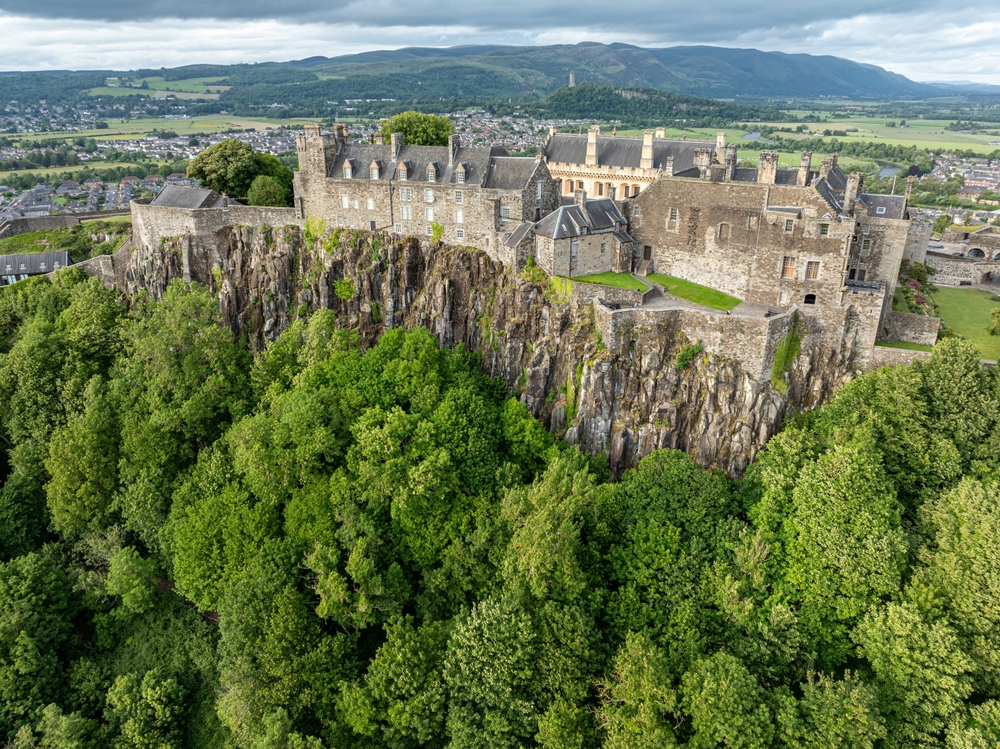
The site comprises several buildings from different periods. The Royal Palace, built under James V in the 16th century, impresses with its sculptured façades adorned with grotesque figures. The Great Hall, restored in its original ochre colour, is one of Scotland's largest medieval halls. The Royal Chapel dates from the reign of James VI. The ramparts offer unobstructed views over the Wallace Monument, the Forth plain and, on clear days, the Highlands.
History and Context
Stirling changed hands at least eight times between Scots and English during the Wars of Independence. The Battle of Stirling Bridge (1297), where William Wallace defeated the English, and the Battle of Bannockburn (1314), Robert Bruce's triumph, took place in its immediate vicinity. The castle subsequently became the favoured royal residence of the Stuarts: Mary Queen of Scots was crowned here in 1543, at just nine months old.
Highlights of Your Visit
The Royal Palace and the Stirling Heads
The oak carved medallions — the Stirling Heads — once adorned the palace ceiling. The originals are displayed in the castle museum; painted reproductions restore the atmosphere of James V's court. Each medallion depicts a royal, mythological or allegorical figure.
The Great Hall
Built around 1503 under James IV, the Great Hall served as a barracks for two centuries before restoration. Its timber roof reconstructs the original design. This is where royal banquets and assemblies of the Scottish Parliament were held.
The Ramparts and Panoramic Views
From the north ramparts, your gaze sweeps across the meanders of the Forth, the National Wallace Monument on Abbey Craig, and the Ochil hills. On clear days, Ben Lomond is visible on the horizon. It's one of the most complete panoramas of central Scotland's historical geography.
The Royal Gardens (King's Knot)
Below the castle, the geometric terraces of the King's Knot are visible from the ramparts. This 17th-century formal garden, now grassed over, preserves the outline of the Stuart sovereigns' pleasure grounds.
Photography Tips
Morning light illuminates the Royal Palace façade without backlighting. To photograph the Wallace Monument with the castle in the background, position yourself on the north esplanade. Sculptural details on the façades stand out best under overcast skies, which eliminate harsh shadows. The interior of the Great Hall benefits from soft natural light at midday.
Location and Access
The castle crowns the old town of Stirling, at the western end of the local Royal Mile. Stirling station is served by trains from Glasgow Queen Street (approximately 45 minutes) and Edinburgh Waverley (approximately 50 minutes). Local buses connect the town centre to the foot of the old town. Parking is available near the esplanade. Guided tours are offered by Historic Environment Scotland on site.
Nearby Attractions
- National Wallace Monument — neo-Gothic tower visible from the castle, dedicated to the hero of Scottish independence.
- Bannockburn Battlefield — site of Robert Bruce's victory in 1314, with an immersive interpretation centre.
- Holy Rude Church — medieval church at the foot of the castle where James VI was crowned King of Scotland.
- Old Town of Stirling — cobbled streets, historic houses and Mar's Wark cemetery to explore on foot.
Frequently asked questions
The castle is open year-round. Spring and summer offer the best weather and longest daylight hours to enjoy the views. In winter, crowds are smaller and the atmosphere more intimate.
Allow 2 to 3 hours to explore the Royal Palace, Great Hall, Royal Chapel, ramparts and the Stirling Heads museum. A half-day enables you to also explore the old town below without rushing.
Yes, both sites are just a few kilometres apart. A taxi or local bus makes it easy to move between them. Plan a full day to visit both comfortably.
Photography for personal use is generally permitted in most areas of the castle. Some temporary exhibitions may have specific restrictions; check on site.
Access is partial. Some areas such as the ramparts and medieval staircases remain challenging for wheelchair users. Historic Environment Scotland provides detailed accessibility information before your visit.
Costumed guides regularly animate the site, particularly in the Royal Palace. Audioguides are also available at the entrance for self-guided exploration at your own pace.
Interested in this visit?
We can include it in your personalised itinerary.