Loch Ness
Loch Ness
A mythical lake in the Highlands, Loch Ness blends the legend of Nessie, the ruins of Urquhart Castle, and wild landscapes across 39 km. Here's how to explore it.
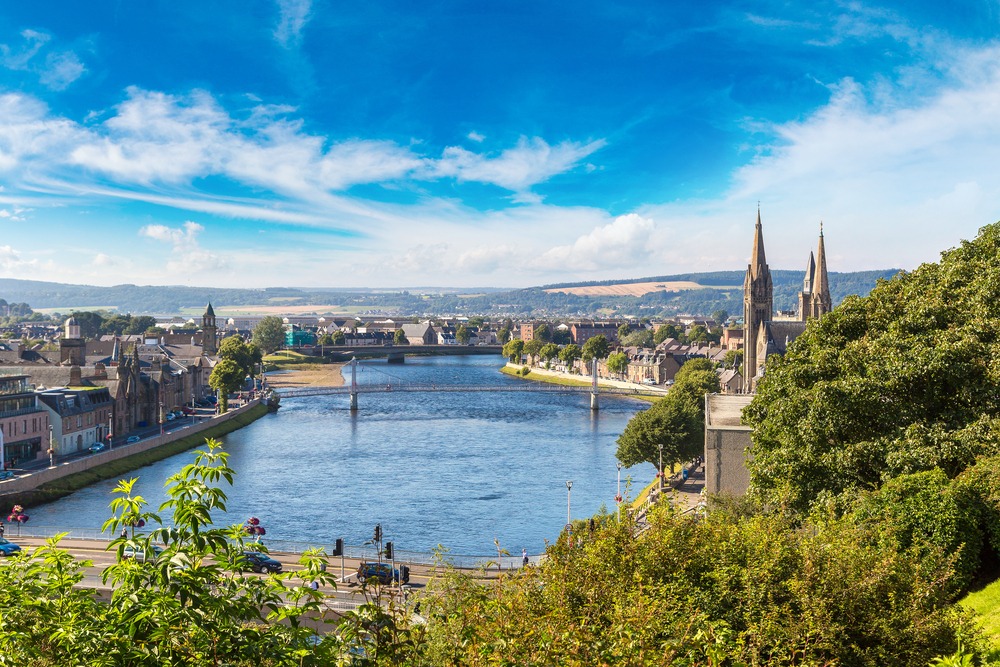
Loch Ness is a freshwater lake located in the Highlands, southwest of Inverness and northeast of Fort Augustus. A natural gem nestled at the heart of Écosse and home to one of the greatest mysteries of all time, Loch Ness fascinates as much as it sparks questions. A lake steeped in legend and shrouded in mist, enchanting forests, moorland vistas and the remains of the medieval Urquhart Castle—that's the itinerary for a road trip around Scotland's most famous lake!
History of Loch Ness
The legendary Loch Ness became famous thanks to the "monster" said to inhabit its depths. This legend, dating back to 1930, is fueled by several pieces of evidence…
In the year 565, Saint Columba allegedly saved a man from bathing in a monster in the River Ness, which connects Loch Ness to the North Sea. This story was recorded in a book dating to the 7th century, chronicling the life of this Saint. It was then said that the monster would reappear in the surrounding waters.
Events accelerated in 1933, with the construction of a road alongside the Loch. The monster allegedly appeared on April 14, 1933, at Drumnadrochit, and several times thereafter in Loch Ness.
Loch Ness Today
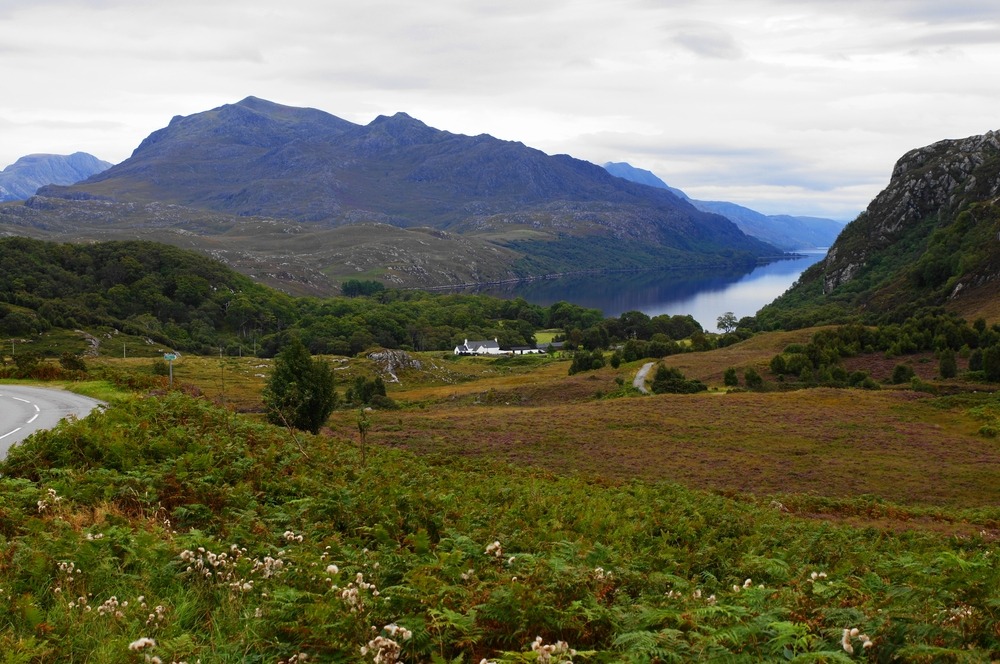
Loch Ness is Scotland's second largest lake, just after Loch Lomond, stretching 39 km long and 2 km wide with an average depth of 450m. In certain places, its waters reach depths of 1,000 m. Its dark waters, surrounded by verdant hills, are caused by black peat suspended in the water. This gives it an impenetrable quality that intrigues visitors.
Nestled in the heart of mountain massifs, Loch Ness unfolds an exceptional panorama and contrasting landscape. This natural wonder sits in the Great Glen valley, a geological fault that divides the Highlands across approximately 100 km. This fault stretches between Inverness, to the northeast, and Fort William, to the southwest. The lake is connected to the North and Irish seas via the Caledonian Canal, which spans 35.4 km and includes 29 locks.
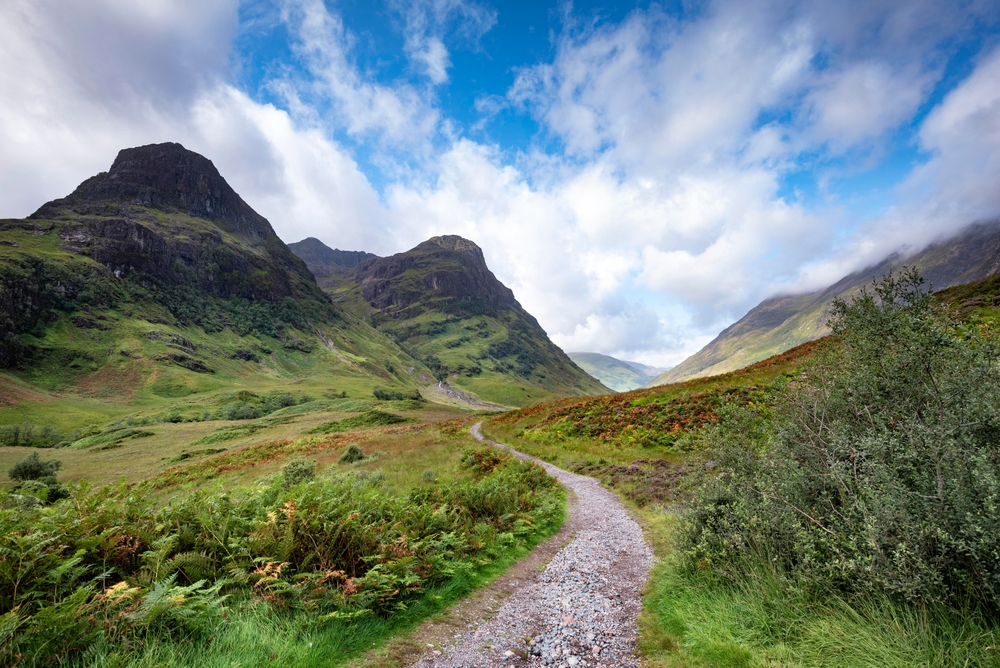
Situated south of the Highlands, Loch Ness offers a magnificent concentration of Scotland's typical landscapes. Here, deep forests alternate with bare moorlands, waterfalls, wooded valleys, and pastures covering the lake's shores, where cattle and sheep graze. Add to this mansions, ruins and castles (some said to be haunted). Countryside rambles await!
Geographic Location of Loch Ness
Situated on the Great Glen geological fault, representing the line of lochs, Loch Ness boasts a maximum depth of 272 m. Stretching across an area of 56.4 km², it is the largest lake in terms of volume (7.5 km³). Thanks to a system of pumps and turbines, its waters generate electricity. As for its steep banks, they plunge more than 240 meters deep.
Journey into the Heart of the Loch Ness Myth
The legend of Loch Ness dates back to the Middle Ages, when an Irish monk speaks of a creature living in the lake's deep waters. While accounts of a lake monster continue to be reported until the end of the 19th century, it wasn't until the 20th century—particularly the 1930s—that this myth captured travelers' imaginations.
The photograph that would shape the legend of the Loch Ness monster was taken by Robert Kenneth Wilson in 1934 and published in the Daily Mail. Although this photo turned out to be an elaborate hoax, the Loch Ness monster became, despite itself, a "celebrity."
The Loch Ness monster, an amphibious dinosaur haunting the waters of one of Scotland's largest and most famous lakes, continues to fascinate today. Each year, "Nessie" attracts over one and a half million curious visitors. Moreover, nearly 1,000 eyewitness accounts and numerous unexplained signs continue to baffle scientists.
Yet nothing has been definitively found or proven to date. Despite its great popularity, it remains unknown whether this legendary creature ever lived in the lake's deep waters… The mystery endures.
Studies have even been conducted, so seriously is the matter taken in Écosse. Nessie might be a pine log that fell to the lake's bottom, where great pressure prevails. During the log's biodegradation, gas would create bubbles, causing it to rise to the surface, only to sink again once emptied of its gas.
To reinforce fascination around the Loch Ness monster, a museum called the Loch Ness Exhibition Center has also opened its doors in a Victorian manor. The museum's entrance is dominated by an imitation of Nessie.
Loch Ness, an Unique Destination to Discover
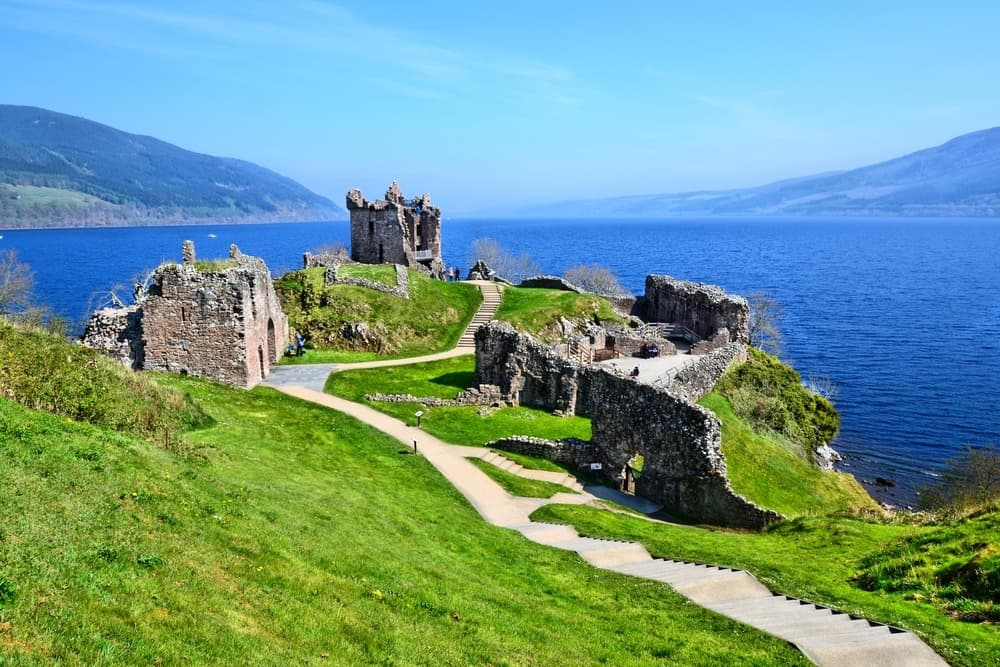
Loch Ness is one of Scotland's best-kept secrets! But beyond the myth and speculation, Loch Ness is, first and foremost, a sumptuous location. It welcomes you for a stay rich in emotion, with its dark waters and the Urquhart Castle towering above.
On the northern side, the ruins of Urquhart Castle are a popular attraction. From this fortress, treat yourself to the finest panoramic views of the lake and Cherry Island, the island standing at the heart of Loch Ness. It must be said that the castle ruins, rising on a rocky promontory above the lake, seem to emerge from a romantic and mystical painting.
History lovers, folklore enthusiasts, and those drawn to ancient stones will enjoy visiting the numerous medieval castles built in the surrounding area. The ruins of Sinclair and Girnigoe castles, witnesses to clandestine meetings, are well worth a visit.
Moreover, boat excursions on Loch Ness are offered. Most boats are equipped with sonar to detect the sea monster said to inhabit the lake's depths. Excursions are organized from Inverness, Fort Augustus, or Drumnadrochit.
The Loch Ness Surroundings: Perfect for Escape
Nestled in the heart of the majestic Great Glen valley, Loch Ness is a true paradise for hikers. The Glen Affric nature reserve, located nearby, is stunning, featuring Caledonian primeval forest, moorlands, waterfalls, rivers and mountains covered with the purple heather typical of the Highlands. Numerous animals inhabit it, including pine martens, squirrels, badgers, foxes, weasels, deer and even buzzards.
Marine species are equally well-represented, particularly in the Moray Firth estuary, near Inverness. You can encounter dolphins, pilot whales, porpoises, basking sharks, and a multitude of seabirds.
But cycling and hiking undoubtedly attract the most enthusiasts in the area, thanks to numerous well-marked trails suited to all levels. The most famous is the Great Glen Way. It traverses 117 km of the magnificent landscapes of the Great Glen. It also connects Fort William to the south with Inverness to the north. On bike or on foot, expect a total or partial walk of 5 to 6 days.
The southern shore of Loch Ness stands out for its sumptuous landscapes, beginning with the pebble beach of Dores, situated 13 km from Inverness. Beyond Dores Bay, you can take the B 862 road inland. The road winds through deep forests of conifers, birch and oak until it reaches the steep gorge of Foyers. From there, an equipped trail with steps leads to the Falls of Foyers.
From Foyers to Fort Augustus (at the lake's southern tip), trees become scarcer. The loch's shoreline grows increasingly steep, eventually forming a cliff plunging into the water. You traverse austere landscapes of moorland, typical Highland lochs and peatlands, best viewed from Suidhe Viewpoint.
Climate
At Loch Ness, the climate is typically maritime, mild with no dry season in winter and warm in summer. The average annual temperature is below 22°C. Additionally, for at least 4 months of the year, average temperatures exceed 10°C. As for rainfall, it is distributed fairly evenly throughout the year.
By Car
Loch Ness is located 21 kilometers from Inverness, the capital of the Highlands, less than 30 minutes' drive away.
Take the A9 from Perth, Glasgow, Edinburgh, and the North.
The A887 is the main road connecting Inverness to the west coast and the Isle of Skye.
From Edinburgh, Scotland's capital, allow between 3.5 and 4.5 hours, depending on your chosen route. There are 271 kilometers if you take the A9 and 297 kilometers on the A93.
You can drive directly across western Écosse to Loch Ness in approximately 4 hours.
By Plane
Take a flight from Inverness Airport, located 11 kilometers from Inverness and 34 km from Loch Ness. Direct flights are available from London Heathrow, Belfast, Bristol, Amsterdam, Birmingham, Manchester, Dublin, and more.
In summer, flights are scheduled from Jersey, Southampton, Zurich, and Düsseldorf to Loch Ness. In winter, departures operate from Geneva or Innsbruck.
By Bus
National bus companies will take you to Inverness city center. From there, take local buses to Loch Ness.
By Train
You must travel to Inverness or Fort William. From there, take other transport to the lake.
By Boat
The Caledonian Canal connects Loch Ness and the Great Glen to Fort William to the south and Inverness to the north. Numerous quays line the lake, ideal for cruises.
Want to discover this destination?
Our local advisors design your tailor-made trip.