North-West Coast and NC500
830 km of loop between Assynt mountains, Atlantic beaches and fishing villages: Scotland's wildest coastline, best explored slowly from May to September.
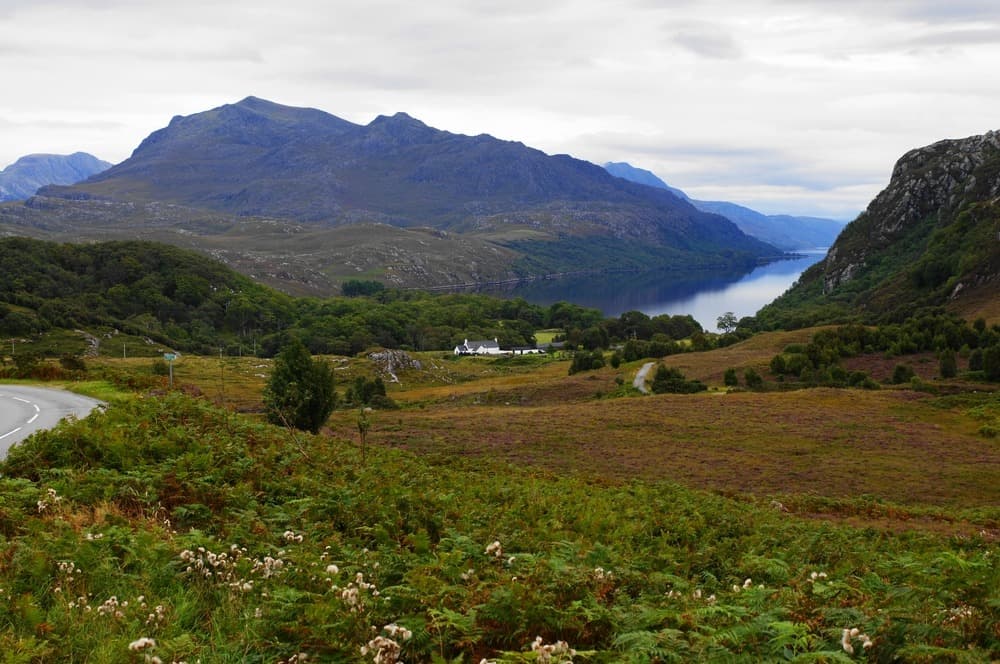
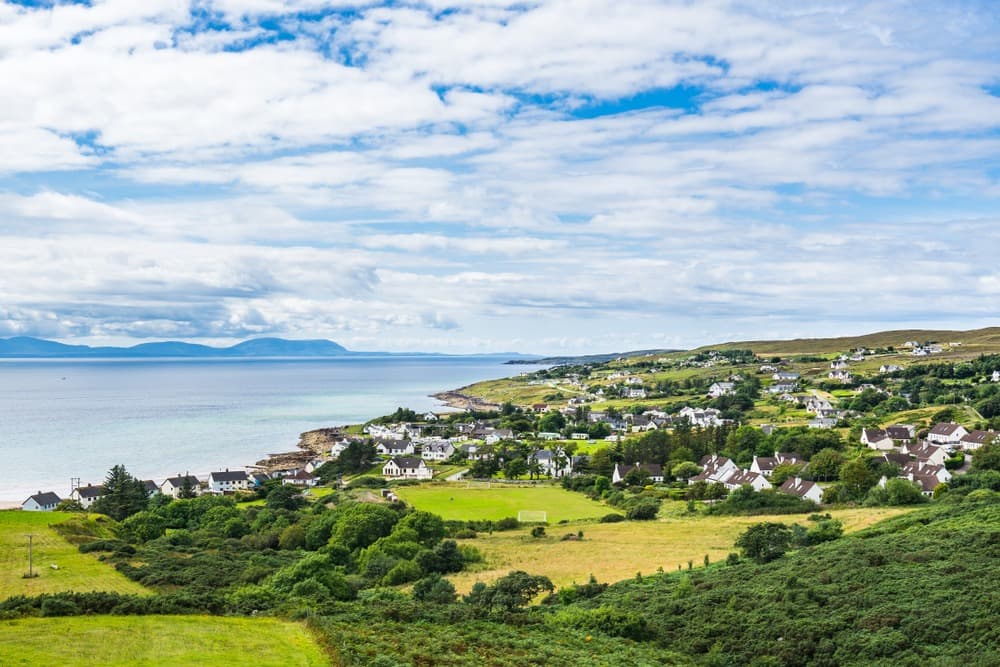
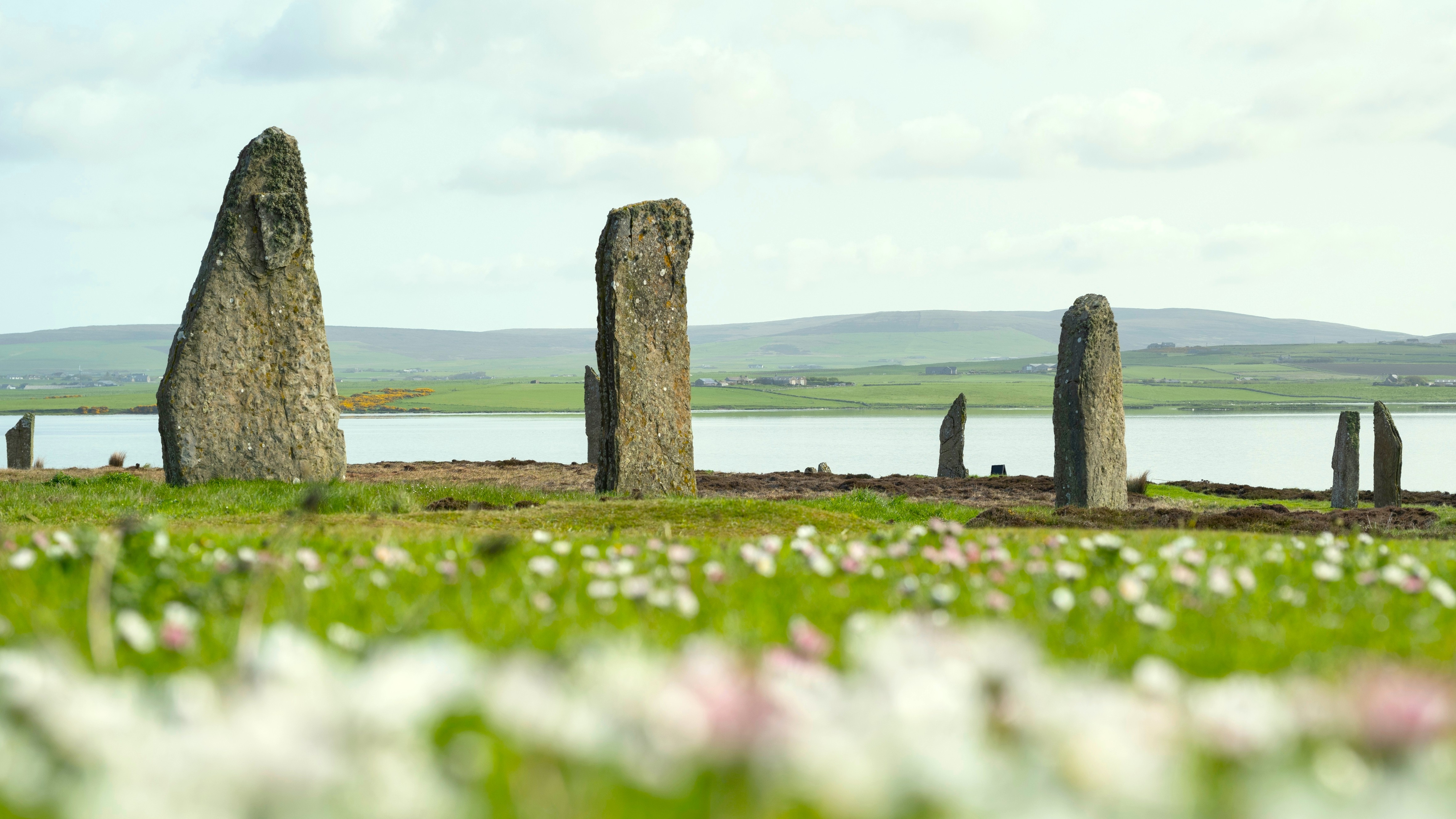
The north-west coast concentrates Scotland's most stripped-back landscapes. From Inverness, the North Coast 500 traces an 830 km loop through three counties with distinct character: Wester Ross to the south-west with its deep sea lochs, Sutherland with isolated mountains planted across peatland, and Caithness to the north, a windswept plateau that drops sharply into the North Sea. Our team based in Edinburgh has been organizing this loop for several years and we want to be clear about one thing: this isn't a scenic drive in the traditional sense, it's a long, slow, sometimes challenging itinerary that demands respect.
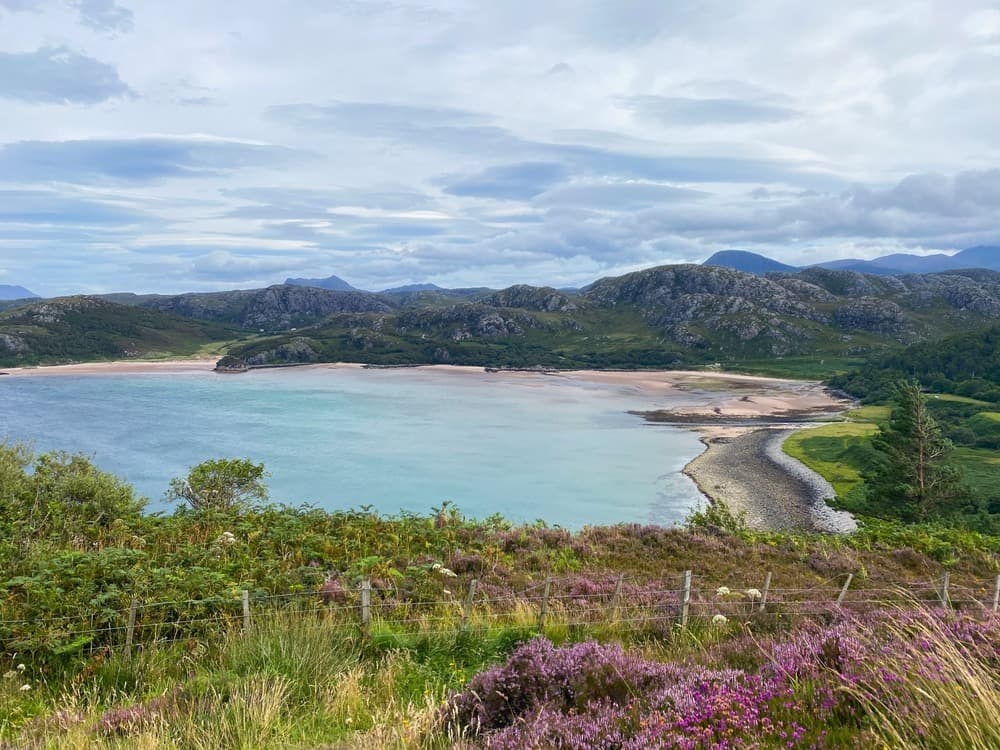
Geology explains everything. The Assynt mountains—Suilven, Stac Pollaidh, Quinag—are residual Torridonian sandstone ridges rising from a foundation of Lewisian gneiss among Europe's oldest rock, around three billion years old. This creates those strange silhouettes erupting from a flat moorland dotted with small lochs. The UNESCO Geopark of the north-west, which spans the region between Ullapool and Durness, was established to protect this geological heritage. Along the coast, the white sand beaches of Achmelvich, Clachtoll and Sandwood Bay stand in sharp contrast to the turquoise water on clear days—a colour that never fails to surprise our travellers.
The population is sparse. Sutherland has around two people per square kilometre, one of Europe's lowest densities. This emptiness is not natural. It dates from the Highland Clearances of the nineteenth century, when landowners expelled Gaelic-speaking farmers to make room for sheep. The ruins of abandoned hamlets, notably at Badbea on Caithness's east coast or in Strathnaver, still bear witness to this history. Scottish Gaelic survives here only residually, mainly in place names: Ullapool comes from Old Norse, Lochinver and Kinlochbervie carry traces of intermingled Viking and Gaelic settlement.
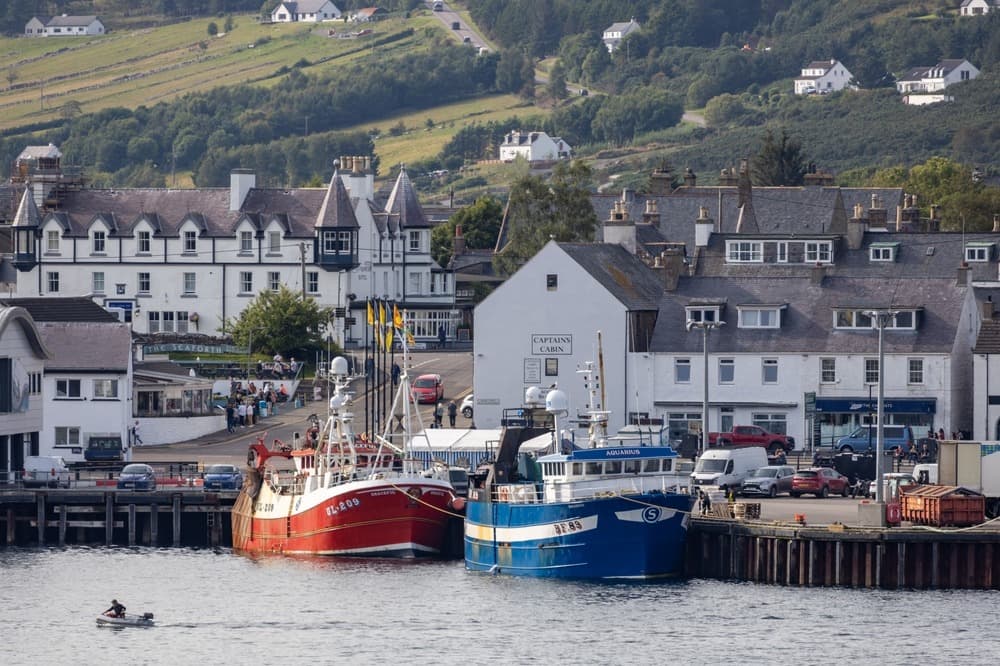
The local economy rests on fishing, sheep farming, tourism and distilling. Ullapool, a port of 1,500 inhabitants, remains the major stop on the west coast and the departure point for CalMac ferries to Stornoway in the Outer Hebrides. Further north, Kinlochbervie still lands white fish. For whisky, the region has few distilleries but Clynelish at Brora and the newer Wolfburn at Thurso are worth a stop. Cuisine typically centres on smoked fish, langoustines, game, and the marinated herring from Ullapool's Seafood Shacks has become a traveller's landmark.
Climate dictates the rhythm. Atlantic westerly winds bring heavy rainfall to the Wester Ross slope, reaching 2,500 mm annually at Kinlochewe, while Caithness to the north-east receives less than 800 mm. Roads are narrow, often single-track with passing places marked by white diamonds, and you must understand the local rule: pull in to let traffic pass, wave thanks, never overtake on the right due to poor visibility. Motorhome drivers in a hurry regularly cause problems since the official launch of the NC500 in 2015, which has multiplied summer visitor numbers.
Three landmarks structure the loop. At the far north-west, Cape Durness and the sea cave of Smoo Cave, accessible on foot from the village. At the top of the north coast, the cliffs of Duncansby Head near John o'Groats, which overlook the sea stacks stacked in the water. And on the eastern section, Dunrobin Castle, former seat of the Dukes of Sutherland, whose conical architecture evokes the Loire more than the Highlands.
To discover
Complete NC500 loop. 830 km from Inverness in seven days minimum, with stops at Applecross, Ullapool, Durness, Thurso and Dornoch. Left-hand driving on narrow roads, realistic average speed 40 km/h.
Assynt mountains from Lochinver. Suilven, 731 m, a sandstone monolith resting on gneiss, climbed in a long day from Glencanisp. Stac Pollaidh, shorter, offers the same views over the Summer Isles archipelago.
Sandwood Bay beach. 6 km hike each way from Blairmore south of Cape Wrath, pink sand and the stack of Am Buachaille planted in the Atlantic. No roads, no buildings, constant wind.
Cape Wrath and military training. North-west point accessible only by minibus from Keoldale after a ferry crossing. NATO training zone, closed certain days, verify 48 hours ahead.
Clynelish distillery at Brora. Single malt coastal production since 1819, characteristic waxy profile. One-and-a-half-hour tour, tasting of four expressions. Booking advised June to August.
When to go
The practical window runs from mid-May to mid-September. June offers the longest days, almost eighteen hours of daylight at the solstice, with daytime temperatures of 14 to 18 °C on the coast. July and August remain the driest months in the north-east but also the busiest, with accommodation booked solid three to six months in advance. September is our preferred period: fewer crowds, glancing light on the Assynt mountains, temperatures still manageable around 13 °C, and the midges—those biting flies that plague the west slope in June-July—have markedly diminished.
From October to April, the region falls quiet. Many B&Bs and restaurants close, Atlantic storms make coastal roads dangerous, and several passes like Bealach na Bà above Applecross, 626 m, can be blocked by snow. Temperatures drop to 2-5 °C during the day and daylight falls to six hours by December. We advise against the NC500 out of season unless you're an experienced traveller seeking total solitude and accepting reduced comfort.
Practical advice
Allow seven full days for the complete loop without rushing, nine to ten days if you want to add day hikes or the Applecross peninsula. The logical entry point is Inverness airport, with direct flights from London, Amsterdam and several British cities. Car rental on-site is essential; we recommend a compact vehicle over an SUV, more nimble on single-track roads. Motorhomes are discouraged unless you have experience with left-hand driving on narrow roads.
The most cohesive combination is NC500 + Isle of Skye and Hebrides, via Ullapool to reach Stornoway by ferry, totalling twelve to fourteen days overall. Linking with the central Highlands also works well if you want to incorporate Glen Coe and the Cairngorms before or after the loop. For travellers coming from Edinburgh, plan the journey via the east coast and Speyside, which adds two to three days but avoids a long transit drive. This region suits independent travellers who enjoy driving, contemplatives drawn to mineral landscapes, intermediate-level hikers. Less suitable for families with young children due to long daily drives and rustic accommodation.