Goat Fell
Goat Fell
Goat Fell, the highest point on the Isle of Arran at 874 m, commands views across the Firth of Clyde and the Highlands. Accessible from Brodick, it's the island's defining walk.
Goat Fell is the highest peak on the Isle of Arran in Écosse, standing at 874 metres. This granite summit dominates the northeast coast of the island, offering clear-day views across the Highlands, Northern Ireland, and the Scottish coastline. Managed by the National Trust for Scotland, it represents Arran's most iconic ascent, accessible from the village of Brodick.
Practical information at a glance
- Access: main trailhead from Brodick Castle gardens, on foot from Brodick village
- Entry: free access to the path; Brodick Castle gardens are managed by the National Trust for Scotland (membership or paid entry required for gardens)
- Duration: allow 4 to 6 hours for the round trip depending on pace and conditions
- What to wear: waterproof hiking boots essential, warm layers and windproof jacket even in summer
- Accessibility: not suitable for visitors with mobility challenges — rocky and steep terrain
- Difficulty: moderate to challenging hike, significant elevation gain on the upper section
What to see
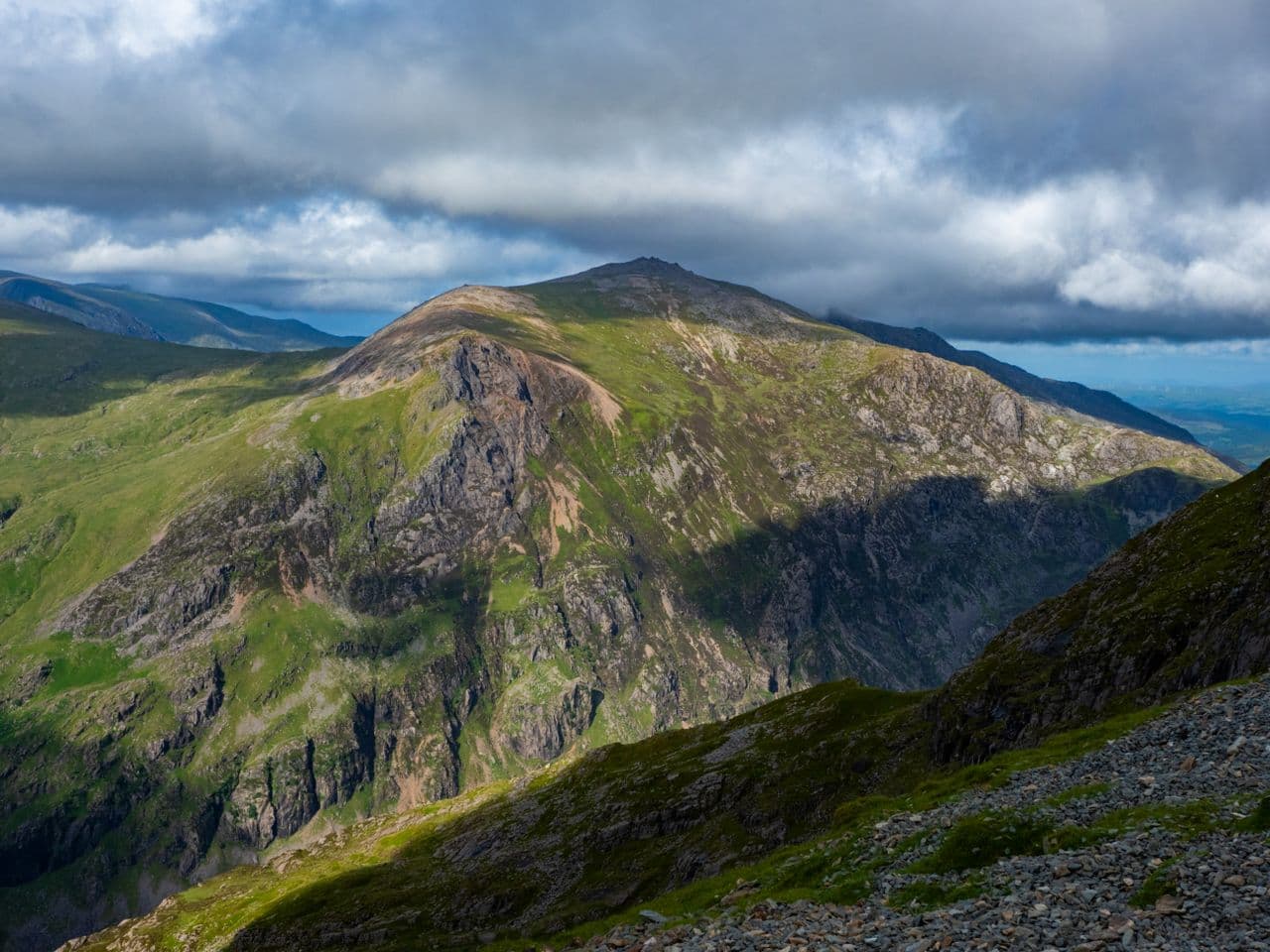
The path first crosses a conifer forest before emerging onto open moorland carpeted with heather and ferns. Higher up, the terrain becomes rocky and granitic. The summit is marked by a cairn and offers 360° views: Brodick Bay, the Firth of Clyde, Ben Lomond on clear days, and occasionally the Irish coast.
History and context
The name "Goat Fell" likely derives from Scottish Gaelic Gaoth Bheinn, meaning "mountain of the wind". The Isle of Arran is sometimes called "Scotland in miniature" because of its landscape variety. Goat Fell belongs to the Brodick Castle estate, owned by the Dukes of Hamilton for centuries before being gifted to the National Trust for Scotland in 1958.
Highlights of the visit
The summit ridge
The final hundreds of metres to the cairn traverse granite blocks. The ascent demands care and balance, but the view opening progressively across both sides of the island rewards the effort.
The heather moorland
In August and September, purple heather blankets the lower slopes. This is also prime territory for red deer, visible early morning or late afternoon.
The Firth of Clyde panorama
On clear days, views stretch to the isles of Bute and Kintyre, and northwards to the Highland summits. Low-angle light in late afternoon accentuates the relief.
Photography tips
Morning light is ideal for photographing Brodick Bay from the summit, before mist rises. The northern slopes offer framing opportunities on Arran's jagged ridges. Avoid midday hours in summer: light flattens and cloud frequently shrouds the peak.
Location and access
Goat Fell sits in northern Arran, accessible from Brodick, the island's main village. Brodick is connected to the mainland by ferry from Ardrossan (Ayrshire coast). The main path starts from Brodick Castle gardens, roughly 2 km from the ferry terminal. No motorised access to the summit.
Nearby attractions
- Brodick Castle — medieval castle and Victorian gardens at the trailhead, managed by the National Trust for Scotland.
- Lochranza Castle — ruins of a 14th-century castle overlooking a loch, in Lochranza village in the north of the island.
- Isle of Arran Distillery — single malt whisky distillery in Lochranza, with guided tours.
- Machrie Moor — prehistoric site with standing stone circles dating to the Bronze Age, on the island's west coast.
Frequently asked questions
May to September offers long days and generally stable conditions. Winter ascents are possible but require experience and equipment for snow or ice.
Waterproof hiking boots, warm layered clothing, windproof and waterproof jacket are essential. The summit can be cloud-covered even when Brodick enjoys sunshine.
Yes, the path begins from the castle gardens. Plan the castle visit before or after the climb — a full day suits both activities.
No facilities for water along the route. Bring sufficient water from Brodick before setting out.
Dogs are generally permitted on the trail, on lead in grazing areas and near Brodick Castle gardens. Check current rules with the National Trust for Scotland.
Interested in this visit?
We can include it in your personalised itinerary.