Outer Hebrides
Outer Hebrides
An Atlantic archipelago off the coast of Scotland, the Outer Hebrides unite Neolithic standing stones, immaculate beaches, flowered machair and hand-woven tweed tradition — far from the crowds.
The Outer Hebrides form an archipelago of around 200 islands and islets off the north-west coast of Scotland. Separated from the mainland by the Minch, these lands battered by the Atlantic concentrate landscapes of moorland, white sand beaches, peatlands and prehistoric sites among the best preserved in Europe. Scottish Gaelic culture remains alive here, sustained by a language, music and traditions that resist the passage of time.
Practical Information at a Glance
- Access: CalMac ferries from Ullapool (to Stornoway, Lewis) or from Uig (Skye) to Tarbert (Harris) and Lochmaddy (North Uist); flights from Inverness, Glasgow and Edinburgh to Stornoway.
- Getting around: car rental strongly recommended — public transport is limited between the islands.
- Recommended duration: 5 to 10 days to cover Lewis, Harris and the Uists; a weekend is enough for Lewis alone.
- What to wear: waterproof jacket and warm layers essential year-round; wind can be fierce even in summer.
- Sunday: on Lewis and Harris, many shops, petrol stations and attractions remain closed on Sunday — plan your provisions in advance.
What to See
The archipelago stretches roughly 200 km from north to south. Lewis, the largest island, is home to Stornoway, the archipelago's only town, and the famous Callanish megaliths. Harris, south of Lewis (the two form a single island), is renowned for its Luskentyre and Scarista beaches, and for hand-woven Harris tweed. Further south, North Uist, Benbecula and South Uist offer a landscape of machair — unique flowering coastal prairie — and inland lochs teeming with birds.
History and Context
Inhabited since the Neolithic, the Outer Hebrides saw successive waves of Picts, Celts, Vikings (who dominated the archipelago from the 9th to 13th centuries) and Scottish clans. Scottish Gaelic remains the mother tongue of a significant portion of the population, particularly on Lewis. The production of Harris tweed, regulated by the Harris Tweed Act of 1993, perpetuates a craft tradition directly linked to the local economy.
Highlights of Your Visit
Callanish (Calanais), Lewis
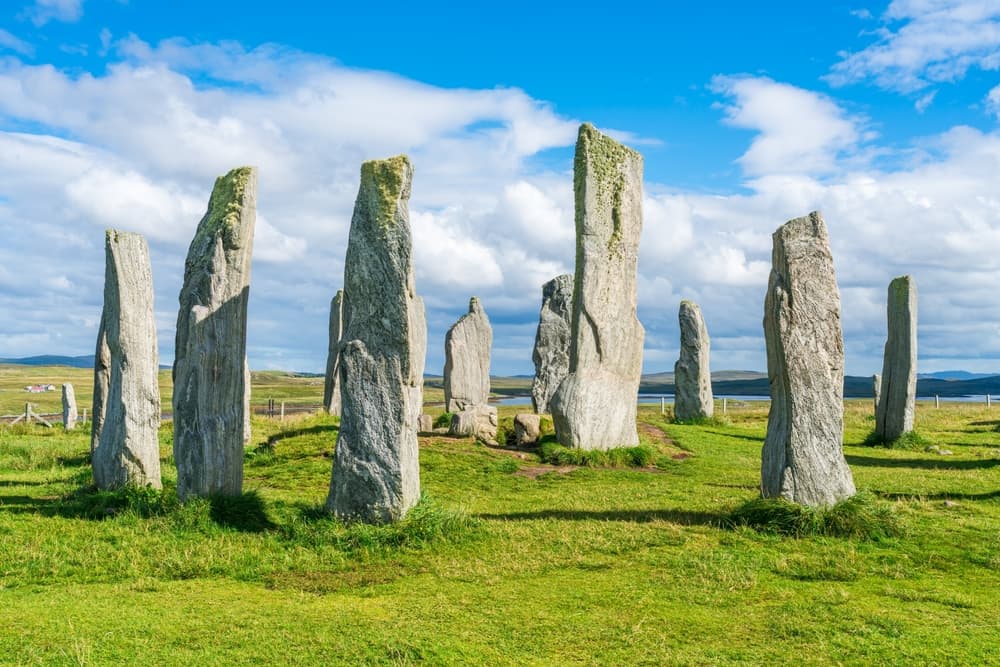
This circle of standing stones, erected around 2900 BC, predates Stonehenge. Arranged in a cross formation with a central avenue, the gneiss stones reach up to 5 metres in height. Access to the site is free; a fee-paying visitor centre provides archaeological context. The atmosphere at sunrise or sunset is particularly striking.
Harris Beaches
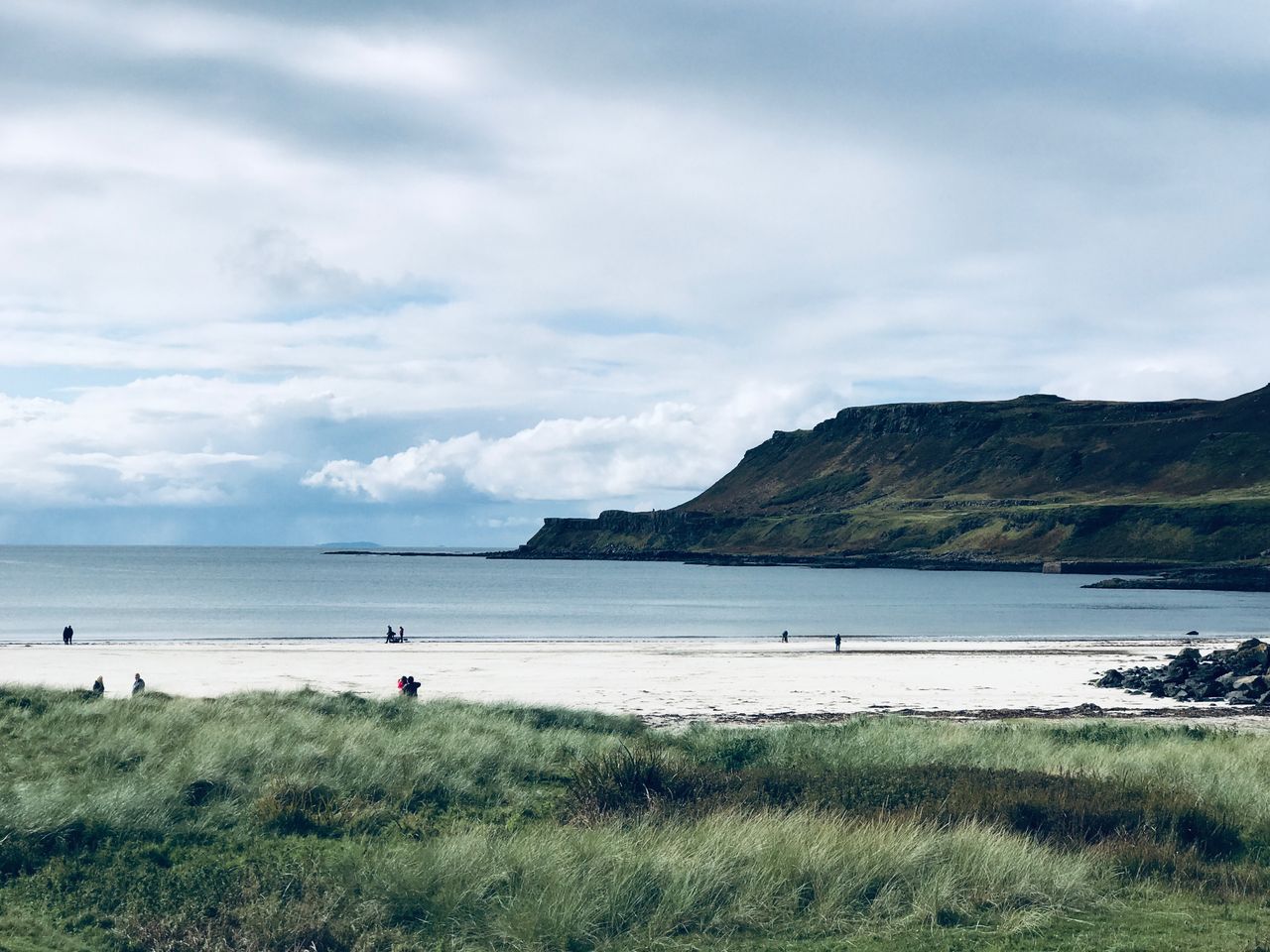
Luskentyre and Scarista regularly feature among the finest beaches in the United Kingdom. The white sand of crushed shells contrasts with turquoise water and the brown hills of the hinterland. These beaches are freely accessible and rarely crowded, even in high season.
Broch of Dun Carloway, Lewis
This Iron Age defensive tower, over 9 metres high in places, is one of the best preserved in Scotland. It dates from around 2,000 years ago and offers concrete insight into local prehistoric architecture.
Machair of the Uists
This type of coastal habitat, formed from shell sand and low-lying vegetation, is found almost exclusively on the west coasts of the Hebrides and Ireland. In summer, it is covered with wild orchids, clover and daisies. It is also a nesting site for curlew and corncrake, a threatened species.
Harris Tweed
Visiting a weaver at home on Harris or Lewis allows you to observe the Hattersley loom in action. Each length of tweed is certified by the Orb Mark, guaranteeing it has been hand-woven in the island homes. Several workshops welcome visitors without appointment.
Photography Tips
The raking light of summer mornings and evenings (the sun sets late in June-July) enhances Harris beaches and Callanish stones. Ever-changing skies — clouds, clear spells, frequent rainbows — offer dramatic conditions. Avoid midday for landscapes; favour the golden hours. There are no photography restrictions at open-air sites.
Location and Access
The archipelago extends west of the north-west coast of Scotland. Stornoway (Lewis) is the main entry point, served by ferries from Ullapool (around 2 hours 45 minutes) and by regular flights. A main road connects Lewis to Harris, then inter-island ferries link Harris to the Uists. Driving is on the left on roads often single-track with passing places. Accessibility for people with limited mobility varies greatly depending on the site: Callanish has a car park and accessible path, but many beaches and natural sites remain difficult to access by wheelchair.
Nearby Attractions
- Isle of Skye — departure point for ferries to Harris and North Uist; mountain and loch landscapes accessible by car from the mainland.
- Cape Wrath — the most north-westerly cape on the British mainland, accessible from Durness by ferry and minibus; spectacular cliffs.
- Inverness — the main city in the north of Scotland, departure point for flights to Stornoway and gateway to the Highlands.
Frequently asked questions
May to September for long days and the best chances of fine weather. June and July offer up to 18 hours of daylight. Winter is windy and ferry crossings may be cancelled.
Yes, in almost all cases. Local buses exist but are infrequent and do not cover remote sites. Hiring a car in Stornoway or bringing one on the ferry is the most practical solution.
On Lewis and Harris, Sunday remains widely observed: many shops, petrol stations and restaurants are closed. Refuel and stock up on food on Saturday.
Yes — Lewis and Harris form a single island connected by road. Three to four days allow you to cover Callanish, Dun Carloway, Harris beaches and Stornoway without rushing.
Directly from weavers on Lewis and Harris, or in authorized shops bearing the Orb Mark. Check the certification: only fabric hand-woven in the islands can legally carry this label.
The white sand beaches and open-air prehistoric sites are well suited to families. Plan waterproof clothing for everyone, even in summer, and anticipate the distances between points of interest.
Want to discover this destination?
Our local advisors design your tailor-made trip.