Glasgow
Glasgow
A former industrial capital turned cultural metropolis, Glasgow captivates with world-class free museums, remarkable Victorian and Art Nouveau architecture, and authentic urban energy far removed from the usual tourist trail.
Glasgow is Scotland's largest city, positioned on the banks of the River Clyde. Once an industrial powerhouse reinvented as a cultural metropolis, it boasts world-class museums, remarkable Victorian and Art Nouveau architecture, and a thriving music scene. Less touristy than Edinburgh, it offers a rawer and more authentic Scottish urban experience.
Quick Practical Facts
- Access from London: train from London Euston (approximately 4.5 hours) or direct flights to Glasgow Airport.
- Local transport: circular underground (the "Clockwork Orange"), Strathclyde buses, bike-sharing schemes.
- Recommended duration: 2 to 3 days to cover the main neighbourhoods.
- Language: English, with a pronounced Scottish accent.
- Currency: British pounds (GBP).
- National museums: free admission to most (Kelvingrove, Riverside Museum, GoMA).
What to See
Glasgow is best explored neighbourhood by neighbourhood. The West End is home to Glasgow University, Kelvingrove Park and its museums. Merchant City concentrates Georgian architecture, galleries and restaurants. The South Side holds less frequented gems. Along the Clyde, former shipyards have given way to contemporary cultural spaces.
History and Context
Founded around a medieval cathedral in the 6th century, Glasgow became a driving force of the British Industrial Revolution in the 18th and 19th centuries. Shipbuilding, textiles and colonial trade shaped its architecture and demographics. The harsh deindustrialisation of the 1970s and 1980s was severe, but the city reinvented itself: European Capital of Culture in 1990, it is today recognised for its artistic dynamism.
Highlights of Your Visit
Kelvingrove Art Gallery and Museum
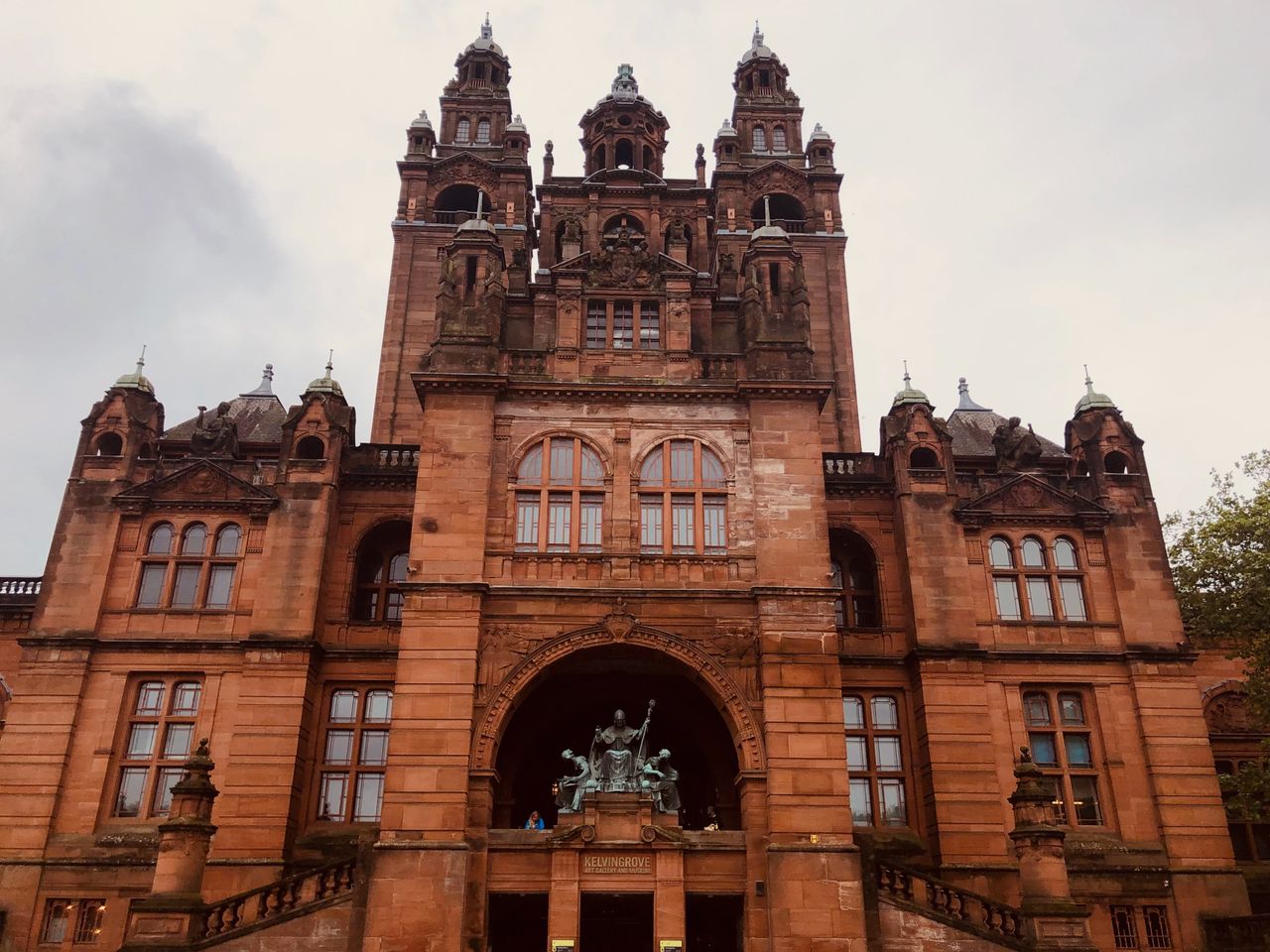
One of the most visited museums in the UK, with free admission. Collections of European art, natural history and Scottish armour coexist within a striking red Neo-Baroque building. The pipe organ still resounds during regular concerts.
Glasgow Cathedral and the Necropolis
Scotland's only medieval cathedral to survive the Reformation virtually intact. Behind it, the Victorian Necropolis overlooks the city from a hilltop: Neo-Gothic mausoleums and panoramic views across Glasgow's roofscape.
Mackintosh and Glasgow's Art Nouveau
Charles Rennie Mackintosh left a unique imprint. The Willow Tea Rooms (Sauchiehall Street) and the House for an Art Lover (Bellahouston Park) showcase his distinctive geometric style. The Glasgow School of Art, partially destroyed by two fires, is undergoing ongoing restoration.
Riverside Museum
Museum of transport and travel, housed in a wave-shaped building designed by Zaha Hadid. Locomotives, trams, vintage cars and a recreation of an Edwardian Glasgow street — all free to enter.
GoMA – Gallery of Modern Art
Set in the former Royal Exchange, at the heart of the city. The statue of the Duke of Wellington outside the entrance, topped with an orange traffic cone by locals, has become an iconic symbol of Glasgow's wit and humour.
Barras Market and East End
The covered Barras Market in the East End is a hub for second-hand goods and popular culture. The surrounding neighbourhood, undergoing gentrification, welcomes independent galleries and craft beer bars.
Photography Tips
- The Necropolis offers the best panorama of the cathedral and Victorian roofscape, ideal in the raking morning light.
- The Riverside Museum and the docked sailing ship Glenlee photograph well from the opposite bank of the Clyde.
- Kelvingrove's red façade is most vibrant in late afternoon, from the western side.
- The Duke of Wellington statue with its orange cone: arrive early, crowds build during the day.
Location and Access
Glasgow sits in central Scotland, approximately 70 km west of Edinburgh. Glasgow Airport serves many European destinations; Glasgow Prestwick Airport primarily handles low-cost flights. Glasgow Central Station connects the city to the rest of the UK. The circular underground (15 stations) covers the city centre and West End. The city is generally accessible to people with reduced mobility in central areas, with variations in older neighbourhoods.
From Glasgow, Edinburgh is accessible in under an hour by train. The shores of Loch Lomond are about thirty kilometres to the north.
Nearby
- Loch Lomond — Scotland's largest loch by surface area, gateway to the Highlands, accessible by train or bus from Glasgow.
- Edinburgh — Scotland's capital, royal castle and UNESCO-listed Old Town, less than an hour by train.
- Stirling — Castle perched on a volcanic crag, Bannockburn battlefield, midway between Glasgow and Edinburgh.
- Isle of Bute — Island in the Firth of Clyde, accessible by ferry from Wemyss Bay, coastal landscapes and Rothesay Castle.
Frequently asked questions
Glasgow can be visited year-round. May to September offer the longest days and mildest temperatures. Summer remains cool (rarely above 20 °C) and rainfall is frequent regardless of season — pack a waterproof jacket.
Yes: Kelvingrove, the Riverside Museum, GoMA and most municipal museums offer free admission. Some temporary exhibitions or specific attractions may charge entry fees.
Train is the most convenient option: frequent services between Glasgow Queen Street and Edinburgh Waverley, journey time approximately 50 minutes. Budget-friendly coaches are also available.
It's possible for a quick overview (Kelvingrove, cathedral, GoMA), but two days allow you to explore the neighbourhoods at a comfortable pace and really experience the city.
Glasgow Cathedral is an active place of worship: appropriate dress is expected. Museums and galleries impose no dress restrictions.
Yes. The Riverside Museum with its vintage vehicles, Kelvingrove and its diverse collections, and the Science Centre on the Clyde are particularly enjoyed by children. Most are free or offer family discounts.
Want to discover this destination?
Our local advisors design your tailor-made trip.