Lochaber
Lochaber
Lochaber encompasses the wildest landscapes of the Highlands: Ben Nevis, Glen Coe, Loch Linnhe and the Glenfinnan Viaduct. An essential region for hiking and Jacobite history.
Lochaber is a region of the Scottish Highlands in western Écosse, centered on Fort William. It encompasses some of the country's most dramatic landscapes: Ben Nevis — the highest peak in the British Isles — Glen Coe, Loch Linnhe and the Great Glen. It is a territory of mountains, lochs and forests, prized for hiking, climbing and scenic road trips along coastal routes.
Practical Information at a Glance
- Access: Fort William is accessible by train from Glasgow (West Highland Line, approximately 3.5 hours) or by car via the A82.
- Recommended duration: 3 to 5 days to explore the region at your own pace.
- What to wear: Waterproof clothing and hiking boots are essential, even in summer.
- Accessibility: Town centres (Fort William, Glencoe village) are accessible; mountain trails generally are not.
What to See
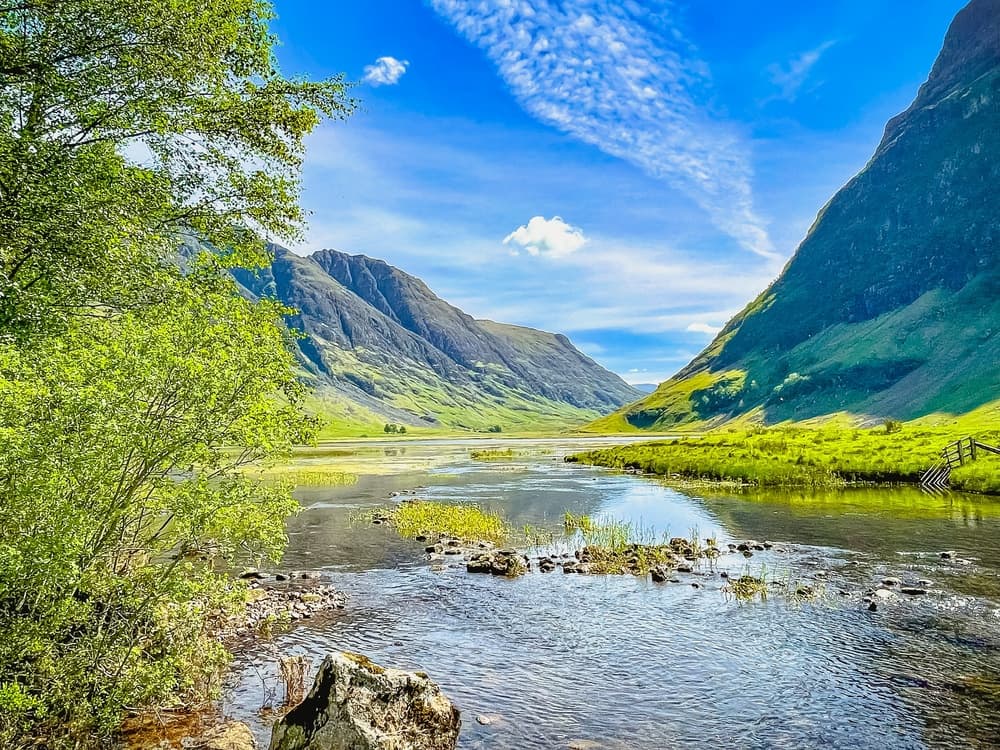
Lochaber concentrates several of Écosse's most spectacular natural sites. Ben Nevis (1,345 m) dominates the region north of Fort William. Glen Coe, a glacial valley with steep walls, is one of the most photographed landscapes in the Highlands. Loch Linnhe and Loch Lochy extend along the Great Glen. The west coast, towards Mallaig, offers views of the Hebridean islands.
History and Context
Lochaber is deeply marked by Jacobite history. The Massacre of Glencoe (1692), in which government soldiers killed members of Clan MacDonald, remains one of the darkest episodes in Scottish history. The region was also the scene of Bonnie Prince Charlie's final campaign in 1745-1746, before the defeat at Culloden. Fort William, founded as a military garrison in the 17th century, still carries this legacy in its name.
Highlights of Your Visit
Ben Nevis
The ascent of Ben Nevis via the Mountain Track (formerly Tourist Track) is accessible to experienced walkers. On clear days, the summit offers views stretching to the Hebrides. Allow a full day for the round trip from Achintee.
Glen Coe
The A82 road crosses the glen from east to west. The Three Sisters — three rocky ridges — dominate the valley. The Glencoe Visitor Centre (managed by the National Trust for Écosse) recounts the history of the massacre and local geology.
The Jacobite Steam Train
This steam train links Fort William to Mallaig, passing over the Glenfinnan Viaduct, made famous by the Harry Potter saga. The West Highland Line traverses some of Écosse's most beautiful loch and moorland landscapes.
The Glenfinnan Monument
Erected in 1815 on the shores of Loch Shiel, this monument commemorates the Jacobite rising of 1745. The circular tower and the panoramic views over the loch make it a must-see stop on the road to Mallaig.
Photography Tips
Golden light in late afternoon beautifies the Glen Coe cliffs. The Glenfinnan Viaduct is ideally photographed from the viewpoint perched on the hill to the north — arrive early to avoid crowds. Ben Nevis reflects in Loch Linnhe from the shores near Fort William at sunrise.
Location and Access
Lochaber extends across the Highland council area in western Écosse. Fort William is the main entry point. By car, the A82 from Glasgow runs along Loch Lomond and the Great Glen. The train from Glasgow (Queen Street) serves Fort William via the West Highland Line. Buses connect Fort William to Glen Coe villages and Mallaig. The region is vast: a personal vehicle greatly facilitates exploration.
Nearby Attractions
- Glen Coe — glacial valley with vertiginous cliffs, about thirty kilometres south of Fort William.
- Glenfinnan Viaduct — a Victorian engineering masterpiece on the road to Mallaig.
- Glenfinnan Monument — Jacobite memorial on the shores of Loch Shiel.
- Mallaig — fishing port terminus of the West Highland Line, departure point for the Isle of Skye.
- Ben Nevis — highest peak in the British Isles, accessible on foot from Fort William.
Frequently asked questions
From May to September, days are long and weather conditions more favourable. July-August are the busiest months. In autumn, the colours of the moorlands and forests are remarkable. Winter is harsh at altitude but offers striking snow-covered landscapes.
The Mountain Track is manageable for hikers in good physical condition, without climbing technique required. However, the summit is often shrouded in cloud and conditions can change rapidly. Waterproof gear, hiking boots and a map are essential.
The train generally runs from May to October. From the viewpoint above the viaduct, you can photograph it without a ticket. To travel on board, book in advance on the West Coast Railways website — places sell out quickly.
Fort William and Glenfinnan are accessible by train. Buses serve Glen Coe and Mallaig. However, many sites are isolated: hiring a car in Fort William remains the most practical solution for free exploration.
Yes, midges are present from June to August, especially at sunrise and sunset, in calm and humid weather. Suitable insect repellent and long clothing limit the nuisance. Wind disperses them effectively.
Yes. The Glencoe Visitor Centre, the steam train and lochside walks are family-friendly. High-altitude hikes, however, require good fitness and are not suitable for very young children.
Want to discover this destination?
Our local advisors design your tailor-made trip.