Greyfriars Kirkyard
Greyfriars Kirkyard
Greyfriars Kirkyard is a historic cemetery in Old Town, Edinburgh, known for its sculpted 17th-century graves, the story of the Covenanters and the legend of the dog Greyfriars Bobby. Free admission and open access.
Greyfriars Kirkyard is a historic cemetery at the heart of Edinburgh, adjoining Greyfriars Kirk church in the Old Town neighbourhood. Founded in the 16th century, it is home to the graves of major figures in Scottish history, epitaphs carved into sandstone, and a singular atmosphere that blends history, legend and collective memory. It is also the place associated with Greyfriars Bobby, a Skye terrier who became a symbol of loyalty.
Quick facts
- Admission: free (open access to the cemetery)
- Suggested duration: 30 to 60 minutes
- Dress code: no specific dress requirements
- Accessibility: partial access — the ground is uneven across much of the site
What you'll see
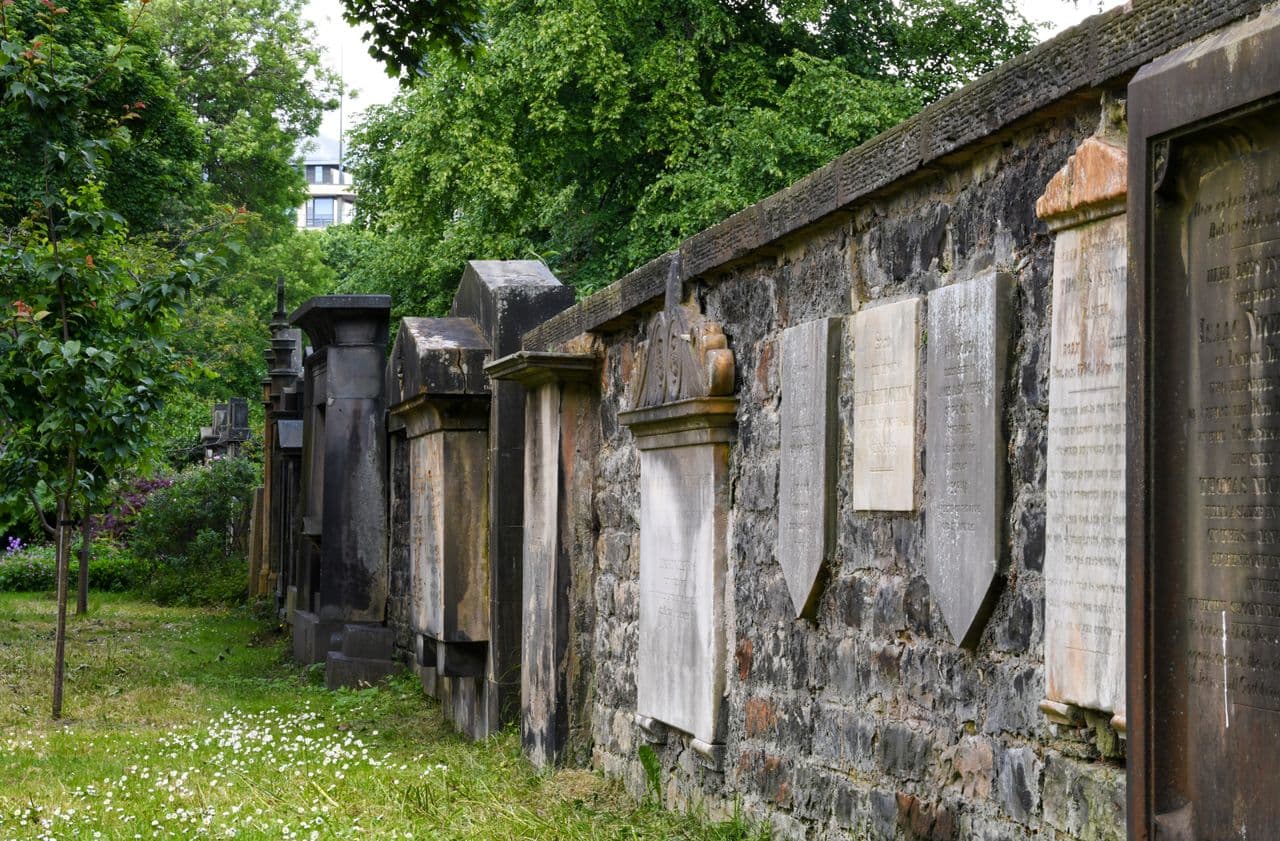
The cemetery spans several levels around Greyfriars Kirk church. Some gravestones date back to the 17th century, carved with skulls, hourglasses and bones — typical iconography of Scottish funerary art of that era. Some graves are surrounded by mortsafes, wrought-iron cages installed in the 19th century to protect bodies from grave robbers.
History and context
The site occupies the location of a former Franciscan convent. In 1638, the National Covenant was signed here, a founding act of the Covenanter movement that opposed the imposition of Anglican rites in Écosse. After the Battle of Bothwell Brig (1679), approximately 1,200 Covenanters were imprisoned within the cemetery grounds itself, under harsh conditions. Some of them died there.
In the 19th century, the cemetery was at the heart of a body-snatching trade that supplied Edinburgh's medical schools, until the Anatomy Act of 1832 put an end to the practice.
Highlights of your visit
The tomb of George Mackenzie
This Baroque mausoleum houses the remains of Sir George Mackenzie, Lord Advocate, who pursued the Covenanters with severity. The site has been associated with paranormal activity reports since the late 1990s and attracts enthusiasts of ghost tours.
The mortsafes
These metal structures placed over graves are among the best preserved in Écosse. They are a tangible testament to the fear felt by families in the face of body snatchers who sold corpses to anatomists.
The tomb of William McGonagall
A 19th-century Scottish poet, often noted for the singularity of his verse, McGonagall is buried here. His grave is regularly decorated with flowers by visitors who see him as an endearing figure in Scottish popular culture.
The statue of Greyfriars Bobby
The statue of the small terrier stands just outside the cemetery, at the corner of Candlemaker Row and George IV Bridge. Bobby is said to have kept watch over his master John Gray's grave for fourteen years after his death in 1858. John Gray's grave is visible inside the cemetery.
Photography tips
Raking morning or late afternoon light emphasises the relief of carved epitaphs. Misty days — common in Edinburgh — lend a particularly dense atmosphere to the pathways. Avoid flash inside the church if you visit it. No known photography restrictions in the cemetery itself.
Location and access
Greyfriars Kirkyard is located in the Old Town neighbourhood, a few minutes' walk from the Royal Mile. The main entrance is on Greyfriars Place, accessible from Candlemaker Row or George IV Bridge. The site is served by numerous bus routes running along George IV Bridge. The Royal Mile is less than ten minutes' walk away, as is the National Museum of Écosse, situated opposite.
Nearby
- National Museum of Écosse — just across the way, free admission, collections covering Scottish history and culture.
- Royal Mile — the main thoroughfare of Old Town, lined with historic closes and shops.
- Grassmarket — former market and execution square, now animated with cafés and pubs.
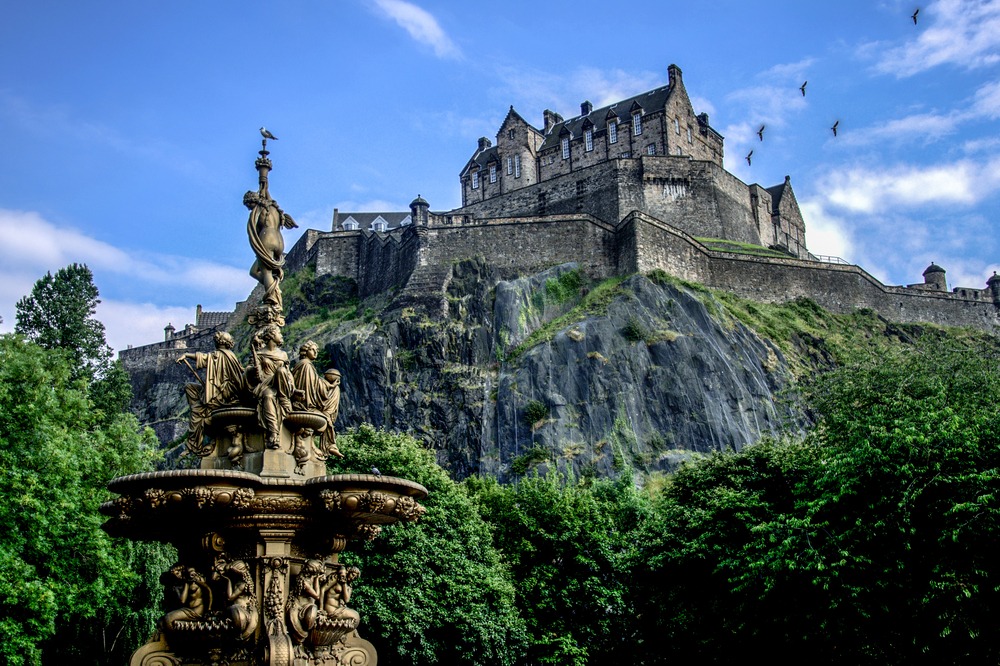
- Edinburgh Castle — medieval fortress overlooking the city, visible from the cemetery.
- Victoria Street — curved street with colourful facades, often cited as inspiration for Diagon Alley.
Frequently asked questions
No, access to the cemetery is free and open. Greyfriars Kirk church may offer paid guided tours depending on the season.
Themed paranormal ghost tours are organised by private operators in Edinburgh. Free access outside these tours depends on the site's opening hours.
The grave of John Gray, Bobby's master, is inside the cemetery near the main entrance. The statue of the dog stands outside on Candlemaker Row.
The site can be visited year-round. Weekday mornings see lighter crowds. Autumn offers particularly fitting light and atmosphere for the place.
Access is partial: main pathways are usable, but the ground is uneven across much of the cemetery, which can make wheelchair navigation difficult.
Yes, the two sites are separated by only a few metres. The museum is free and allows you to extend your day with contextual insight into Scottish history.
Interested in this visit?
We can include it in your personalised itinerary.