Islands off Oban (Mull, Kerrera, Seil, Luing, Easdale)
From Oban, ferries serve islands of strikingly different character: the sprawling isle of Mull with Duart Castle, the wild expanse of Kerrera, and the former slate islands of Easdale and Seil.
Oban is the principal gateway to the Inner Hebrides. From its bustling harbour, ferries and water taxis connect to several islands of sharply contrasting character: the large island of Mull, the diminutive Kerrera just across from the port, and the Slate Islands — Seil, Luing and Easdale — reached towards the south. Each offers a compelling blend of rugged coastlines, abundant wildlife and local history that the mainland cannot rival.
Essential information at a glance
- Access: CalMac ferries from Oban harbour to Mull (Craignure) and Colonsay; ferry to Kerrera from a slip south of the harbour; the Atlantic Bridge causeway connects to Seil.
- Suggested duration: a minimum of one day per major island; Kerrera and Easdale can be visited in half a day.
- What to wear: waterproof jackets and walking boots recommended, even in summer.
- Booking: reserve CalMac crossings in advance during peak season (July–August), especially when travelling by car to Mull.
What to see
Landscapes vary by island. Mull presents moorland, sea cliffs, Duart Castle and the vividly painted village of Tobermory. Kerrera is a wild, sparsely visited isle ideal for spotting seals and eagles. Easdale, once a slate quarrying centre, retains its flooded workings and miners' cottages. Seil and Luing offer sweeping views across the straits and a preserved rural atmosphere.
History and context
These islands have been inhabited since the Iron Age. The Slate Islands (Seil, Luing, Easdale) take their name from slate extracted for centuries to roof buildings across Scotland and Ireland. Mull witnessed the rivalry of feuding clans — the MacLeans and Campbells — whose fortifications still dominate the landscape. Kerrera holds the ruins of Gylen Castle, built in the 16th century by the MacDougalls.
The highlights
Tobermory, Mull
The harbour front lined with brightly painted houses is the most iconic image of the Inner Hebrides. The village is home to distilleries, galleries and an active fishing port. It also serves as the base for reaching the isle of Iona by ferry via Fionnphort.
Duart Castle, Mull
Perched on a promontory commanding the entrance to the Sound of Mull, this 13th-century stronghold is the ancestral seat of Clan MacLean. It welcomes visitors for part of the year and commands unobstructed views across the strait to the mainland mountains.
Easdale and its slate quarries
The isle, reached by a short boat journey from Ellenabeich on Seil, is home to fewer than a hundred year-round residents. The former quarries, flooded by the sea in 1881, have become dark pools ringed by slate blocks. A local museum chronicles the story of the slate industry.
Kerrera and Gylen Castle
A short ferry crossing from Oban brings you to this car-free island. A coastal path leads to the ruins of Gylen Castle, with views across to the islands of Scarba and Jura on clear days. Common seals regularly haul out on rocks to the south.
Photography tips
Low-angled morning and evening light complements the painted façades of Tobermory beautifully. For Duart Castle, the vista from the CalMac ferry as it approaches Craignure often surpasses land-based viewpoints. On Easdale, reflections in the flooded quarries work particularly well under overcast skies, which diffuse light evenly.
Location and access
Oban sits on Scotland's west coast, roughly two hours' drive from Glasgow. The harbour is the embarkation point for all crossings. For Mull, the CalMac ferry reaches Craignure in approximately 45 minutes. To reach Seil, the road crosses the Atlantic Bridge causeway, some twenty kilometres south of Oban. Kerrera is accessed by small ferry from the slip at Gallanach Road.
Nearby attractions to combine: Duart Castle, Isle of Iona, Easdale.
In the vicinity
- Isle of Iona — monastic settlement founded by Saint Columba in the 6th century, reached by ferry from Fionnphort at the end of Mull.
- Kilchurn Castle — 15th-century ruins on the shores of Loch Awe, roughly an hour from Oban.
- Glencoe — iconic glaciated valley, approximately an hour north of Oban.
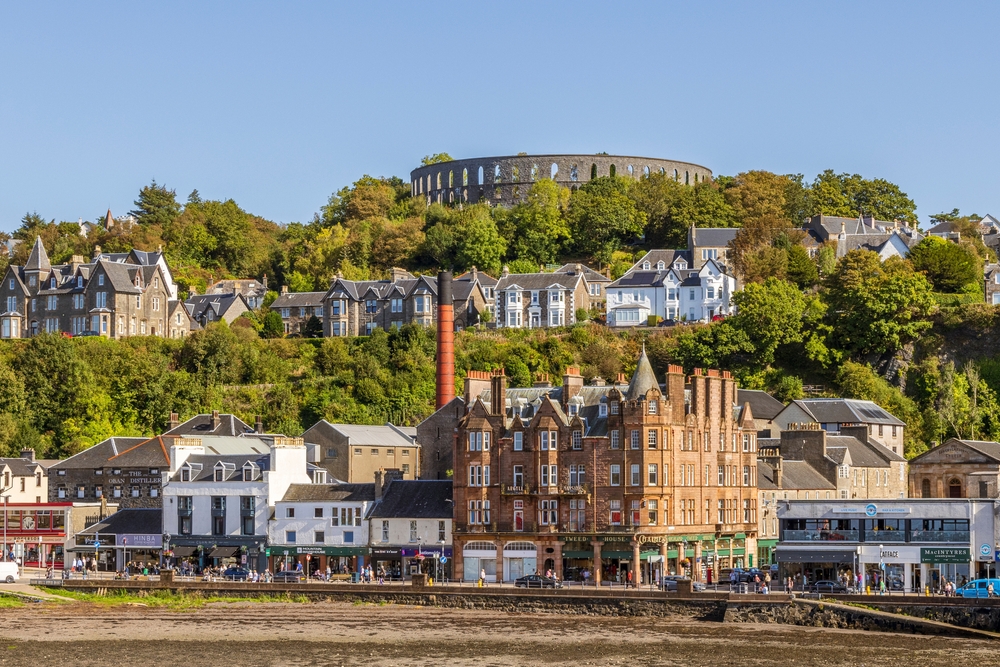
- Oban Distillery — one of Scotland's smallest whisky distilleries, in the town centre, offering guided tours.
Give it a go!
Our local experts arrange this activity for you.