Loch Maree
Loch Maree
Loch Maree stretches for some twenty kilometres across Ross-shire, framed by Slioch and ancient Caledonian forests. With its historic island, abundant wildlife and mountain landscapes, it ranks among Scotland's most remarkable lochs.
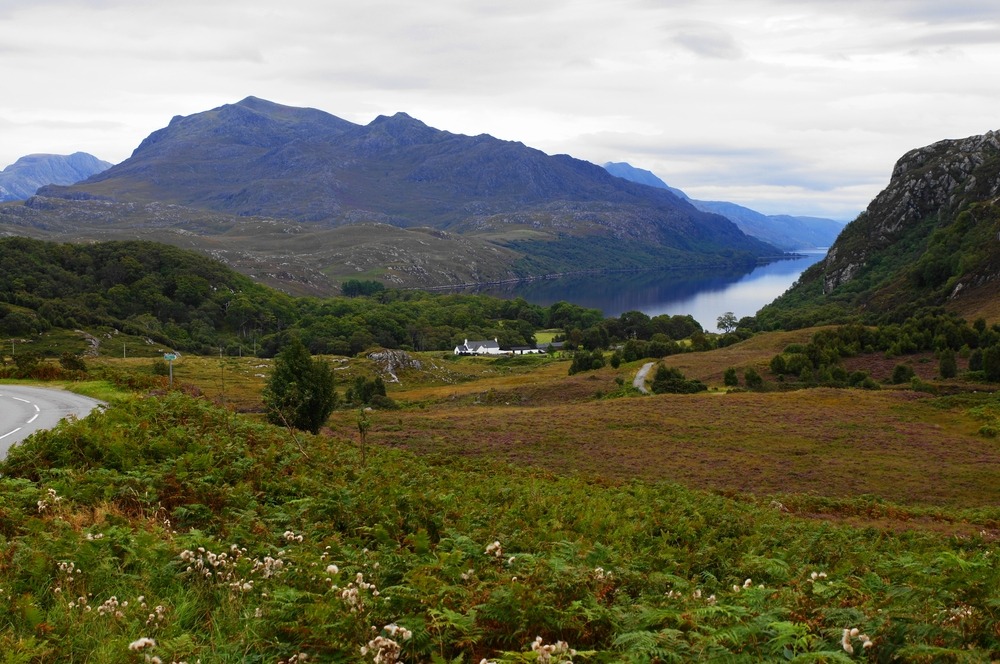
Loch Maree stretches for some twenty kilometres across the north-west Highlands of Scotland, between Kinlochewe and Gairloch. Surrounded by mountains among Europe's oldest — including Slioch — and dotted with wooded islands, this loch ranks among Scotland's finest. It borders the Beinn Eighe National Nature Reserve, Britain's first national reserve established in 1951. Abundant wildlife, Caledonian pine forests and the shifting light of the north-west make it a nature destination in its own right.
Practical Information at a Glance
- Access: the A832 road runs along the south shore of the loch between Kinlochewe and Gairloch — accessible by car.
- Public transport: limited bus services from Inverness to Kinlochewe and Gairloch; check local timetables.
- Entry: free access to the lochside and public paths.
- Recommended duration: half a day to a full day depending on the activity chosen.
- What to wear: hiking boots and waterproof clothing recommended year-round.
- Accessibility: roadside viewpoints offer accessible views; forest paths are uneven terrain.
What You'll See
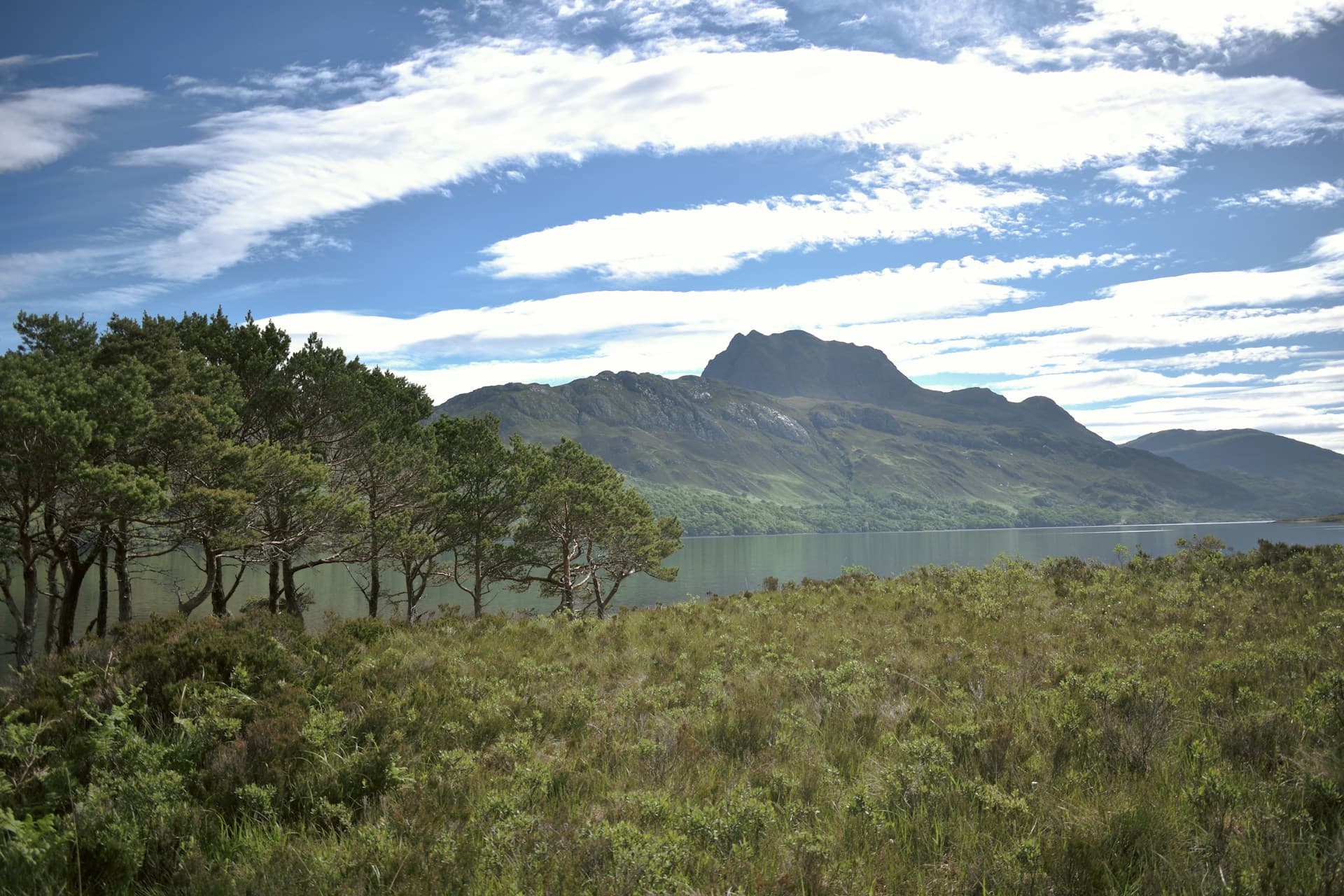
The loch itself is the centrepiece: its dark waters reflect Slioch (980 m), a Torridonian sandstone mountain dominating the north shore. Some twenty islands dot the surface, including the Isle of Maree, which harbours the remains of an ancient Christian hermitage and a sacred well. The shores are covered with Scots pine and birch forests, relics of the original Caledonian forest.
History and Context
The name 'Maree' derives from Saint Maelrubha, an Irish monk who established himself on the main island in the 7th century. The site was already venerated before Christianity: the well on the Isle of Maree was reputed to cure mental illness, and coins were hammered into tree bark as offerings — a practice documented until the 19th century. Queen Victoria visited the loch in 1877 and stayed at Loch Maree Hotel, contributing to its fame.
Highlights of Your Visit
Slioch from the Shoreline
The view of Slioch from the Kinlochewe car park or from the A832 road is among the most photographed in the Highlands. The red sandstone mountain is reflected in the loch on still days, particularly in early morning light.
Beinn Eighe Trails
The Beinn Eighe visitor centre at Kinlochewe provides access to several marked trails through the Caledonian pinewood. The forest trail (Mountain Trail) climbs toward open views over the loch and surrounding peaks.
Isle of Maree
Access to the Isle of Maree is by boat from Talladale. You'll find an ancient cemetery, the ruins of Saint Maelrubha's chapel and the famous wishing trees where coins have been hammered into the bark. The island is private; enquire locally about access possibilities.
Wildlife
The area is home to golden eagles, black-throated divers (rare breeders in Britain), otters along the shores and red deer on the heights. Calm mornings offer the best viewing opportunities.
Photography Tips
Morning golden light illuminates Slioch from the south shore. In still conditions, the mountain's reflection in the loch is striking. Viewpoints along the A832, particularly near Talladale, offer wide framing. In autumn, birches turn golden and contrast beautifully with the red sandstone — a particularly photogenic period.
Location and Access
Loch Maree lies in Ross-shire, approximately 80 km west of Inverness via the A835 then A832. Kinlochewe, at the loch's eastern end, is the main entry point with the Beinn Eighe visitor centre. Gairloch to the west offers accommodation and services. The road alongside the loch is narrow in places — careful driving advised.
Nearby Attractions
- Beinn Eighe National Nature Reserve — Britain's first national reserve, marked trails and visitor centre at Kinlochewe.
- Gairloch — coastal village with white sand beaches and local museum of Highlands life.
- Torridon — spectacular valley dominated by sandstone mountains among the world's oldest, some thirty kilometres south.
- Inverewe Gardens — remarkable botanical gardens on the Poolewe peninsula, west of the loch, maintained by the National Trust for Scotland.
Frequently asked questions
May to September for the most favourable weather and long daylight hours. In autumn, the birch colours are spectacular. Avoid July-August if you're concerned about midges — bring insect repellent.
The island is private. Boat excursions are sometimes organized from Talladale or Gairloch — enquire with local providers on site, as availability varies seasonally.
Yes. Roadside walks and short Beinn Eighe trails are family-friendly. Longer and steeper trails like the Mountain Trail require good fitness.
Easily. Torridon, Inverewe Gardens and Gairloch are within an hour's drive. A two to three-day loop from Inverness allows you to cover the entire region.
No restrictions on public areas. If you visit the Isle of Maree, respect the historical character of the site and do not damage the already fragile wishing trees.
Kinlochewe and Gairloch offer hotels, B&Bs and campsites. The historic Loch Maree Hotel at Talladale sits directly on the lochside — advance booking recommended in high season.
Interested in this visit?
We can include it in your personalised itinerary.