Steall Waterfall
Steall Waterfall
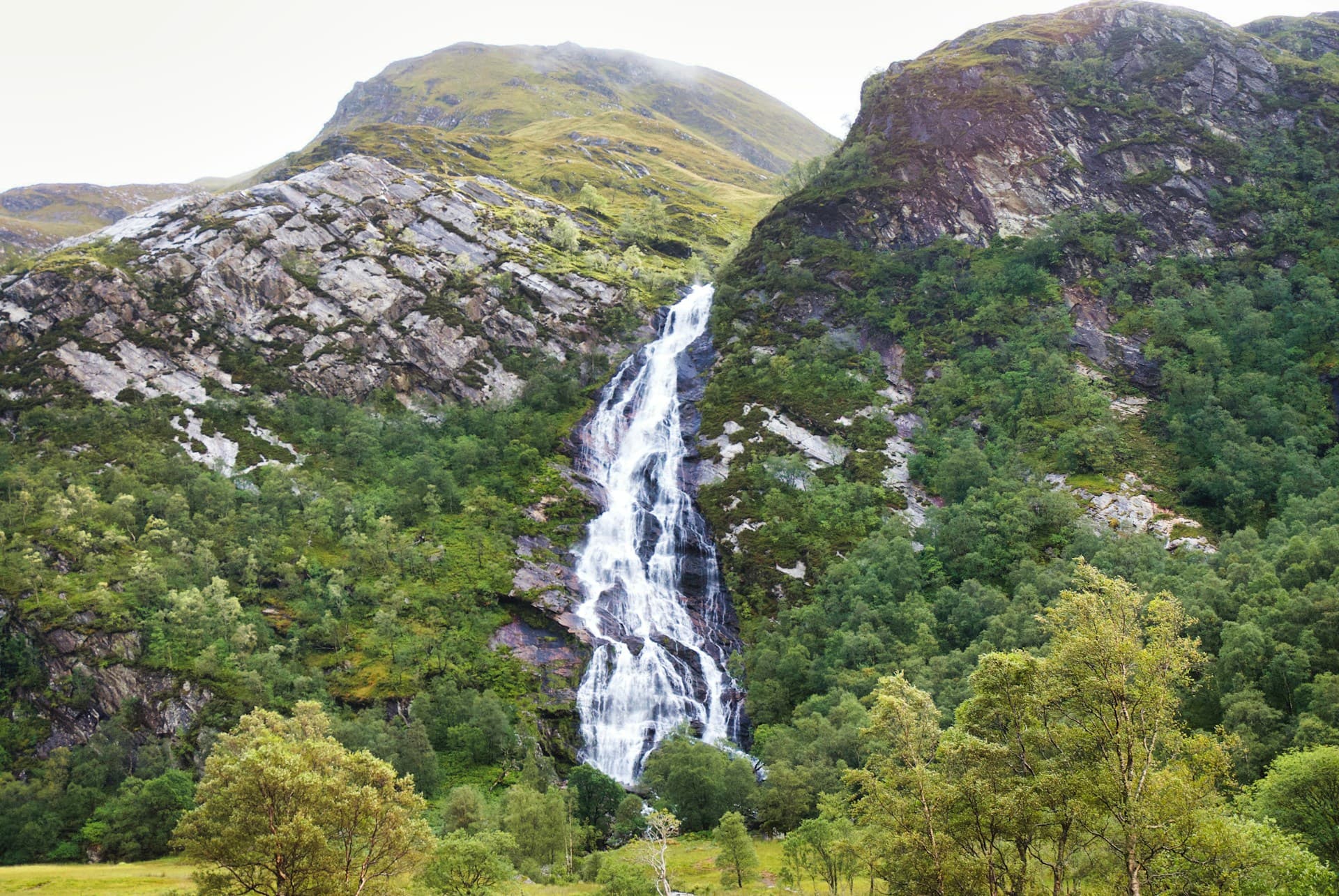
Deep within Glen Nevis, the Steall Waterfall plunges roughly 120 metres into a glacial cirque. It's reached via a striking gorge path, followed by a cable bridge spanning the River Nevis.
Steall Waterfall stands at the head of Glen Nevis, a few kilometres south-east of Fort William. At approximately 120 metres high, it ranks among Écosse's most impressive falls. The route follows a spectacular gorge path alongside the River Nevis, hemmed between sheer rock walls and dense forest. The site draws hikers and wild-landscape enthusiasts from across the Highlands.
Key Information at a Glance
- Access: paid car park at the end of Glen Nevis road (Polldubh / Upper Glen Nevis car park).
- Duration: allow 2 to 3 hours return for the hike.
- Entry: trail access is free; car park is paid.
- Footwear: waterproof hiking boots essential — the path is boggy and slippery.
- Accessibility: trail is not wheelchair-accessible (uneven terrain, rocky sections).
What You'll See
The path first crosses the Nevis Gorge: a narrow defile where the river churns between moss-covered rocks. Beyond the gorge, the valley opens suddenly onto a vast glacial cirque — An Steall Meadows. The waterfall appears ahead, plunging in three strands from the heights of Sgùrr a' Mhàim. A three-wire cable bridge spans the river for closer approach.
History and Context
Glen Nevis is a valley carved by Quaternary glaciers. The cirque at the waterfall's base, An Steall, exemplifies a classic hanging valley: the tributary glacier sat higher than the main valley, creating a permanent cascade when it retreated. The Gaelic name An Steall simply means "the water jet".
Highlights of Your Visit
The Nevis Gorge
The first kilometre of the trail runs alongside the river through an impressive rocky corridor. Safety cables are fixed in places along the rock face. Vegetation — ferns, birch, moss — creates a primeval forest atmosphere.
The Cable Bridge
Three taut cables strung above the River Nevis form the only passage to the waterfall. Crossing demands balance and a measure of courage. It's inadvisable during spate conditions or icing.
The Waterfall Itself
From the meadow, the fall drops like a white veil down the dark rock face. After heavy rain, the flow triples and the roar echoes from the cirque entrance. In winter, it may partially freeze.
Photography Tips
Morning light strikes the cascade directly from the east. Late afternoon casts the rock wall in shadow. After rain, flow is at its peak — ideal for long exposures. From the cable bridge, a slightly upward angle isolates the fall against the sky. Bring an ND filter or lightweight tripod.
Location and Access
The waterfall lies in Glen Nevis, approximately 3 kilometres on foot from the Upper Glen Nevis car park, itself reachable from Fort William via Glen Nevis road (roughly 10 km). Fort William is connected to Glasgow and Edinburgh by train (West Highland Line). No public transport to the upper car park: a car or taxi from Fort William is necessary.
Nearby: Ben Nevis, whose classic path departs from the same Glen Nevis area.
Nearby Attractions
- Ben Nevis — the highest peak in the British Isles, accessible from Glen Nevis.
- Glencoe — iconic glacial valley in the Highlands, roughly 30 km to the south.
- Fort William — the departure town, with museums, shops and rail connections.
- Glenfinnan Viaduct — famous railway structure, approximately 25 km to the west.
Frequently asked questions
Flow is most dramatic in autumn and winter, following heavy rainfall. Spring offers fresh vegetation and longer daylight. In summer, the path is busier but conditions are drier.
It's rated moderate. The gorge contains narrow, slippery rocky passages. Elevation gain is modest, but waterproof hiking boots are essential.
In dry conditions and outside spate periods, most hikers can cross safely. During frost or high water, it becomes hazardous and should be avoided.
Both trails start in Glen Nevis, but are separate hikes. Combining them in one day demands significant fitness and is suited only to experienced walkers.
No known restrictions. The site is open countryside and photography is permitted. Drones are subject to current UK regulations for natural areas.
Interested in this visit?
We can include it in your personalised itinerary.