The Isle of Skye
The Isle of Skye
Winding roads, jagged Cuillins, cliffs plunging into the sea: the Isle of Skye concentrates Scotland's most striking landscapes. Here's your essential guide.
Bordered by the Cuillins, the Isle of Skye is the largest and most northerly of the Inner Hebrides archipelago in Écosse. A true concentration of spectacular scenery, wild coastlines and iconic geological formations, this island is undoubtedly one of Scotland's most beautiful destinations. Set your sights on the Isle of Skye, an essential stop on any Scottish road trip, promising beauty and wonder.
History of the Isle of Skye
In certain areas of the Isle of Skye, traces of hunters dating back to the Mesolithic era have been discovered. Several remains testifying to the presence of Pictish, Broch and Dun peoples are visible on the island today.
The Celtic Period
The earliest known mention of the Isle of Skye appears in Ptolemy's "Geography". The island was thus known by the name "Sketis". It was positioned geographically, though erroneously, between Caithness and Norway.
The first written accounts of Skye emerged in the 6th century with Saint Columba, an Irish monk. He visited Skye around the year 585. Indeed, two islets on the island continue to bear the name "Eileann Chalium Chille" (meaning "Island of Saint Columba" in Scottish Gaelic). One borders the shores of Loch Snizort and the other, located at Penifiler near Portree.
Norwegian Dominion
The period before the 9th century was marked by Norwegian domination of the Hebrides. These islands were then called Suðreyar, or the southern islands, in Old Norse. The Norwegian dominion of the Hebrides became official in 1098, when Edgar I of Scotland recognised the sovereignty of Magnus III of Norway.
During the first Viking raids, some of the conquerors settled throughout the Hebrides. They formed the Gall-Gaels, a civilization born from the blending of Nordic and Gaelic peoples. Skye is referenced in the sagas.
Skye thus became an integral part of the Kingdom of the Hebrides, uniting Man and the Hebrides. Despite the Scottish origin of the rulers, the kingdom, with its Celto-Norman culture, remained tied to the Viking sphere.
Scottish Dominion
In 1262, the Scottish occupation of Skye took place, prompting the King of Norway, Håkon IV, towards the end of 1263, to sail to Scotland to settle the matter. He set sail for Scotland with an invasion army comprising 200 ships and 15,000 men.
The Norwegian fleet faced storms near the Scottish coast. Moreover, 40 ships had to be transported overland to Loch Lomond. Upon his arrival at Kirkwall, Håkon, exhausted and ill, the Norwegian king spent the winter in the palace of Bishop Heinrkr, planning to resume his journey the following summer. However, upon his death, which occurred before the end of the journey, his plans came to naught.
His son Magnus VI of Norway succeeded him. For the latter, peace with the Scots was essential in order to preserve Norwegian possessions on the islands in the Irish Sea and west of Scotland. From 1438 onwards, the Isle of Skye was occupied by the Lords of the Isles.
The Isle of Skye Today
The Isle of Skye, connected to Scotland's north-west coast by a bridge and part of the Highland Council area, is bordered to the south by the Sea of the Hebrides, to the west by The Little Minch and to the north by The Minch.
With an area of 1,736 km², Skye is Scotland's second largest island, just after the Isle of Lewis and Harris. The south-west coastline of the island consists of a succession of peninsulas.
The island is particularly renowned for its picturesque fishing villages, wild landscapes and medieval fortresses. Today it remains one of the last bastions of the Gaelic language, spoken by 58% of the population.
Considered the largest island of the Inner Hebrides archipelago, it boasts a jagged coastline punctuated by narrow lochs and peninsulas. To find a place to stay for a few days on the island, head to its capital, Portree.
Exploring Skye: the most famous island of the Inner Hebrides
The Isle of Skye is utterly enchanting, with its winding roads, graceful peaks and waterfalls with deep reflections. This extremely popular island unfolds varied landscapes, dominated by moorland and peatbogs covering vast plains. Sometimes these give way to vertiginous rocky summits. At the foot of small rolling mountains nestle lochs and glens in watercolour hues. Heather is found on the hillsides, along the lochs and roadsides.
The North of the Isle of Skye
Portree
Portree, the capital of the Isle of Skye, is a picturesque harbour village characterised by colourful dwellings lining the waterfront. It's an excellent stopping point and place to rest, as you'll easily find restaurants, cafés, seafront pubs, accommodation and supermarkets. Boat excursions are also organised from the harbour for those wishing to observe the abundant local marine wildlife.
Sligachan Bridge
The starting point for an excursion to the Cuillins massif, Sligachan stone bridge is a mythical spot on Skye. It's an essential passage when heading north towards Portree. Sligachan Old Bridge is a highly photogenic location, with the magnificent Cuillin Hills as a backdrop. Near the bridge, there is ample parking, a pub and picnic tables.
Old Man of Storr
The Old Man of Storr is an iconic location on the island. This is a 50-metre-high rock standing vertically on the Trotternish ridge, in the north of the island. This pinnacle can be seen from several spots across Skye.
Quiraing
Quiraing and its heather-covered peaks, rocky formations and peatbogs in the north of the island, are equally worth a visit. The magnificent viewpoint is accessible via a small single-track road hugging the coast, leading to a large car park. The location is particularly photogenic at dawn and late afternoon, when the low light reflects off the landscape.
Staffin
Also in Skye's north, Staffin and its lovely cove are perfect for relaxation. At the edge of Staffin village, follow the path leading to a small bay ringed by cliffs. Within Staffin village, visit the "Staffin Fossil Museum". This museum, housed in a stone cottage, features a fine collection of fossils and dinosaur footprints.
In the South of the Isle of Skye
The Fairy Pools
One of the most beautiful places in the southern part of the Isle of Skye is The Fairy Pools. This consists of magnificent waterfalls cascading down from the Cuillins mountain range.
Armadale Castle
Also in the south of the Isle of Skye, taking the ferry to Mallaig, plan a stop at Armadale Castle, which belongs to Clan Donald. Learn more about the history and traditions of Clan Donald, as well as the Lordship of the Isles. Don't hesitate to wander through the gardens and paths surrounding the castle. With a bit of luck, you might encounter local wildlife (golden eagles, deer, etc).
In the west of the Isle of Skye stands the Neist Point lighthouse, surrounded by cliffs. Neist Point, with its postcard-perfect setting, is an excellent spot for observing dolphins and whales. The Neist Point cliffs, given the remote nature of the site, are quite difficult to access. The only road leading there is a single-track road stretching several kilometres. At the end of the road, you'll arrive at a small car park. Just above the car park is an access point leading** to a magnificent viewpoint over the bay, cliffs and lighthouse standing at the tip of the headland.
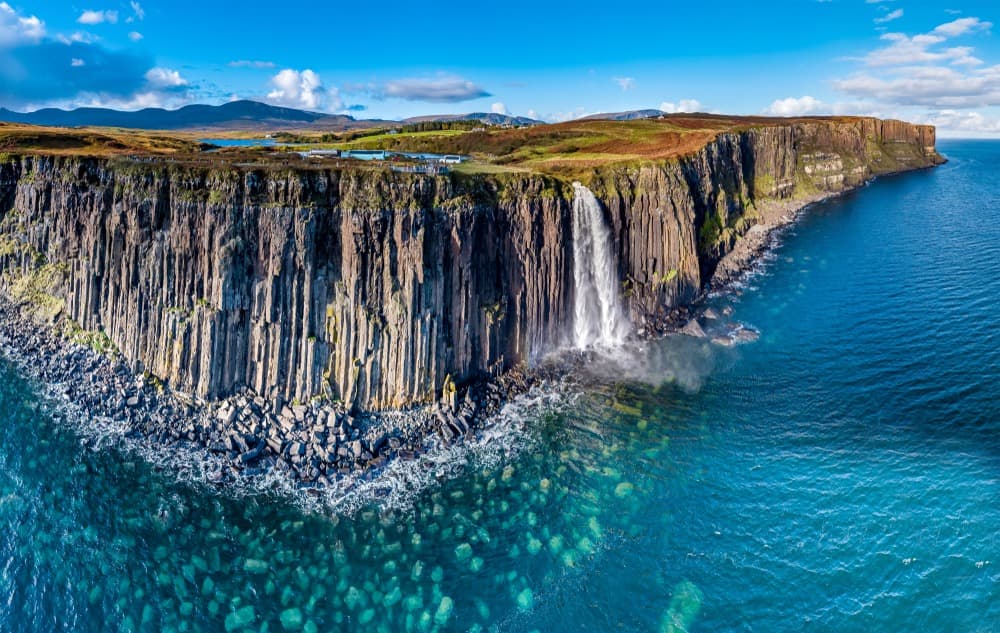
On Skye's north-east coast, 8 km from Old Man of Storr, the Lealt Falls are probably the most beautiful waterfalls in the UK. Visiting in the morning is recommended, as at that time of day, the waterfall is beautifully illuminated by daylight.
The Talisker Distillery
If you've explored the natural sites and wish to discover other highlights of the island, a visit to the Talisker Distillery is highly recommended. It's the only one on the island. This distillery is located near the town of Carbost, on Skye's western coastline. The visit will include tastings and anecdotes about the history of this local spirit.
Dunvegan Castle
The Isle of Skye is also home to several sublime castles worth discovering, such as Dunvegan Castle, built on the shores of Loch Dunvegan. This castle and its magnificent gardens are must-sees on the Isle of Skye. Inside the building, you can see a collection of paintings belonging to the MacLeod clan and the famous Fairy Flag, a flag said to possess magical powers! Boat excursions are also organised from the fortress, notably to observe seals.
Skye Museum of Island Life
For cultural activities, the Skye Museum of Island Life is worth visiting. Located in the north of the island, in the small town of Kilmuir, this museum tells the story of the Isle of Skye's inhabitants from a century ago (furniture and tools). It also houses several thatched Scottish cottages dating from the 19th and 20th centuries.
Climate
The dual influence of the Gulf Stream and the Atlantic Ocean creates a mild oceanic climate. Frost is less frequent than in the rest of Scotland. Annual rainfall averages 1,500 to 2,000 mm. Wind is frequent. The Trotternish and Waternish peninsulas are particularly exposed. By contrast, Sleat in the south is somewhat sheltered.
The Isle of Skye is accessible by car, ferry and bus.
By Car
The easiest access is via the Kyle of Lochalsh bridge. From Glasgow take the A82, then the A87.
- The drive takes 4 hours 15 minutes from Glasgow (without stops). It takes you through the Glencoe region.
- From Edinburgh, the journey takes 4 hours 30 minutes (without stops).
- From Inverness, the journey takes 2 hours (without stops).
This is only the travel time to the bridge. After that, to reach Skye, particularly Portree, allow 1 hour of driving.
By Ferry
- Between Mallaig (at the end of the Road to the Isles) and Armadale. Allow 30 minutes travel time.
- Between the Outer Hebrides islands (Harris and North Uist) and Uig. Allow 2 hours travel time.
By Bus
There are direct coach services from Glasgow, Inverness or Edinburgh to Portree.
Once in Portree, take buses circulating within the island.
- Direct service connecting Glasgow to Portree (routes 915 and 916). Journey time is 6 hours 30 minutes.
- Direct service connecting Inverness to Portree (route 917). Journey time is 3 hours 20 minutes.
- From Edinburgh, take route 900 to Glasgow. Then take one of the connecting services.
Attractions in The Isle of Skye
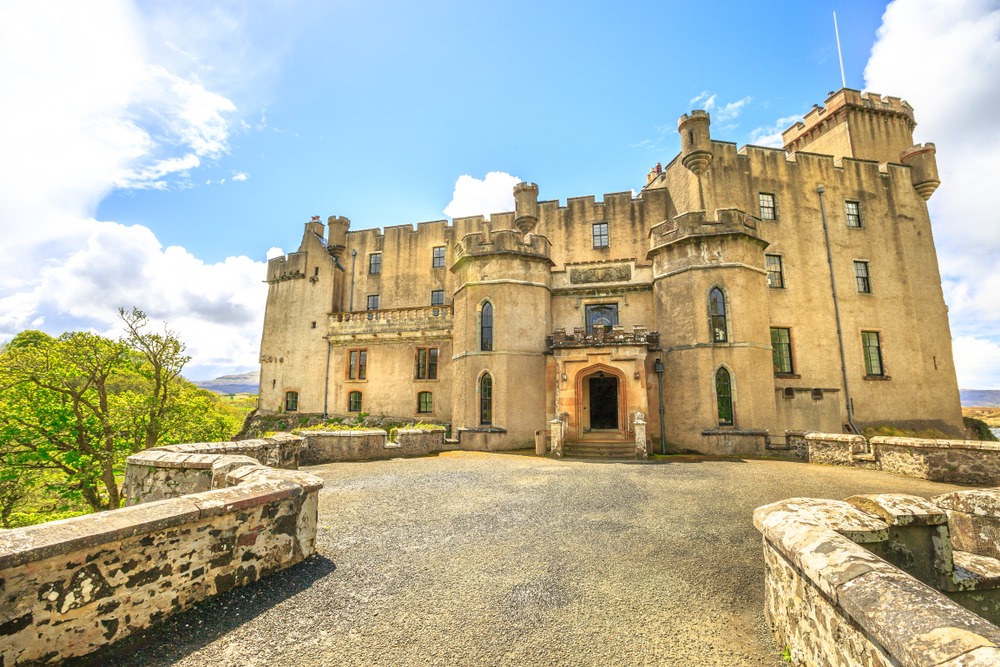
Le château et les jardins de Dunvegan
Au nord-ouest de l'île de Skye, le château de Dunvegan domine le loch du même nom depuis plus de huit siècles. Demeure des chefs du clan MacLeod, c'est la plus ancienne forteresse occupée
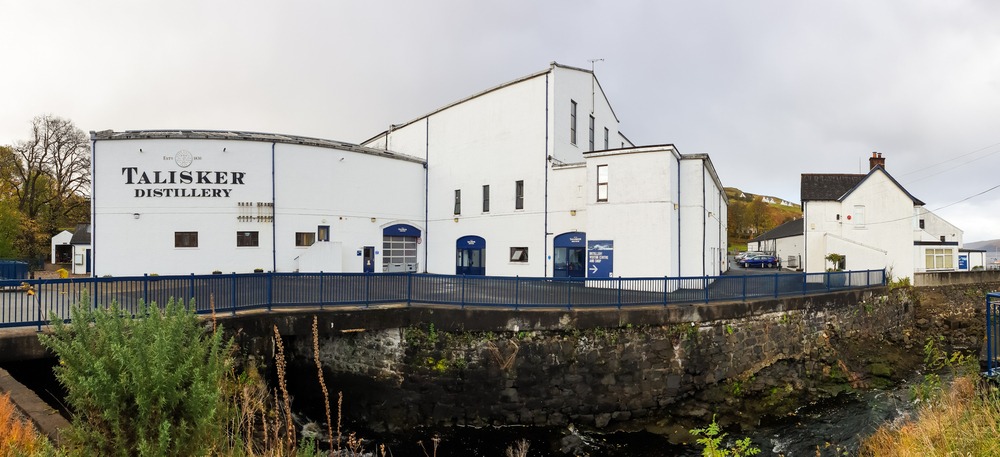
Distillerie Talisker
Sur la péninsule de Minginish, à l'ouest de l'île de Skye, la distillerie Talisker produit du single malt depuis 1830. C'est la plus ancienne distillerie de l'île et l'une des plus emblématiques
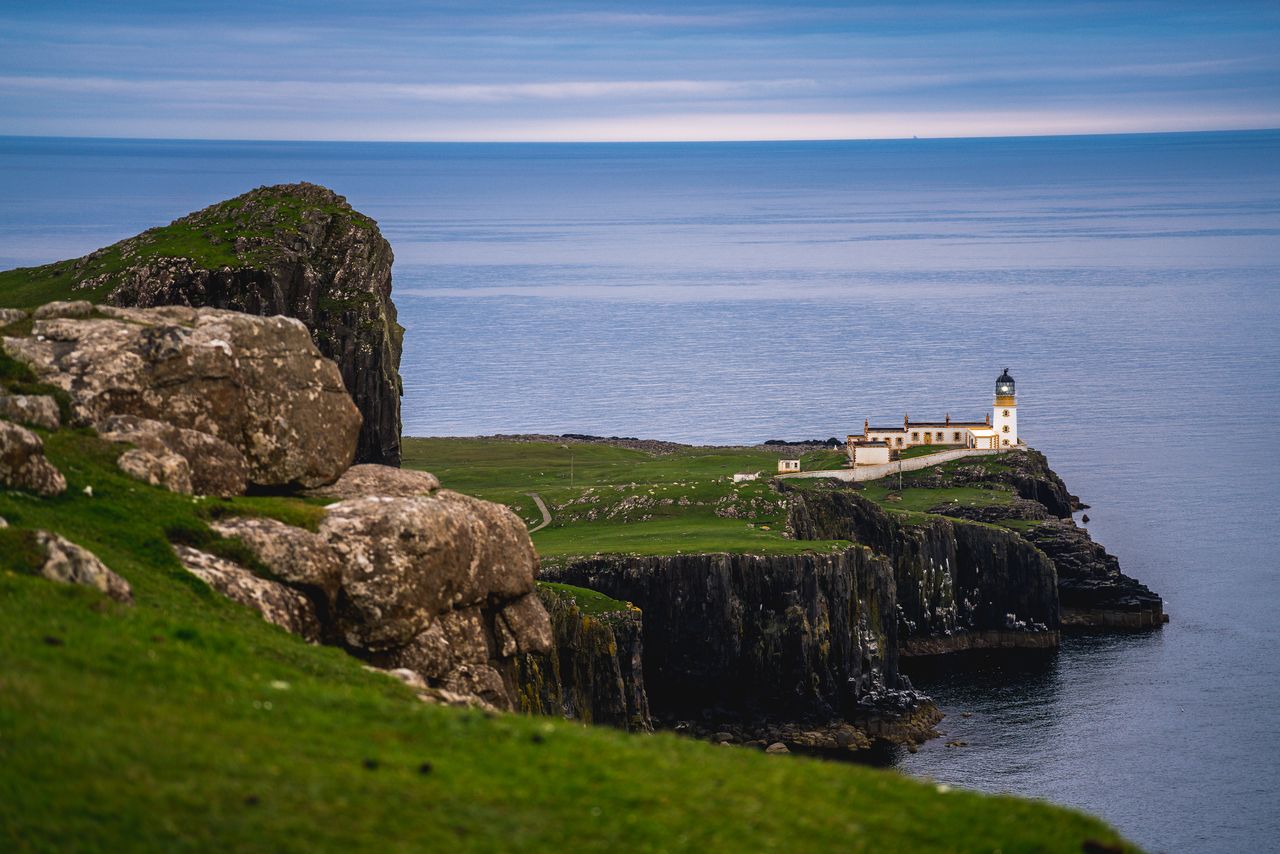
Neist Point
Neist Point est le promontoire le plus occidental de l'île de Skye, dans les Hébrides intérieures écossaises. Une longue crête rocheuse plonge vers un phare blanc posé au bord des falaises
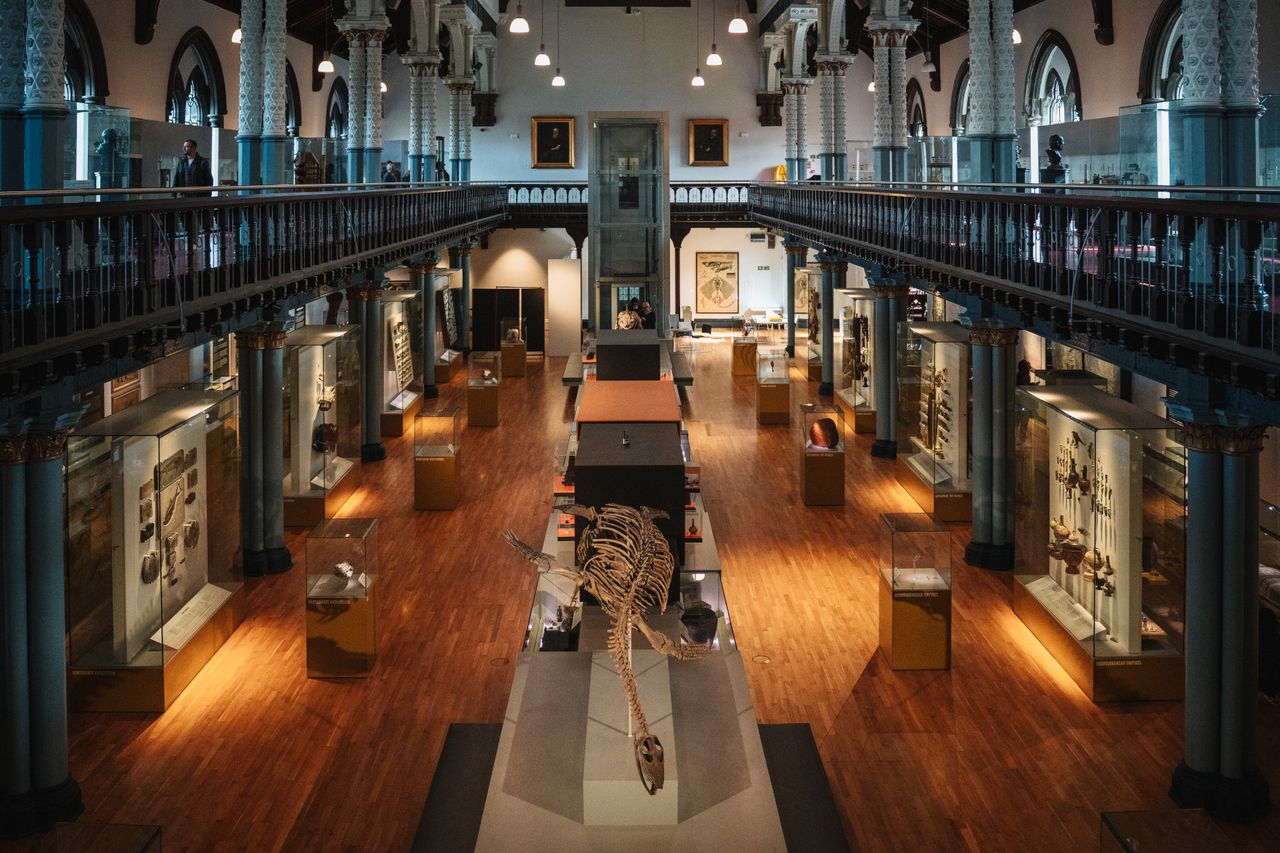
Staffin Dinosaur Museum
Au nord de l'île de Skye, le village de Staffin abrite un petit musée consacré aux fossiles de dinosaures découverts sur les plages et falaises locales.
Want to discover this destination?
Our local advisors design your tailor-made trip.