Cairngorms National Park
Cairngorms National Park
The largest national park in the United Kingdom spans 4,500 km² of arctic plateaus, Caledonian pine forests and heather moorland in the Scottish Highlands. Reindeer, golden eagles and northern lights are all on the agenda.
Cairngorms National Park stretches across more than 4,500 km² in the Scottish Highlands, between Aviemore and Braemar. It is the largest national park in the United Kingdom. It is home to Britain's most extensive arctic-alpine plateau, ancient Caledonian pine forests, and five of Scotland's six highest peaks. Hikers, birdwatchers and wilderness enthusiasts will find rare wild territory in western Europe.
Practical information at a glance
- Entrance : free and unrestricted access to the park (some car parks charge)
- Access : Aviemore is served by train from Inverness and Edinburgh; buses connect park villages
- Recommended duration : minimum 2 to 3 days to explore several zones
- Clothing : mountain equipment mandatory at altitude — changeable weather year-round
- Accessibility : some marked trails and visitor centres are accessible; the high plateau is not
What you'll see
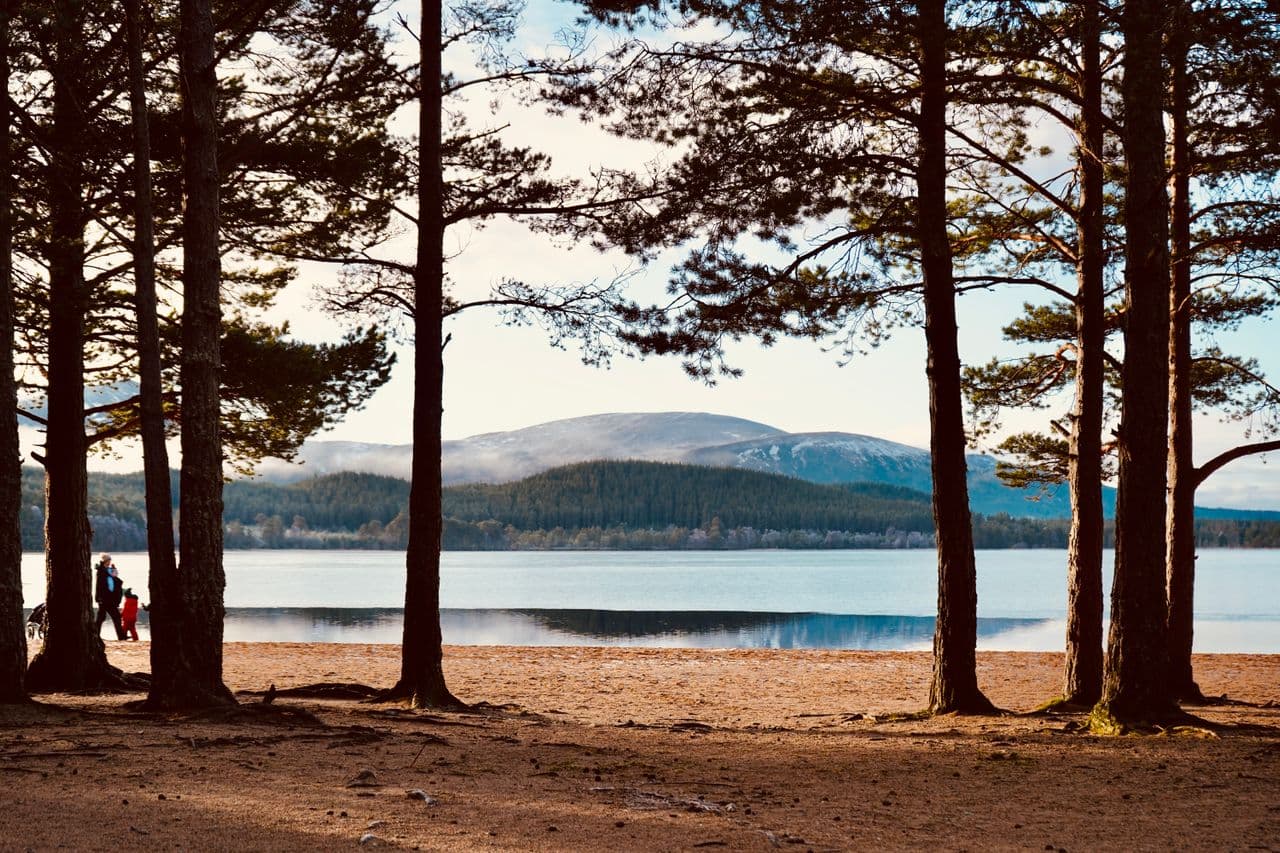
The park divides into several distinct zones. The Cairngorms massif proper peaks at Ben Macdui (1,309 m), Scotland's second highest summit. Rothiemurchus Forest preserves Scots pines centuries old. The Dee Valley crosses the southern slope, bordered by heather moorland. Loch Morlich, at the foot of Cairngorm Mountain's ski slopes, offers a surprising fine-sand beach at this latitude.
History and context
The Cairngorms have been inhabited since the Mesolithic. Scottish clans practised transhumant farming there until the 19th century. The region has been linked to the British royal family since Victoria and Albert acquired Balmoral in 1852. The national park was established in 2003, Scotland's second after Loch Lomond. Its designation strengthened protection of Caledonian habitats and emblematic species.
Highlights of your visit
The Cairngorms plateau
Above 1,000 m, the landscape becomes arctic: mosses, lichens, snow persisting sometimes until June. The Cairngorm Mountain funicular rises to 1,085 m and grants access to the plateau effortlessly. In fine weather, views extend to the Moray Firth.
Rothiemurchus Forest
One of Scotland's largest Caledonian pine forests. Here you may spot red squirrels, Scottish crossbills and, with luck, capercaillie. Marked trails depart from Inverdruie, near Aviemore.
The Dee Valley and Braemar
The park's southern slope is gentler terrain. Braemar hosts Scotland's most celebrated Highland Games each September, traditionally attended by the royal family. Braemar Castle, a 17th-century watchtower, is open to visitors.
Wildlife watching
The park harbours 25% of the UK's threatened species. Semi-wild reindeer from Cairngorm Reindeer Centre, golden eagles, otters on the Spey, and snowy owls in winter are among possible sightings.
Photography tips
Golden light in late afternoon on heather moorland is optimal in August–September, when heather blooms. For reflections on Loch Morlich, favour early morning. At altitude, conditions shift fast: protect your gear. Northern lights are visible from the park on clear winter nights, far from any light pollution.
Location and access
The park spans Highland, Moray, Aberdeenshire and Perth & Kinross regions. Aviemore is the main entrance point, approximately 45 minutes by train from Inverness. The A9 traverses the park north to south. Seasonal shuttles connect Aviemore to principal sites. For remote zones, a car remains essential. The Cairngorm Mountain funicular departs from Coire Cas car park, a few kilometres from Aviemore.
Nearby attractions
- Balmoral Castle — summer residence of the British royal family, open to the public for part of the year.
- Loch an Eilein — forest lake with a medieval island castle, accessible on foot from Rothiemurchus.
- Dalwhinnie Distillery — one of Scotland's highest distilleries, at the park's southern edge.
- Inverness — capital of the Highlands, convenient starting point for reaching the park from the north.
Frequently asked questions
Each season has its merits. Summer (June–August) offers the longest days and access to all trails. September is ideal for blooming heather and the autumn rut. Winter permits skiing and northern lights viewing, but high-altitude conditions can be hazardous.
For valley trails, walking shoes suffice. At altitude, full mountaineering kit is essential: waterproof clothing, insulating layers, map and compass. Weather can turn in minutes, even in summer.
Yes. Inverness, roughly 45 minutes north of Aviemore, is the classic starting point for Loch Ness. Both sites combine easily over a 4–5 day Highlands trip.
Photography is unrestricted in the park's natural spaces. Inside private castles and museums (Balmoral, Braemar Castle), restrictions may apply — check on site.
Yes. Cairngorm Reindeer Centre, near Aviemore, offers guided visits to the UK's only semi-wild reindeer herd. The animals roam freely on the massif's slopes.
Aviemore and its immediate surroundings (Rothiemurchus, Cairngorm Mountain) are accessible by train and bus from Inverness or Edinburgh. For remote zones like Braemar or the Dee Valley, a car is strongly recommended.
Interested in this visit?
We can include it in your personalised itinerary.