Urquhart Castle
Urquhart Castle
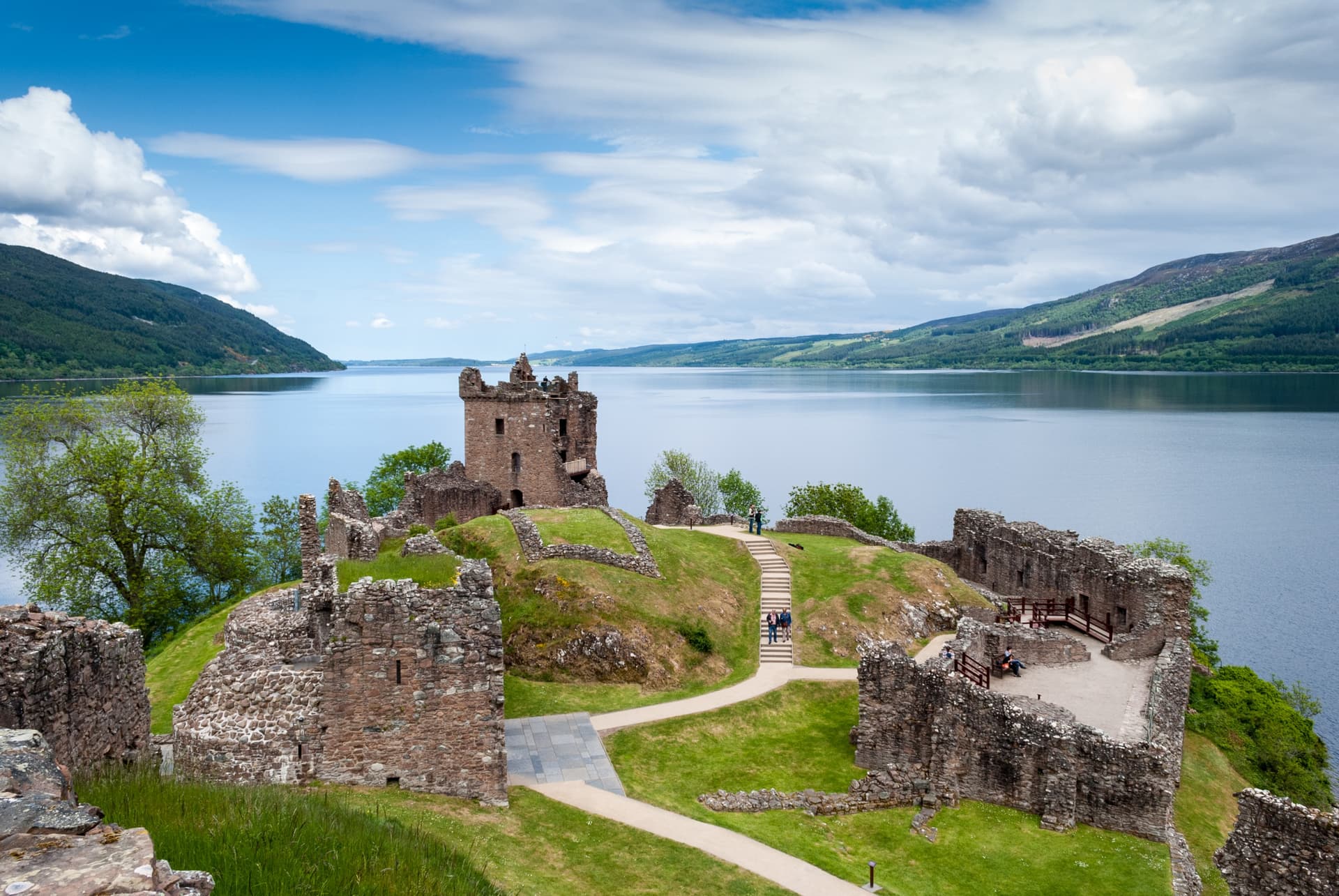
Perched on a promontory of Loch Ness, the ruins of Urquhart tell five centuries of Scottish history, from the Picts to conflicts between Clan MacDonald and the Crown.
On the western shore of Loch Ness, roughly twenty kilometres south-west of Inverness, the ruins of Urquhart Castle command the water from a rocky promontory. The site, occupied since Pictish times, preserves traces of five centuries of medieval occupation and offers one of the broadest vantage points over the loch.
Why visit Urquhart Castle
- A panoramic view across Loch Ness from the ramparts and tower.
- Exceptional historical layering: Pictish occupation, 13th-century medieval castle, fortified stronghold reworked in the 14th–15th centuries, abandonment in the late 17th century.
- A partially preserved tower that can be explored across multiple levels.
- A visitor centre above the site, with introductory film and a collection of archaeological objects from the excavations.
- A logical stopping point on the Inverness – Fort Augustus – Fort William route, along the Great Glen.
Castle History
The site's occupation predates the arrival of Saint Columba in Scotland in the 6th century. The Life of Columba, a biography written in the 7th century by Adomnán, Abbot of Iona, mentions a dwelling belonging to a Pictish nobleman on the promontory. Artefacts consistent with this occupation have been uncovered during excavations, though no formal evidence of a Pictish fort has been established.
Around 1230, King Alexander II suppressed a revolt in Moray and entrusted the region to his son-in-law Alan Durward, who commissioned the castle's construction. Upon Alan Durward's death without heir in 1275, the site passed to the Comyn family. It was taken by the English in 1296, reclaimed by the Scots in 1303 then lost again the same year, before coming under Robert Bruce's control in 1306.
From 1395 onwards, the castle was converted into a true medieval fortress: a fortified gatehouse and tower were added to the north. For 150 years, it stood at the heart of conflicts between the Lords of the Isles, of Clan MacDonald, and the Scottish Crown. From 1545 onwards, its defensive function waned: the tower was transformed into a laird's residence.
Around 1600, the castle was gradually abandoned in favour of more comfortable dwellings. The last garrison departed in 1692. Materials were subsequently salvaged by local inhabitants: some 10 tonnes of lead from the roofs were notably reused in neighbouring cottages and farm buildings.
What to See on the Site
The entrance and fortified gatehouse
Access is from the west, via a sloping meadow that descends towards the loch. A drawbridge precedes the gate, flanked by two round towers. These towers housed guards, a prison cell and the drawbridge mechanisms.
The Upper Bailey
To the right after the entrance extends the upper bailey, the castle's oldest and highest section. Most of the archaeological finds were discovered here. Several foundations are visible: the foundation known as "M" corresponds to a forge, and a circular foundation is likely that of a stone dovecot. The function of the other buildings remains undetermined.
The Water Gate and Lower Bailey
Facing Loch Ness, the water gate marks the transition between the upper bailey and the lower bailey, situated below the main entrance.
The Tower (Grant Tower)
This is the site's best-preserved section, having been in use longest. The massive foundations date to the 14th century; the upper storeys were rebuilt after 1509. The tower is protected by a small ditch and access was via the first floor, which housed a large hall. The two upper levels contained residential rooms, including the lord's chamber. The uppermost floor, of a military nature, comprised guardrooms and dormitories.
Practical Information
- Management: site managed by Historic Environment Scotland.
- Duration of visit: allow 1h30 to 2h30 including the visitor centre and introductory film.
- Admission: paid entry, reduced rates for children and seniors, free for Historic Scotland and English Heritage members. Online booking recommended during peak season.
- Accessibility: the visitor centre and certain viewpoints are accessible; the site itself features numerous slopes, stairs and uneven ground.
- On site: shop, café with loch views, car park.
When to Visit
The castle is open year-round with extended hours in summer (until early evening in July–August) and reduced hours in winter. May–June and September offer a good compromise: long days, favourable light over the loch and fewer crowds than high summer. July–August is the busiest period, with a continuous flow of tour coaches between 11am and 4pm; it's better to aim for opening time or late afternoon. In winter, the wind-battered ruins and low skies create a distinctly different atmosphere, but you should be prepared with warm clothing.
How to Get There
- From Inverness: Scottish Citylink bus 919 drops visitors at the castle car park stop, approximately 35 minutes' journey.
- From Fort William: same line 919 departing from the bus station, with stops at Spean Bridge, Invergarry, Fort Augustus and Invermoriston before Urquhart.
- By car: via the A82 that runs along the western shore of Loch Ness, with on-site car park.
- By boat: several cruises from Inverness or Fort Augustus combine loch navigation and a castle stop.
Nearby
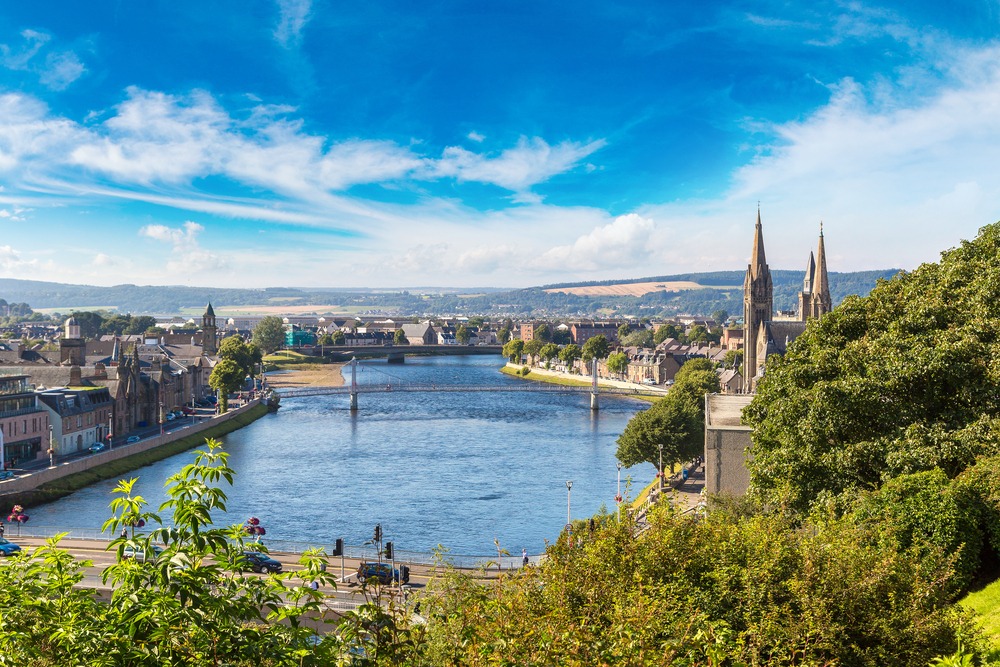
- Inverness, capital of the Highlands, the natural starting point for the region and the Great Glen.
- The village of Drumnadrochit, 3 km away, home to two exhibition centres dedicated to Nessie and Loch Ness.
- Fort Augustus, at the southern end of the loch, and its Caledonian Canal lock flight.
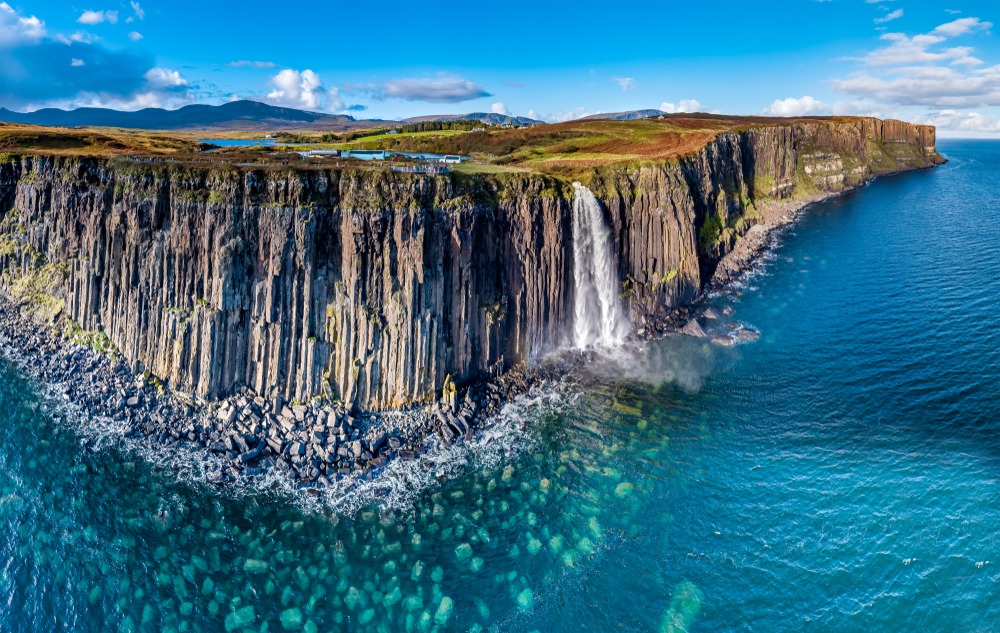
- On the Isle of Skye, Dunvegan Castle and gardens, another medieval fortress still inhabited.
Frequently Asked Questions
Frequently asked questions
Allow 1h30 to 2h30 including the visitor centre, introductory film and a wander through the ruins. In peak season, add extra time for queuing.
Online booking via the Historic Environment Scotland website is recommended in July and August, when the site may be full for certain time slots.
Yes, it's one of the site's highlights: the castle stands on a promontory jutting into the loch, with frontal views from the tower and water gate.
Yes, Scottish Citylink bus 919 serves the castle car park directly from Inverness in approximately 35 minutes.
Yes, the site suits family visits well: open spaces, a tower to explore, a reconstructed trebuchet in the courtyard. Be mindful, however, of stairs and unprotected edges on some ramparts.
Including Urquhart in Your Journey
The castle fits naturally into a Highlands itinerary combining Inverness, Loch Ness, the Great Glen and the Isle of Skye. To build a bespoke trip including this stop, explore our Scottish journeys.
Interested in this visit?
We can include it in your personalised itinerary.