Scottish Highlands
Scottish Highlands
Glacial mountains, deep lochs and endless moorlands: the Scottish Highlands offer some of Europe's wildest landscapes, where clan history and spectacular coastal roads tell stories of a fierce, resilient land.
The Highlands occupy the north and west of Écosse: a territory of mountains, lochs and wind-swept moorlands. Here, landscapes transform at every bend in the road. Ruined castles, fishing villages, snow-capped summits in winter and golden light in summer compose a region both wild and inhabited, shaped by centuries of clan feuds, conflict and emigration.
Key Information at a Glance
- Getting there: Inverness is the main gateway, accessible by train from Edinburgh and Glasgow, and served by Inverness Airport.
- Car hire recommended: essential for exploring secondary roads and isolated sites; driving on the left.
- Suggested duration: 5 to 10 days minimum to cover the main routes (NC500, Glencoe, Skye).
- Best time to visit: May–September for daylight and accessibility; October for autumn colours; winter for snow but mountain roads sometimes closed.
- Midges: biting insects present June to August in damp areas — bring insect repellent.
- Accessibility: limited on mountain trails; some sites (Urquhart Castle, Glencoe Visitor Centre) have facilities.
What You'll See
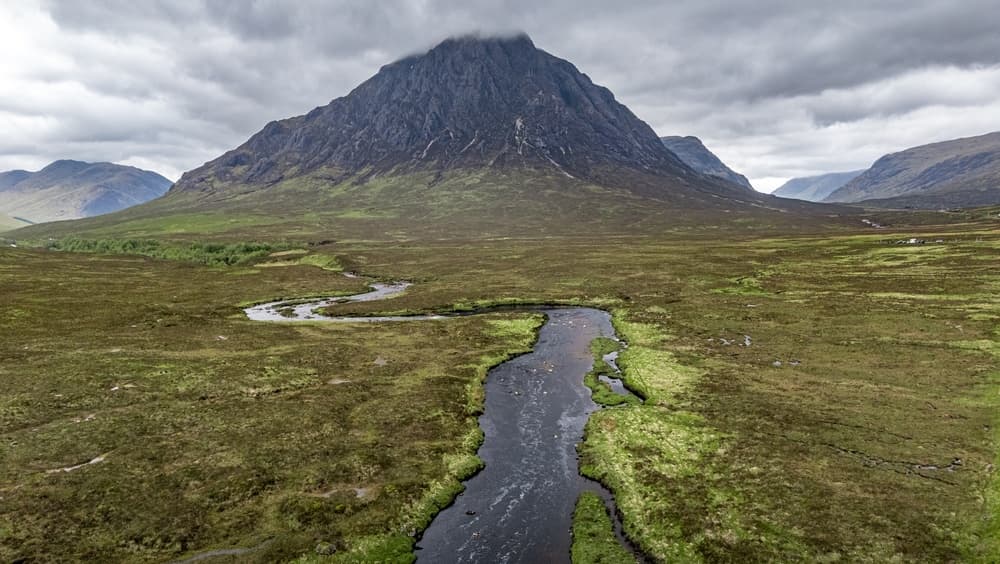
The Highlands offer landscape diversity concentrated over relatively compact terrain. Glen Coe, a glacial valley with sheer walls, contrasts with the flat expanses of Rannoch Moor. Loch Ness, stretching nearly 37 km, runs alongside coniferous forests and medieval ruins. Further north, the Wester Ross coast reveals white sand beaches bordered by turquoise waters, surprising at these latitudes.
History and Context
The Highlands were the theatre of 18th-century Jacobite wars, culminating in the Battle of Culloden in 1746 — the last large-scale battle fought on British soil. The defeat of the Jacobite clans led to the Highland Clearances: tens of thousands of Gaelic-speaking peasants were evicted from their lands between the late 18th and 19th centuries to make way for sheep farming. This history still profoundly marks local identity and the region's sparse demography.
Highlights of Your Visit
Glen Coe
This glacial valley ranks among Écosse's most photographed sites. The Three Sisters — three rocky spurs — dominate the valley floor. The Glencoe Visitor Centre (National Trust for Scotland) recounts the 1692 massacre. Several marked trails depart from the valley car park.
The North Coast 500
This circular driving route of approximately 500 miles starts from Inverness and hugs the northern and western coasts of the Highlands. It passes through Torridon, Applecross, Durness and John o'Groats. The road is passable by car, motorcycle or bicycle, with stops at B&Bs or campsites.
Loch Ness and Urquhart Castle
Loch Ness runs along the Great Glen geological fault line. The ruins of Urquhart Castle, perched on a promontory, command direct views over the loch. The site is managed by Historic Environment Scotland and has a visitor centre.
Ben Nevis
Located near Fort William, Ben Nevis reaches 1,345 m — the highest peak in the British Isles. The ascent via the Mountain Track (formerly Tourist Track) typically takes a full day. Mountain equipment mandatory; weather unpredictable.
The Isle of Skye
Connected to the mainland by a bridge from Kyleakin, Skye concentrates spectacular geological formations: the Quiraing, the Old Man of Storr, the Fairy Pools. The village of Portree is the island's main logistical base.
Photography Tips
Highland light is changeable and often dramatic. Golden hours — early morning and late afternoon — reveal the textures of moorlands and lochs. In summer, the sun sets late (after 10 p.m. in June), offering prolonged side-lighting. Glen Coe photographs best in cloudy conditions, which emphasise the valley's dark character. Avoid high-season weekends at well-known spots (Old Man of Storr, Fairy Pools) to keep crowds out of frame.
Location and Access
The Highlands cover roughly the northern half of Écosse. Inverness is the main hub: trains from Edinburgh (around 3.5 hours) or Glasgow (around 3 hours). Fort William is accessible from Glasgow via the West Highland Line, one of Europe's most scenic railway routes. Driving remains the most flexible way to explore single-track secondary roads. Citylink buses connect major towns, but frequency is low in rural areas.
Nearby Attractions
- Isle of Skye — volcanic formations, distilleries and fishing villages, accessible via the Skye Bridge from Kyle of Lochalsh.
- Eilean Donan Castle — restored medieval castle at the confluence of three lochs, one of Écosse's most photographed castles.
- Culloden Battlefield — site of the last Jacobite battle (1746), with memorial and museum managed by the National Trust for Scotland.
- Glen Coe — glacial valley and site of the 1692 massacre, starting point for numerous hikes.
- Ben Nevis — highest peak in the British Isles, near Fort William.
Frequently asked questions
May and June offer good balance: long days, green vegetation, midges still scarce. July–August are the busiest months. September–October bring autumn colours and fewer crowds. Winter is possible but some mountain roads close due to snow.
Yes, in the vast majority of cases. Public transport covers main routes (Inverness, Fort William, Kyle of Lochalsh) but isolated sites — Applecross, Quiraing, Torridon — are only accessible by car or bike. Single-track roads require care.
Budget at least 5 days to cover Inverness, Glen Coe and Skye. For the complete North Coast 500, allow 7 to 10 days depending on your pace. Distances are deceptive: winding roads slow travel considerably.
June–August, in damp and wooded areas, midges can be prolific, especially morning and evening in calm weather. Effective insect repellent and a face net are recommended if camping or hiking under these conditions.
Yes, this is the classic itinerary. Edinburgh sits about 3.5 hours by train from Inverness. Many travellers spend 2–3 days in Edinburgh then head to the Highlands by car or train, stopping at Pitlochry or Aviemore.
Personal photography is generally permitted at outdoor sites (Culloden, Urquhart Castle, Glen Coe). Some museums and castle interiors may restrict photography — check signage on site.
Want to discover this destination?
Our local advisors design your tailor-made trip.