Stirling
Stirling
Perched on a volcanic crag at the heart of Scotland, Stirling brings together a royal castle, the Wallace Monument and battlefields that shaped the nation's identity. A city dense with history and sweeping vistas.
Stirling occupies a strategic crossroads between the Scottish Highlands and Lowlands. Perched on a volcanic outcrop, the town has been the stage for decisive battles that forged Scotland's identity. Its royal castle, medieval monuments and panoramic views over the Forth plain make it a destination rich in history and landscape.
Practical information at a glance
- Access: central railway station with direct connections from Edinburgh (~50 min) and Glasgow (~40 min).
- Suggested duration: a full day to cover the castle, old town and nearby monuments.
- What to wear: comfortable shoes essential — the cobbled streets of the old town are uneven.
- Accessibility: the town centre is partially accessible; the castle features sloped areas and stairs.
What to see
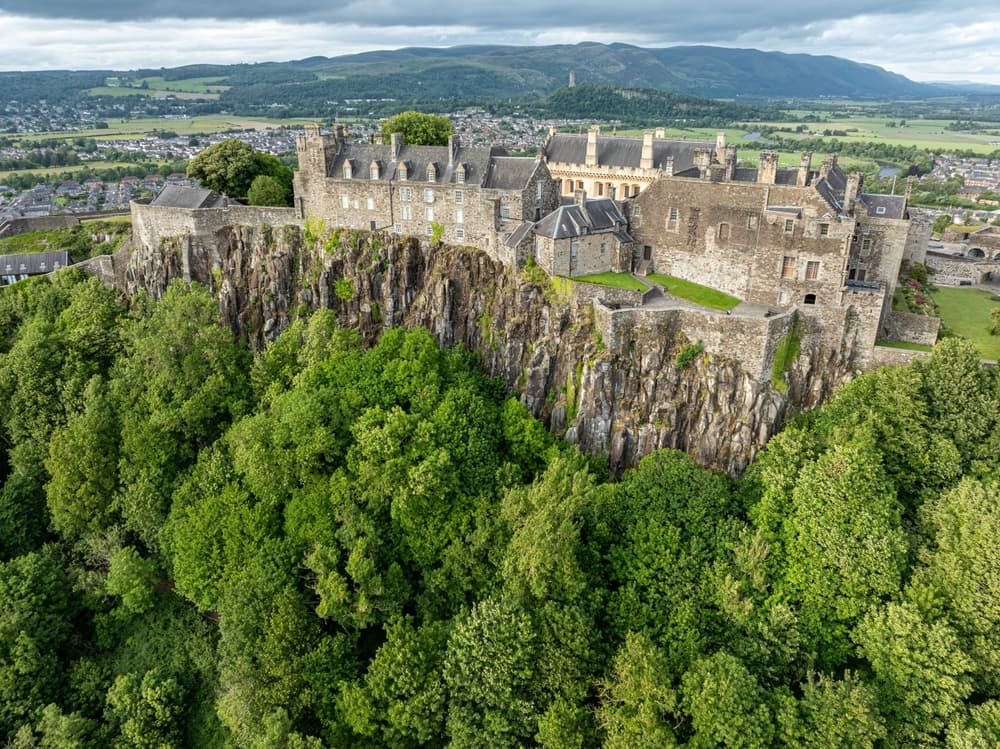
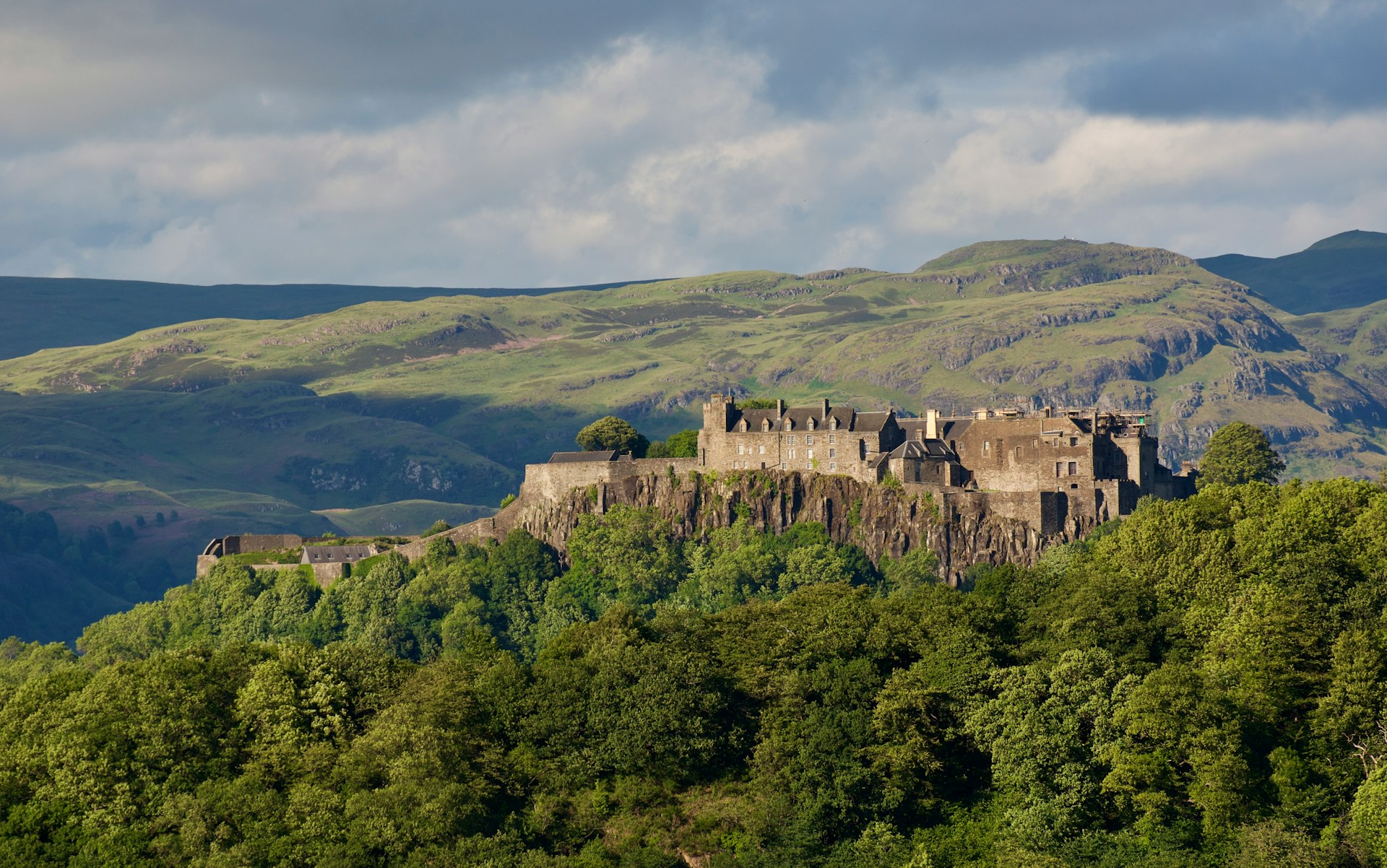
The castle of Stirling dominates the town from its volcanic crag. Inside, the restored Royal Palace showcases the apartments of Mary Queen of Scots and the celebrated sculpted medallions of the ceiling. Below lies the kirkyard of the Holy Rude and the old town, preserving medieval closes and turretted tenements. The Wallace Monument, a neo-Gothic tower visible across the plains, houses the two-handed sword attributed to William Wallace.
History and context
Stirling changed hands repeatedly between English and Scots during the Middle Ages. The Battle of Stirling Bridge (1297), where Wallace defeated the English army, and Bannockburn (1314), Robert Bruce's pivotal victory, took place in the immediate vicinity. The castle was a favoured residence of the Stuart kings: James IV commissioned the Great Hall, one of the finest examples of late medieval architecture in Scotland.
Highlights of your visit
Stirling Castle
The Royal Palace, restored in its vibrant original colours, commands attention. The Stirling Heads — oak medallions depicting the royal court — are displayed in the king's chamber. The Great Hall, with its timber roof and soaring windows, remains one of Scotland's largest covered medieval spaces.
The Wallace Monument
The 67-metre tower offers a 360° panorama across the Forth plain, the Highlands to the north and the castle. Three galleries trace Wallace's life and the history of medieval Scotland. Wallace's sword, over 1.60m long, is displayed on the first level.
Bannockburn battlefield
A few kilometres south, the site managed by the National Trust for Scotland offers an immersive augmented reality experience reconstructing the 1314 battle. The equestrian statue of Robert Bruce marks the centre of the site.
The old town and Argyll's Lodging
Argyll's Lodging, on Castle Wynd, is Scotland's best-preserved Renaissance townhouse. The closes climbing towards the castle — Broad Street, St John Street — concentrate crow-stepped gables and buildings spanning the 16th to 18th centuries.
Photography tips
Morning light illuminates the castle's eastern facade from the Holy Rude kirkyard. For the Wallace Monument, climb to the crown of the tower: the view over the Forth's meander with the castle as backdrop is breathtaking. Bannockburn battlefield offers compelling perspectives of the Bruce statue in late afternoon light.
Location and access
Stirling sits at the centre of Scotland, approximately 55 km north-east of Glasgow and 55 km north-west of Edinburgh. The station is a ten-minute walk from the historic centre. Local buses connect the station to the Wallace Monument and Bannockburn battlefield. The castle is reachable on foot from the station in roughly twenty minutes via the old town.
Nearby attractions
- Loch Lomond — Scotland's largest freshwater lake and gateway to the Highlands, less than an hour's drive away.
- Edinburgh — Scotland's capital, with its castle and UNESCO-listed old town, 50 minutes by train.
- Glasgow — cultural and architectural metropolis, 40 minutes by train.
- Doune Castle — 14th-century fortress and filming location, approximately 20 kilometres north-west.
- The Kelpies — monumental steel equestrian sculptures near Falkirk, some 30 kilometres to the east.
Frequently asked questions
Spring (April-May) and summer (June-August) offer the best weather and longest days. Autumn brings warm light across the Forth plain. Winter is cold and wet, but the town sees far fewer visitors.
During peak season (July-August), online booking is recommended to avoid queues. The castle is managed by Historic Environment Scotland.
Yes, rail connections are fast and frequent from both cities. A day is sufficient for the castle, Wallace Monument and old town, provided you start early.
The castle features sloped areas and stairs; some sections are accessible, others are not. The Wallace Monument has a spiral staircase that is not accessible. Check with the sites before your visit.
Personal photography is generally permitted in outdoor spaces and most rooms. Some exhibitions may restrict flash photography; check signage on site.
The site is about 3 km south of the centre. Local buses serve the area; walking from the station takes approximately 40 minutes. Parking is available on site by car.
Want to discover this destination?
Our local advisors design your tailor-made trip.