The 13 stages of Scotland's Unesco Trail
Scotland's Unesco Trail is an itinerary that allows you to discover the 13 UNESCO World Heritage Sites. This circuit can be traveled via three loops, departing from Glasgow, Inverness and Edinburgh…
The Unesco Trail of Scotland is an itinerary that allows you to discover the 13 UNESCO World Heritage Sites. This circuit can be traveled via three loops, departing from Glasgow, Inverness and Edinburgh… Follow us from the Scottish capital, for an unforgettable journey, through the country's most beautiful landscapes and spots!
1. Starting the Unesco Trail of Scotland from Edinburgh
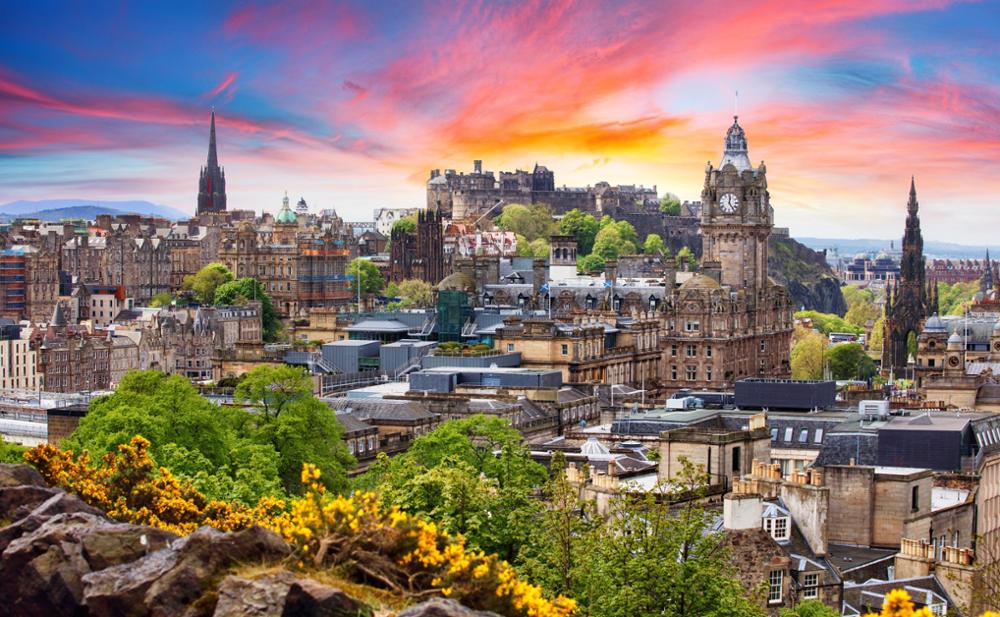
Considered one of the most beautiful cities in the world, the Scottish capital is an ideal stop to immerse yourself in the country's history. During this first halt, you can admire the medieval architecture of the Old Town and explore the famous Royal Mile - the main artery of the old city, connecting Edinburgh Castle to Holyrood Palace.
A tip? Let yourself wander through the small alleyways, lined with buildings and richly decorated facades. Then, head towards the New Town…
Built between 1767 and 1820 to accommodate its growing population, this neighborhood is airier and brighter than the Old Town. The new city displays Georgian architecture, known for its elegance and perfect symmetry. Both different and complementary, the Old and New towns have been listed by UNESCO since 1995.
2. The engineering feat of Forth Bridge
Located in the town of Queensferry, the Forth Bridge is one of the world's longest railway bridges! Inaugurated in 1890, it is still used daily in the 21st century, by both passenger trains and freight trains.
Stretching for 2.5 kilometers, the Forth Bridge connects the northeast and southeast of Scotland. It displays innovative aesthetics, considered by UNESCO as an "outstanding landmark in the evolution of bridge design and construction".
Listed as a World Heritage Site in 2005, this railway treasure is a major stop on the Unesco Trail… Visible from afar (weather permitting!), the "Scottish Golden Gate" can also be admired from two other bridges: on foot from the Forth Road Bridge and by car from the Queensferry Crossing.
3. The creativity of the city of Dundee
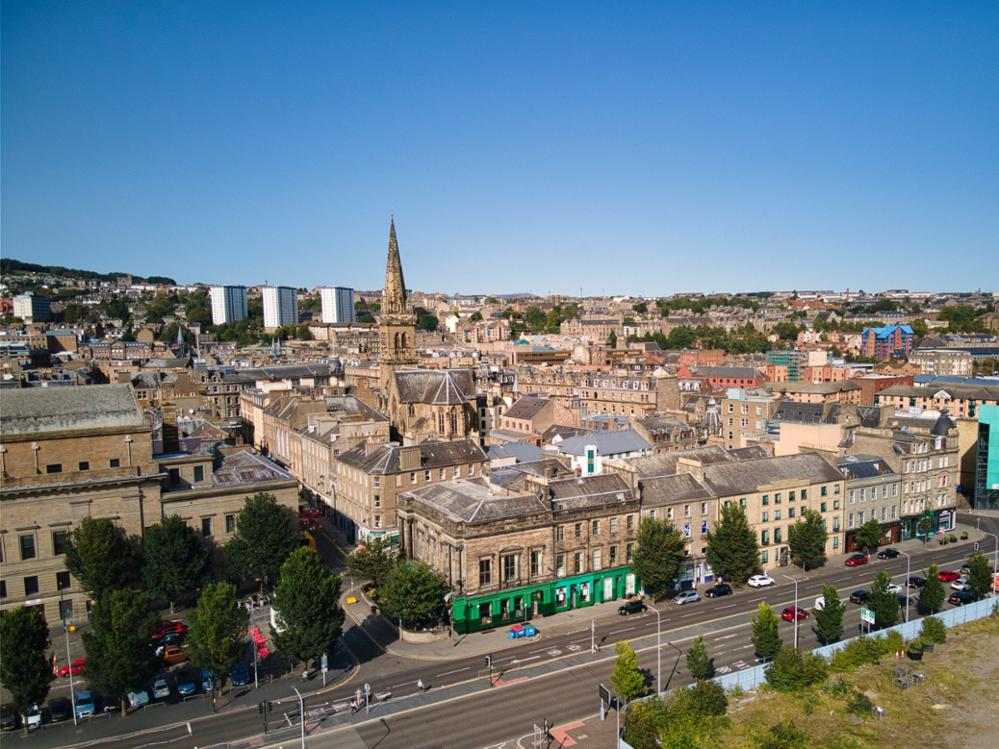
Once renowned for its textile industry, the city of Dundee is today known for its design and digital design (especially popular with Minecraft - the number one video game). Result? In 2014, the city was named City of Design by UNESCO!
But more than just a craft, design is a way of life in Dundee… It notably helps reduce social inequalities through collaborative projects around the arts or festival organization.
During your stopover, you'll be swept up by Dundee's bustling and creative atmosphere! As you stroll along the banks of the Tay, or through the heart of the city, you can admire its street art, galleries, and the prestigious Victoria & Albert Design Museum, recognizable by its contemporary architecture designed by Kengo Kuma.
4. The Neolithic remains of the Orkney Islands
15 km north of the Scottish coast, discover the prehistoric remains of the Orkney Islands… The archipelago is home to one of the most important Neolithic sites in Western Europe! It has been listed by UNESCO since 2008, under the name Heart of Neolithic Orkney.
The site includes numerous burial chambers and ritual stones, including the Ring of Brodgar (27 magnificent megaliths) and the Stenness Standing Stones, arranged 5,000 years before our era!
Discovering the prehistoric sites of the Orkney Islands also means exploring the mysterious Skara Brae Neolithic village (hidden under sand for centuries), and appreciating picturesque landscapes, caught between the North Sea and the Atlantic Ocean…
5. The Geopark of the Shetland Islands
After a ferry crossing from the Orkney Islands, head to the Shetland Islands! The archipelago is home to many remains, giving it a special aura… Very wild (only 15 islands are inhabited out of about a hundred islets), the Shetland Islands form a superb geopark, listed by UNESCO in 2015.
At the heart of these lands, you'll have the chance to witness unique geodiversity, made up of cliffs, volcanoes and various stone landscapes (granite, schists or gneiss).
Its curiosity? A trail through ancient seabeds! This superb ensemble also hosts small fjords, fine sandy beaches, and offers countless hiking trails (ideal for birdwatching).
6. The Geopark of the Northwest Highlands
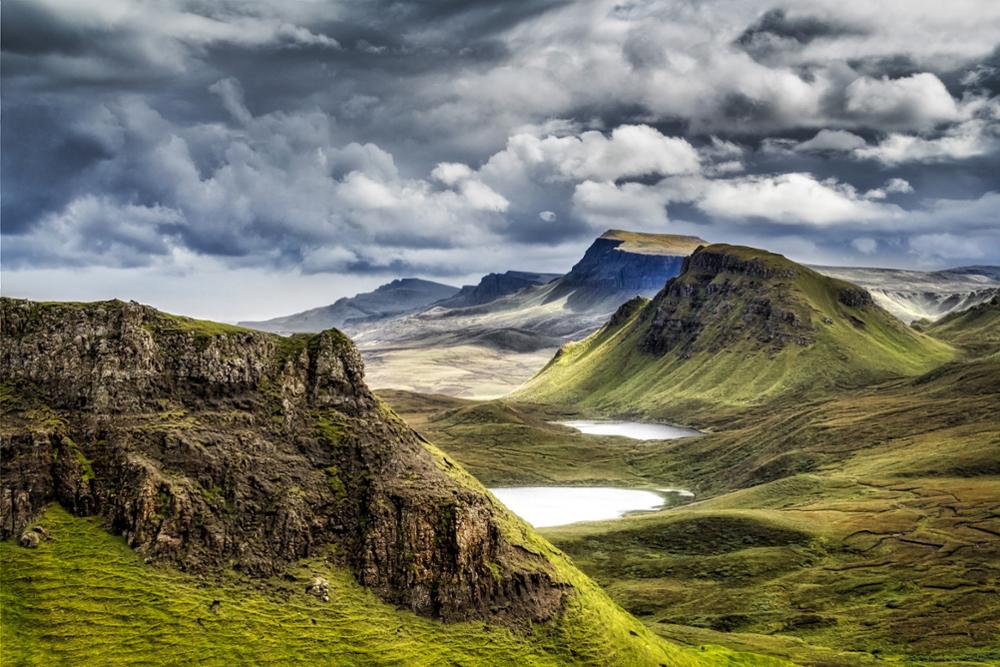
A second unmissable geopark? That of the Highlands! Located in the northwest of the region, it extends over more than 2,000 km². Listed in 2015, this part of Scotland is renowned for the beauty of its coastal and mountainous landscapes, as well as its geological richness. Much of its rock formations are among the oldest in Europe!
You'll also find inselbergs (small isolated reliefs topped with white rocks, named quartzite), marshy areas, coves, beaches and ancient glacial zones. The Highlands Geopark is also an opportunity to see many seabirds and seals.
7. The Wester Ross Biosphere Reserve
Listed by UNESCO in 1976, the Wester Ross Biosphere Reserve is another emblematic site in the northwest Highlands. Located near Ullapool (a small port town of barely 1,300 inhabitants), it offers spectacular landscapes where rich biodiversity flourishes…
The reserve is divided into several distinct zones. It is home to rocky peaks, valleys, pine forests and splendid lochs, such as Loch Maree (Scotland's 4th largest freshwater loch) or Loch Ewe (which served as a gathering point during World War II).
Wester Ross is also renowned for its local traditions and languages: approximately 8,000 people live at the heart of the biosphere reserve. Locals primarily derive their living from tourism, agriculture and fishing.
8. The St. Kilda Archipelago
St. Kilda is an archipelago located about a hundred kilometers off Scotland's west coast. Accessible by boat from Ullapool, it comprises five islands (Hirta, Dùn, Soay, Boreray and Levenish).
The archipelago has been listed by UNESCO since 1986, for its exceptional landscapes, historical heritage and unique traditional culture. Uninhabited since the 1930s, St. Kilda has managed to preserve its remains from prehistoric and medieval times…
Also renowned for its volcanic panoramas (its rocky walls, marine erosion, etc.), St. Kilda is home to one of Europe's highest cliffs, as well as numerous bird species - including rare or endangered birds, such as the Northern Gannet!
9. The music of Glasgow
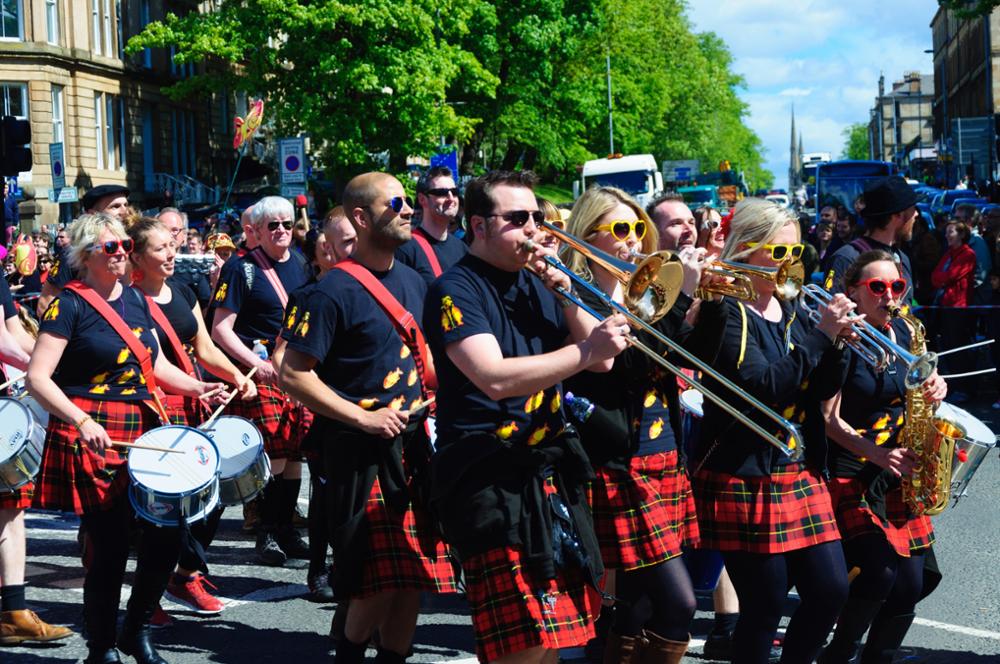
Glasgow is renowned worldwide for its music. In 2008, the city joined the UNESCO Creative Cities Network, which recognized it as "a major international musical center" where music is considered "both as a form of art and as a tool for education and social integration".
Glasgow also has the highest number of music students in the country…
Each week, numerous concerts are programmed - electronic, classical, pop, rock, world music, etc. An opportunity to discover emblematic venues in the city, such as the Royal Concert Hall, the OVO Hydro arena or a Scottish pub, where ceilidh bands (Scottish dance and music, conducive to conviviality) regularly perform.
10. Galloway and South Ayrshire
After the festive atmosphere of Glasgow, head to the Galloway and South Ayrshire Biosphere Reserve, for a breath of fresh air! Listed by UNESCO in 2012, this wild expanse of 5,268 km² features several wetland zones (listed as Ramsar sites).
The Alloway & Southern Ayrshire Biosphere is also home to the Cairnsmore of Fleet National Nature Reserve - an isolated mountain, renowned for its eclectic landscapes. It is also a wonderful playground for sports enthusiasts, with numerous outdoor activities (hiking, cycling, canoeing, etc.).
11. The town of New Lanark
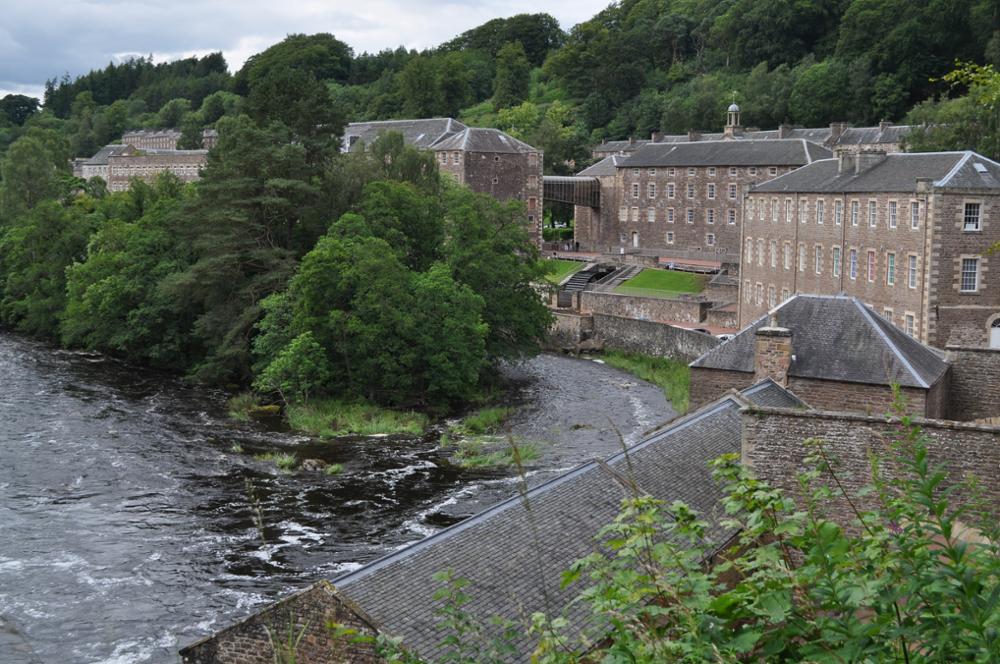
After an escape into nature, a change of scenery at New Lanark. Located on the banks of the Clyde (a major river in Scotland), this former 18th-century manufacturing village was once a jewel of the textile industry. Why? Soon after its founding in 1785, New Lanark was equipped with cotton mills - a spinning factory.
Through its industry, the village saw its population, infrastructure and architecture flourish. Today, the town testifies to this rich industrial past, thanks to its factories (which operated until 1968) and the New Lanark Conservation project, which has been working to preserve this historical heritage since 1975…
The town is forever associated with the name of Robert Owen, the village's founder (and its economic model), considered one of the founding fathers of British socialism.
The site was listed by UNESCO in 2001 for its high degree of authenticity. Indeed, the village has changed very little since its construction! During visits, audio commentaries recount the lives of certain inhabitants (available in several languages).
12. Antonine Wall
Stemming from the Roman Empire, the Antonine Wall is a fortified complex that extends over about sixty kilometers, between the towns of Bo'ness (to the east) and Old Kilpatrick (to the west). This architectural treasure can be admired from several viewpoints, particularly along the Forth & Clyde Canal.
Considered an ambitious engineering project, this wall formerly formed a frontier (consisting of 17 forts and thousands of soldiers, tasked with combating potential enemy intrusions).
The Antonine Wall is inscribed as a World Heritage Site as part of a larger ensemble (also comprising Hadrian's Wall and the Limes of Upper Germany and Raetia, another 550 km frontier). The best-preserved section of the Antonine Wall is located near Watling Lodge Fort, in the town of Falkirk.
13. Closing the Scotland Unesco Trail in the Scottish capital
To close the loop of the Unesco Trail through Scotland, return to the city of Edinburgh for a final stage. After discovering its history and architecture at the beginning of your journey, discover its literary heritage (inscribed in the UNESCO Creative Cities Network in 2004).
An inspiring city for many writers (including the authors of Sherlock Holmes and Jekyll and Hyde), Edinburgh is home to about fifty publishers, prestigious festivals and literary awards, which play an important economic and cultural role for the city.
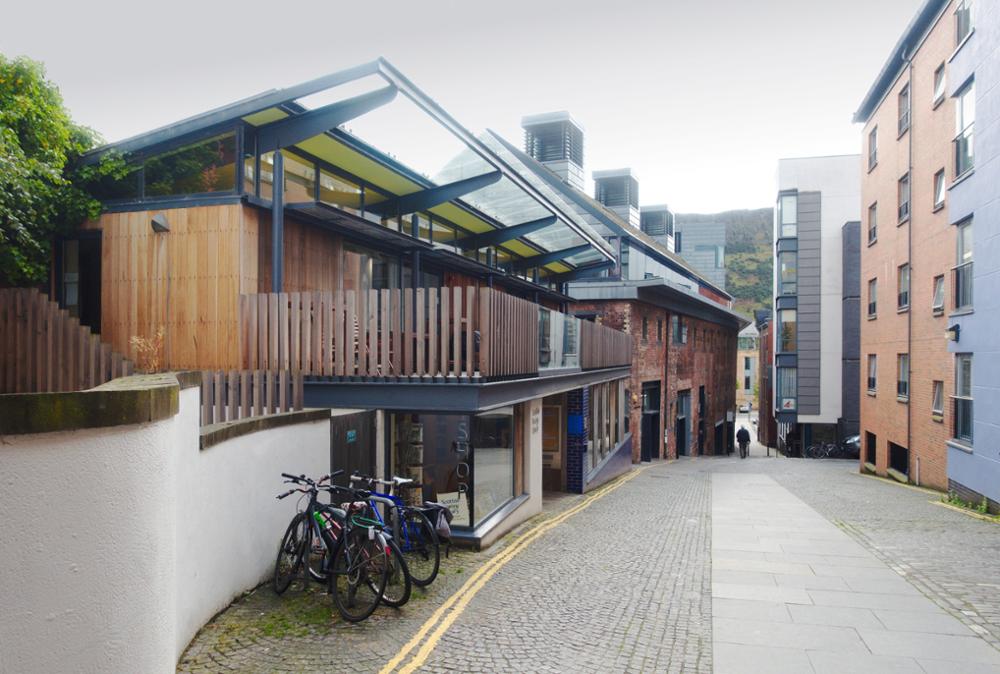
Among the must-see places? The Scottish Poetry Library - the only library in the world dedicated to poetry!
The two other loops of the Unesco Trail… There are two other loops to complete the Unesco Trail journey. - The itinerary starting from Glasgow: this loop begins with an exploration of the Galloway and South Ayrshire Biosphere Reserve. - The itinerary starting from Inverness: this circuit begins with the discovery of St. Kilda, then continues north to Scotland, towards the Orkney and Shetland Islands. |
Frequently asked questions
The ideal duration to cover the 13 stages of the Unesco Trail depends on your pace and starting point. Budget between 10 and 14 days minimum for a complete circuit from Edinburgh, including ferry crossings to the Orkney and Shetland Islands.
The ideal period is between May and September, when temperatures are milder and daylight is longer. Scottish summer (June-August) is particularly suited for island stages and hiking in the geoparks.
A rental car is the most flexible way to connect most stages. Ferries are essential to reach the Orkney, Shetland and St. Kilda islands. Scotland's railway network also allows you to connect major cities such as Edinburgh, Glasgow and Dundee.
Among the 13 sites, the Neolithic remains of the Orkney Islands, the St. Kilda archipelago, the Old Town of Edinburgh and the Forth Bridge are among the most spectacular and emblematic of the itinerary.
Scotland's Unesco Trail can be traveled via three loops starting from three different cities: Edinburgh, Glasgow or Inverness. Each loop offers a different order of visits to discover the 13 UNESCO World Heritage Sites.
Some stages are accessible by train or bus (Edinburgh, Glasgow, Dundee, New Lanark), but remote sites like St. Kilda, the Shetland Islands or the Highlands Geopark require a personal vehicle or specialized ferries.