Where to See Dolphins in Scotland? Our Practical Guide
Dream of seeing dolphins? You have an excellent chance of making that dream come true on a trip to Scotland.
Dream of seeing dolphins? You have an excellent chance of making that dream come true on a trip to Scotland. We share the best spots for dolphin watching in Scotland along with all our practical advice for seeing them in ideal conditions.
What dolphin species can be seen in Scotland?
Scottish waters are home to numerous dolphin species, whether resident or migratory. Among the dolphins that can be observed in Scotland, you'll find:
Bottlenose Dolphins (Tursiops truncatus)
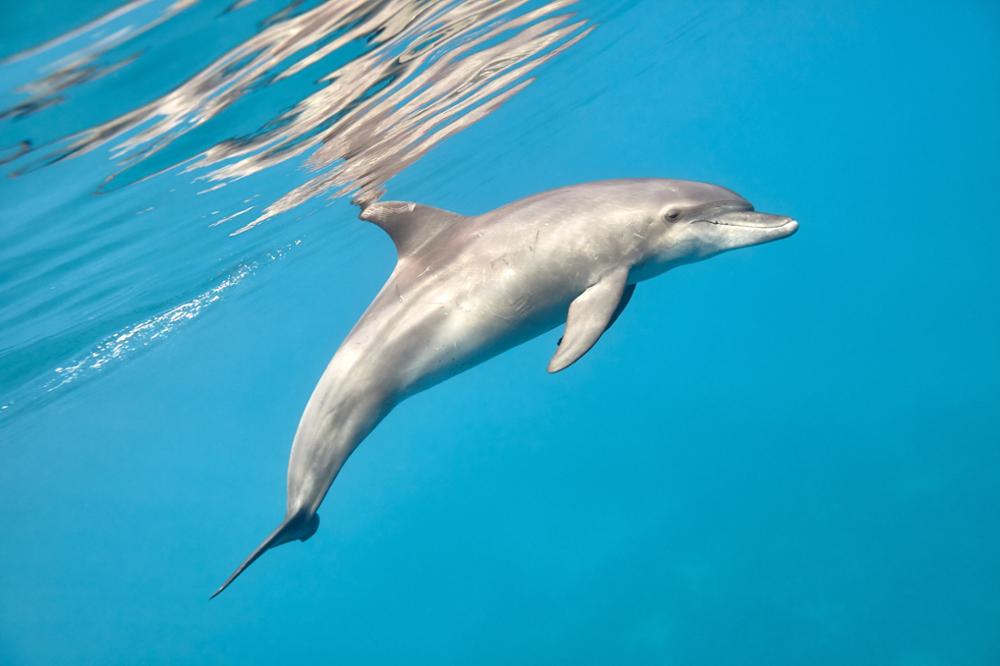
These are the dolphins you're most likely to see in Scotland. Reaching up to 3.9 metres in length, they are characterised by a dark grey back with lighter grey flanks and an almost white belly. They're often nicknamed "bottlenose dolphins". They're renowned for their playful nature and acrobatic leaps. You can see them year-round, but they're more easily spotted from shore during summer.
Common Dolphins (Delphinus delphis)
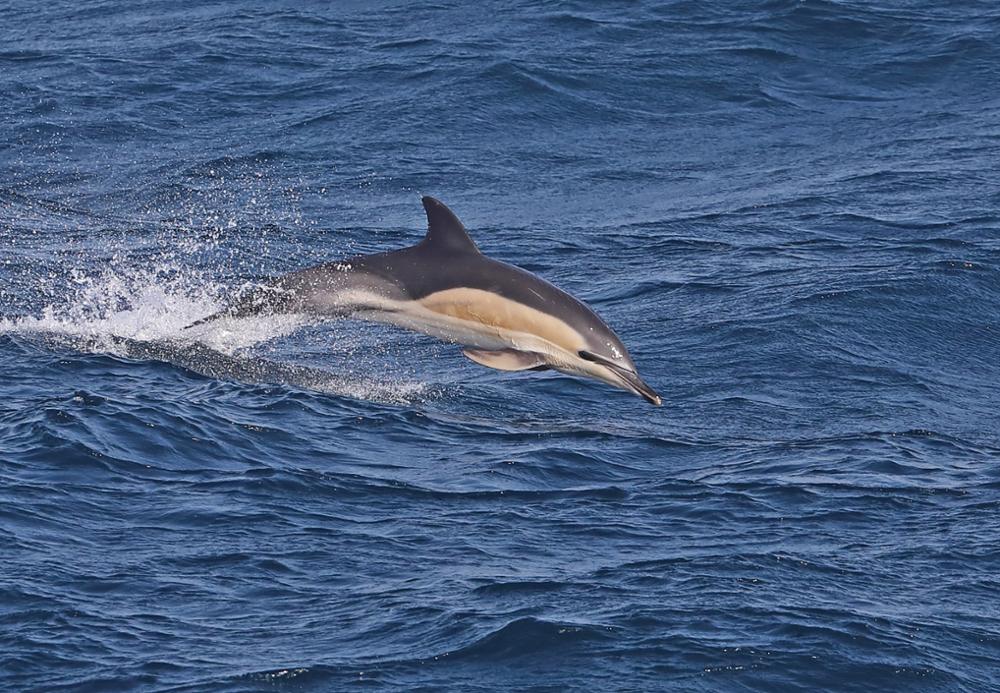
Common dolphins constitute the second most present dolphin species in Scottish waters. Measuring between 1.7 and 2.4 metres in length, they are smaller than their bottlenose cousins. They're recognised by their characteristic cream-coloured hourglass pattern on the flanks. They're excellent acrobats: you'll frequently see them leaping out of the water and surfing on the waves created by boats. You can observe them any month of the year, though they're more numerous between May and October, when food is more abundant.
Risso's Dolphins (Grampus griseus)
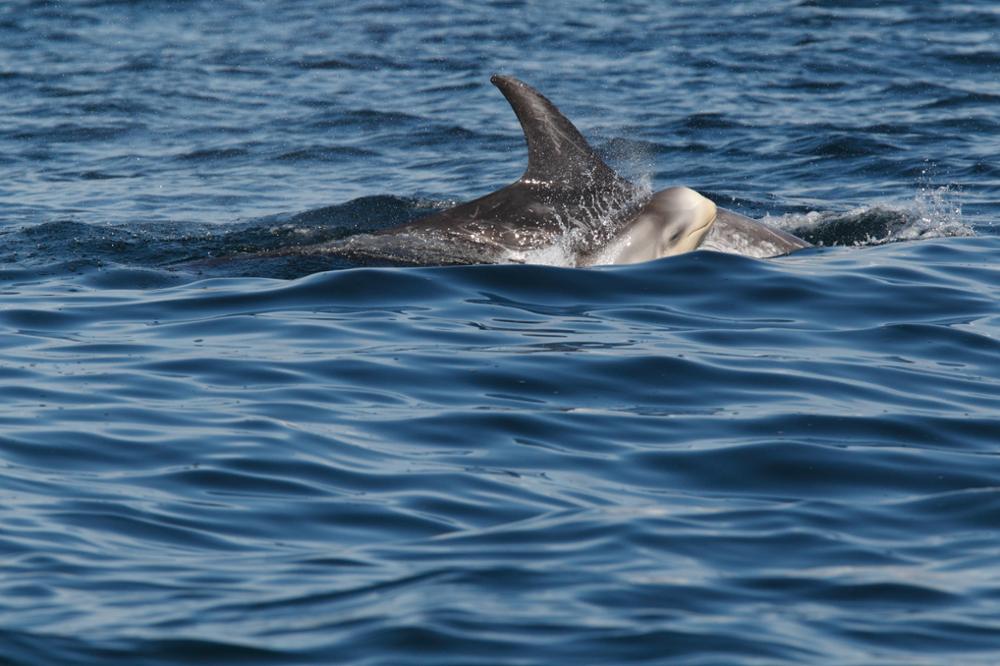
Risso's dolphins are characterised by a distinctive appearance: they have a stocky body with a large sickle-shaped dorsal fin. Their blunt, bulbous forehead is marked by a V-shaped crease. Adults can reach up to 3.8 metres in length. Unlike the previous species, Risso's dolphins inhabit deeper waters where they find their food (squid, octopus, cuttlefish...). It's therefore more difficult to see them from shore.
White-Beaked Dolphins (Lagenorhynchus albirostris)
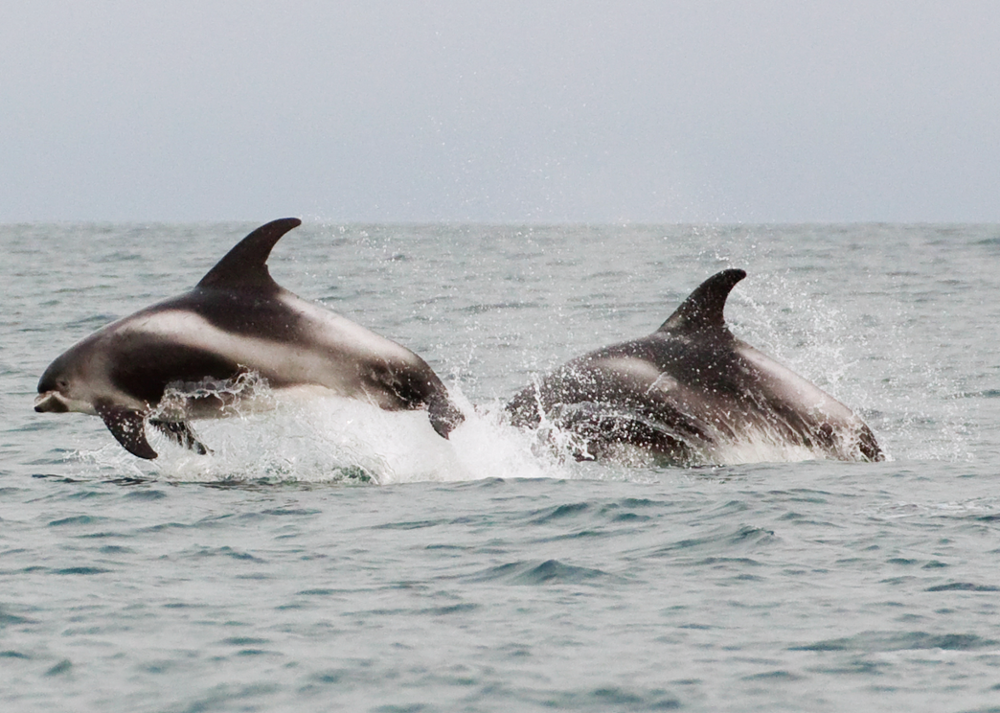
As their name suggests, white-beaked dolphins are recognised by their short, entirely white beak. They have dark grey tails, fins and a sickle-shaped dorsal fin, along with pale grey spots along the flanks and a pale grey patch behind the dorsal fin. They can reach 3.1 metres in length and are fast, powerful and acrobatic swimmers. Like Risso's dolphins, they prefer deeper waters to coastal areas. They can be seen notably around the Hebridean archipelago.
Atlantic White-Sided Dolphins (Lagenorhynchus acutus)
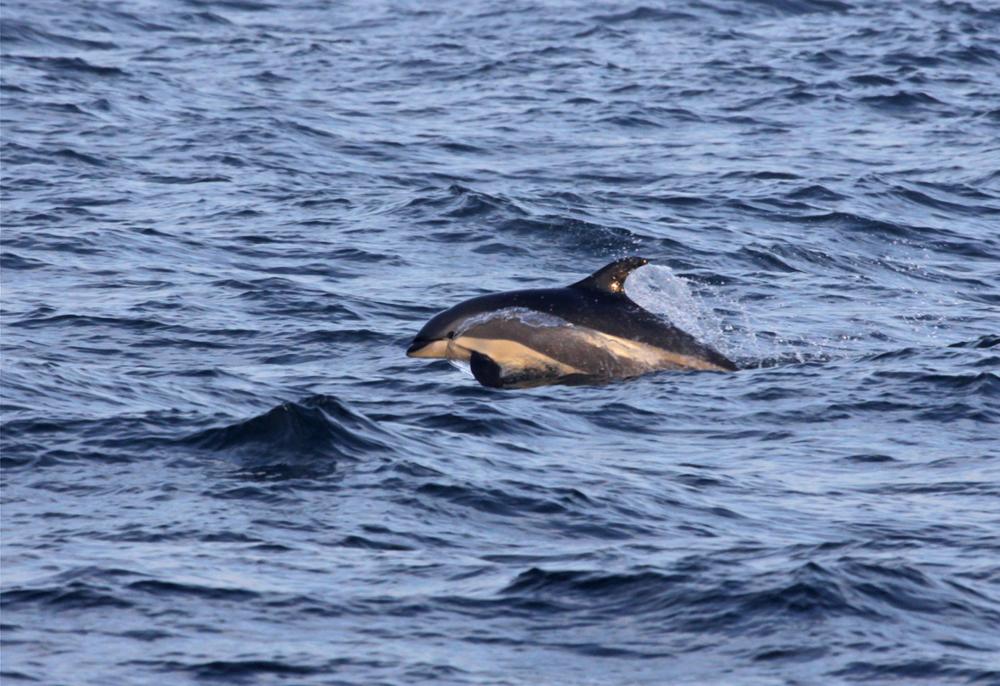
Atlantic white-sided dolphins are robust dolphins, reaching up to 2.8 metres in length, with a small head and short beak. They're characterised by distinctly marked colours: a light grey band and white patches on the lower part and a dark grey band with a yellow patch on the upper part. In Scotland, they're found mainly west of the Hebrides, in deep waters, approaching the coast only in summer.
Striped Dolphins (Stenella coeruleoalba)
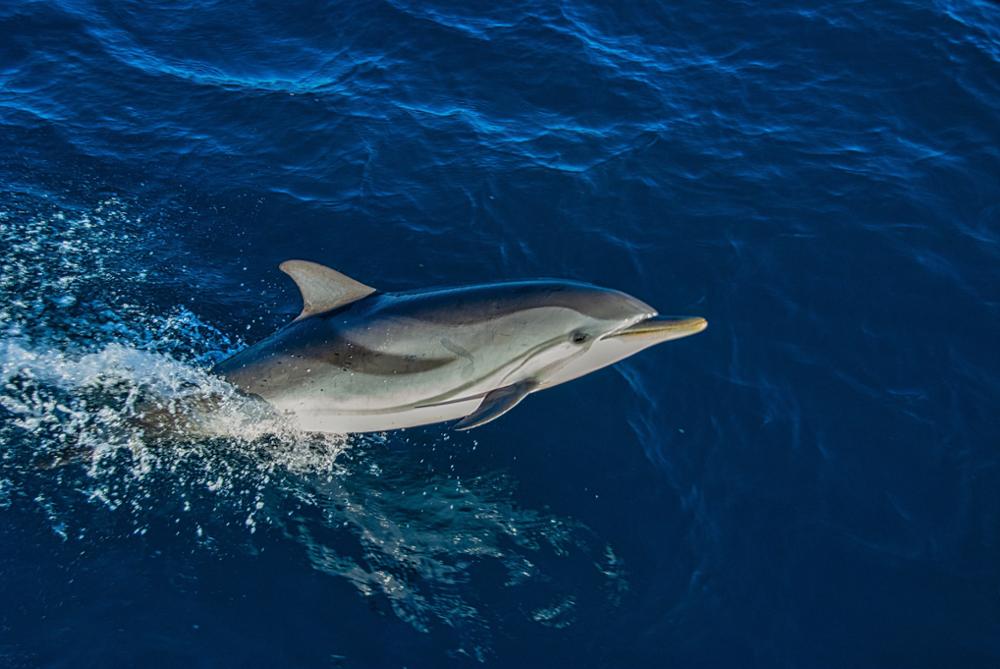
Though rare to see in Scotland, striped dolphins can be spotted during the warm summer months. Reaching up to 2.6 metres in length, they're characterised by a long beak, a large curved dorsal fin, short pectoral fins and several bands of grey colour (dark grey, pale grey).
Did you know?
Scottish waters are the realm of cetaceans. In addition to dolphin species, you can observe:
Harbour porpoise,
Minke whale,
Fin whale,
Sei whale,
Basking shark,
Killer whale (more commonly known as orca),
Humpback whale,
Long-finned pilot whale,
Sperm whale,
Cuvier's beaked whale,
Common beaked whale,
Ocean sunfish (also called mola mola).
Where can you observe dolphins in Scotland?
Chanonry Point - Moray Firth
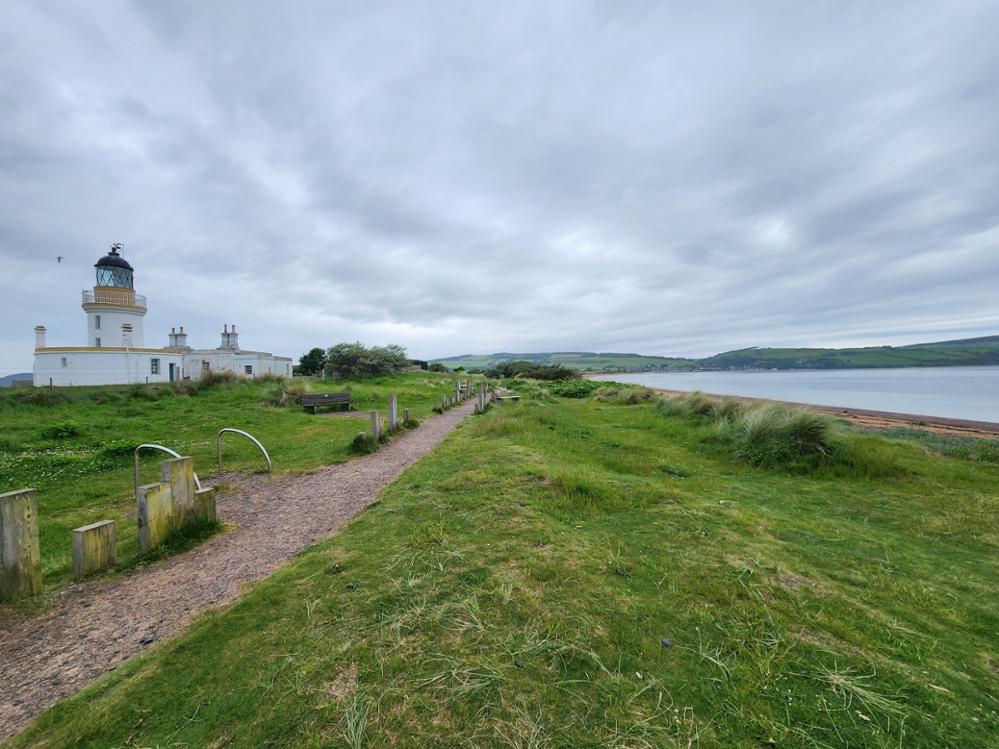
Located in the Moray Firth estuary, off the Black Isle peninsula, Chanonry Point is undoubtedly Scotland's best dolphin-watching site. The reason is simple: it's home to a resident colony of bottlenose dolphins that stays year-round. This is the northernmost population in the world.
Though present year-round, bottlenose dolphins are more numerous in summer. Indeed, the bay, which stretches from Inverness to Banff, can number up to 200 individuals. They readily approach the coast to feed, as fish shoals are more abundant during this period.
You have several options for observing dolphins at Chanonry Point:
Shoreline observation: due to the narrowness of the strait, it's very easy to observe dolphins from the coast. It's even one of Europe's best places for shore-based dolphin watching. This is the ideal option for enjoying the spectacle in an ecologically and animal welfare-conscious way. To do this, you can head to the beach below Chanonry Point lighthouse. It's easily accessible after a short walk.
Observation on a boat excursion: if you want to see dolphins up close, you can opt for a boat excursion. These can be arranged from Cromarty, Avoch and Inverness. While there are rules to follow to approach dolphins without harming them, make sure to choose an approved operator that cares about animal welfare (see further in the article).
Note:
To maximise your chances of seeing dolphins at Chanonry Point, it's advisable to visit during flood tide, approximately 2 to 3 hours after low tide.
Spey Bay - Fochabers
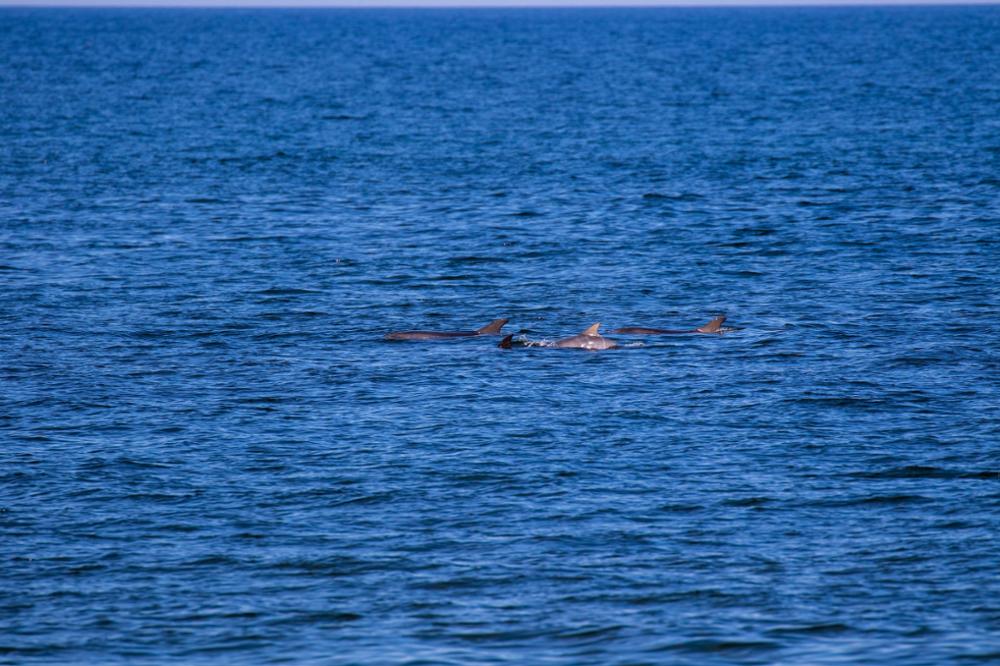
Located a few kilometres north of Chanonry Point, Spey Bay is situated on the east bank of the Spey River mouth. This is where the River Spey flows into the North Sea. Considered one of the country's most fish-rich watercourses, the Spey River abounds with Atlantic salmon. It's also home to sea lamprey and large colonies of freshwater pearl mussels.
As you can see, the area constitutes an important feeding zone for bottlenose dolphins and other marine creatures. You can therefore easily observe them from the coast, especially in summer when food is more abundant. During the rest of the year, dolphins disperse and are found further offshore.
Visit the Scottish Dolphin Centre: a must-see!
If you're passing through Spey Bay, don't miss a visit to the Scottish Dolphin Centre. It's a charitable organisation dedicated to protecting whales, dolphins and porpoises. Located in an 18th-century salmon fishing station, the centre offers free visits to everyone to learn more about marine creatures.
Among the activities on offer, you can:
Discover exhibitions and lectures,
Observe dolphins from the shore by taking advantage of hiking trails,
Take a guided walk to see dolphins and more (the area is home to many animals such as osprey, grey and common seals, occasional otters, and coastal birds...),
Visit the historic ice house at Tugnet, Scotland's largest ice house still in operation.
The Scottish Dolphin Centre is open daily from 10:30 to 16:00 during summer. Later, hours change: Thursday to Monday from 10:30 to 16:00 in September/October and Thursday to Monday from 10:30 to 15:30 in November.
To maximise your chances of seeing dolphins at Chanonry Point, it's advisable to visit during flood tide, approximately 2 to 3 hours after low tide.
The Inner Hebridean Islands (Isle of Mull, Isle of Skye...)
Head to the south-west of Scotland to discover the inner Hebridean islands. Part of the Hebridean archipelago, the inner Hebrides form a group of about 80 islands. These are Scotland's closest islands to the mainland coast. The waters of the archipelago are known to teem with marine life due to the abundance of food in the archipelago's deep waters (squid, octopus...). You'll therefore find several cetacean species including common dolphins, Risso's dolphins and white-beaked dolphins.
Many boat excursions allow you to venture offshore to observe dolphins. That said, it's quite possible to spot them from the land by heading to one of the islands, the most popular of which are:
Isle of Skye

The largest island in the Hebridean archipelago, the Isle of Skye is often a firm favourite with travellers for its wild landscapes. Beyond its cultural, natural and historical treasures, the island is known as an excellent spot for dolphin and whale watching. To do so, head to Neist Point lighthouse, on the western side of the island.
Note that it's possible to reach the Isle of Skye by road by crossing a bridge at Kyle of Lochalsh. Otherwise, you can always take a ferry or book an excursion from the coast. Also discover all the things to see on the Isle of Skye.
Isle of Mull
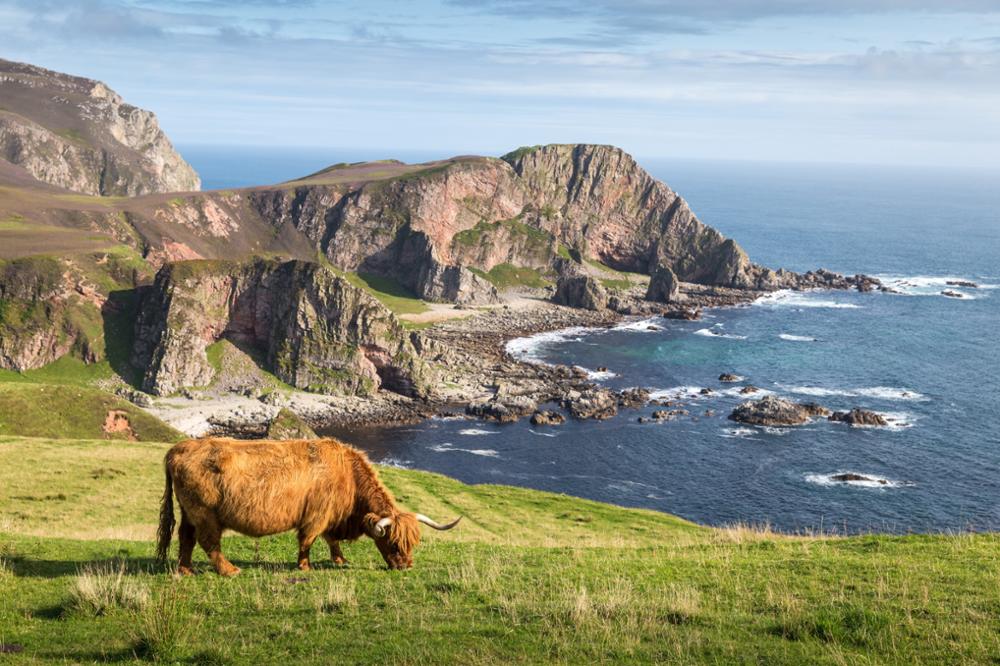
The second-largest island in the Hebrides, the Isle of Mull is also among the best sites for cetacean watching in Scotland. To see dolphins from this picturesque and wild island, we recommend heading to Tobermory lighthouse. You can also spot them near the Fishnish ferry terminal or at Craignure.
Other spots
While Chanonry Point, Spey Bay and the inner Hebridean islands are considered Scotland's best dolphin-watching sites, other spots are worth a visit. Among them are:
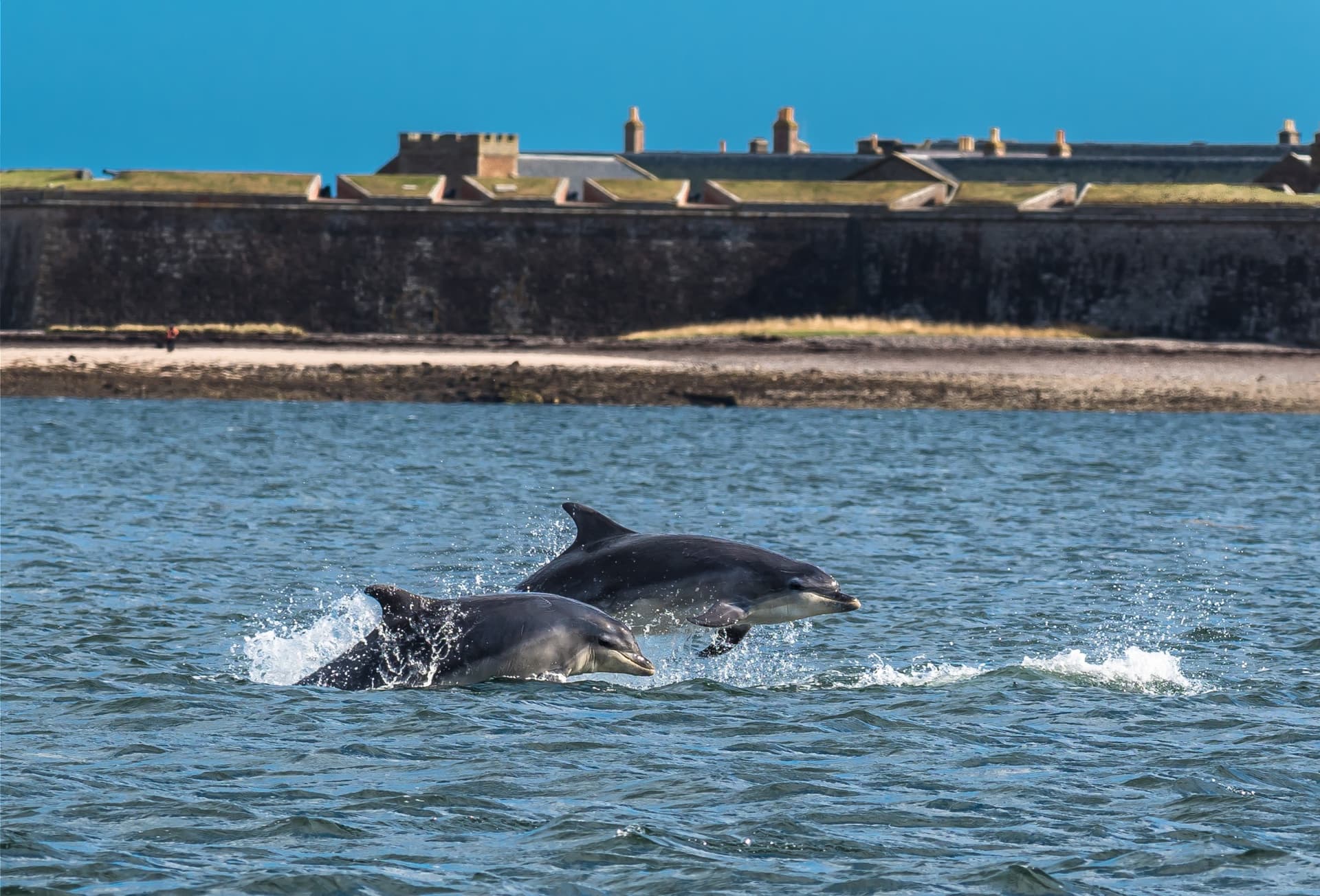
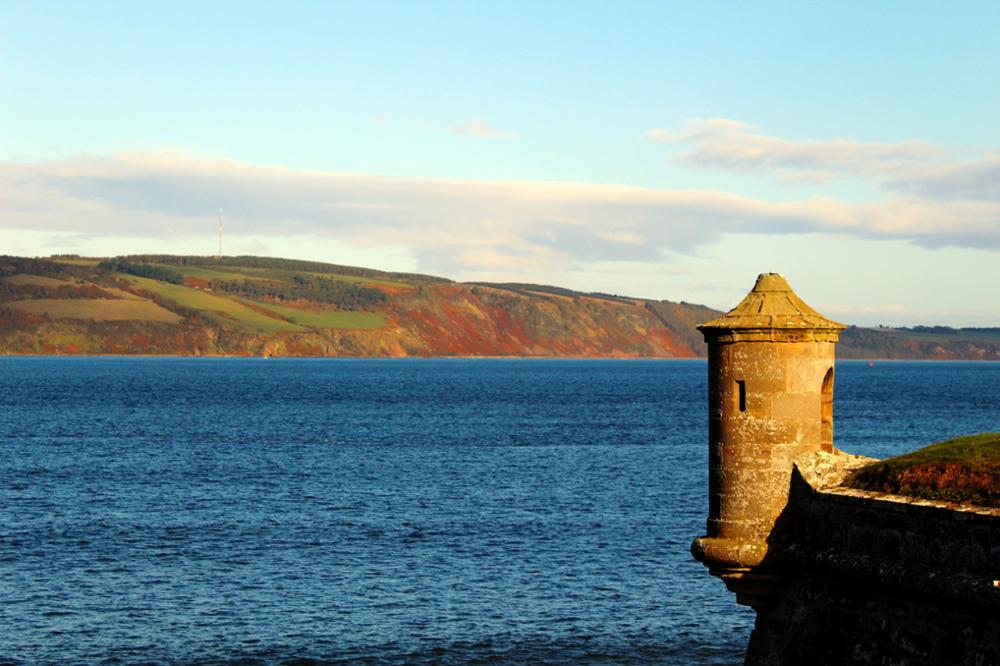
Fort George: located opposite Chanonry Point, on the other side of Moray Firth, next to the town of Ardersier, Fort George is one of the region's must-see historical monuments. From the ramparts of this former fortress, you can observe bottlenose dolphins. The downside? You'll see them less well than at Chanonry Point and you need to pay to enter. But if you're a history and nature enthusiast, it might be worth combining the best of both worlds!
Applecross Peninsula : located opposite the Isle of Skye, Applecross Peninsula features a wild coastline where rocky shores, sea caves, sand dunes and sandy beaches unfold. At Poll Creachan, you can see colonies of seals relaxing. Further offshore, you can admire large cetaceans, including dolphins, as well as sea porpoises and whales...
Ardnamurchan Peninsula : this West Highlands region is also known as an important passage for dolphins and other cetaceans. Weather permitting, you may encounter them along the coastline.
Aberdeen Harbour: nicknamed "the Granite City" because of its many grey granite buildings, Aberdeen is home to a commercial and industrial port built alongside the former Torry Battery. Surprising as it may seem, this port regularly receives visits from cetaceans including bottlenose dolphins, common dolphins, Risso's dolphins, porpoises, Minke whales, basking sharks... Nearby, you'll find the RSPB Dolphinwatch nature reserve.
How to observe Scotland's dolphins without disturbing them?
Prioritise shore-based observations
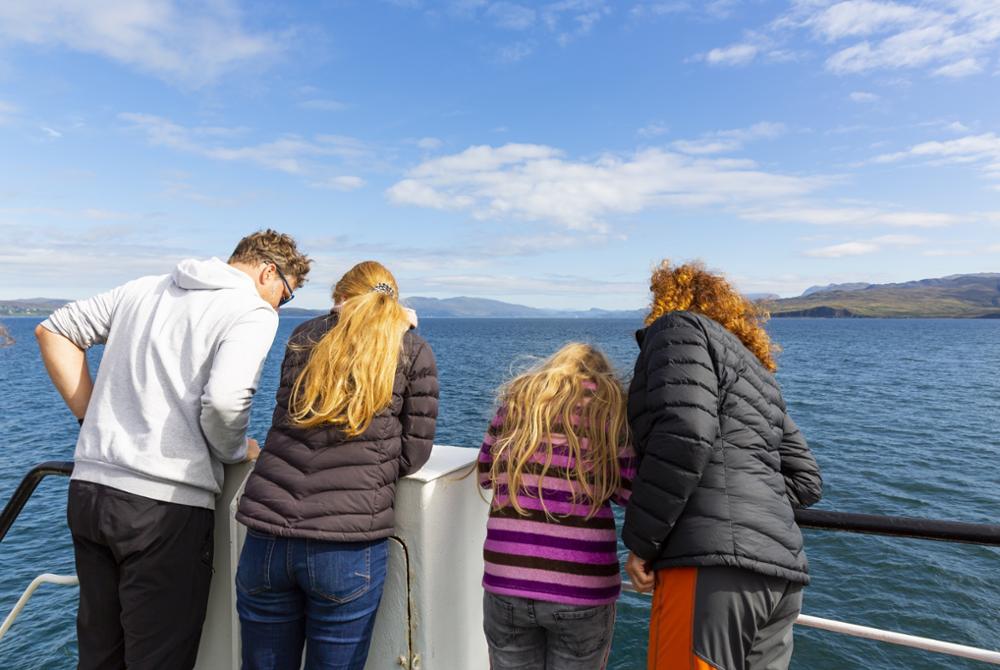
The best way to observe Scotland's dolphins and other cetaceans is to stay on the coast. Not only is it more ecological, but shore-based observation has no impact on the tranquillity of the animals (as long as you stay calm and don't approach them)!
It's also ideal for taking photographs (without the movement of boats). The good news? You can observe them for as long as you like without causing them distress! To make the most of it, bring good binoculars...
Good to know:
There's an application that lists cetacean-watching spots on Scotland's west coast: the Hebridean Whale Trail. Designed by the Hebridean Whale and Dolphin Trust, a marine wildlife conservation charity based on Mull, the site brings together about thirty spots for observing cetaceans from dry land.
More information at whaletrail.org
Choose accredited operators for a boat excursion
The presence of boats can disturb cetaceans (pollution, engine noise...). If you'd like to go on a dolphin-watching excursion in Scotland, you must choose an operator accredited to WiSe—a UK national training scheme aimed at minimising disturbance to marine wildlife. On their website, you'll find a list of all accredited operators.
You can also refer to operators accredited to the Dolphin Space Programme. These operators commit to providing quality and safe wildlife observation trips that don't disturb marine life. Most DSP operators have also completed WiSe training. Discover the list of operators at www.spanglefish.com.
Know the code of conduct for cetacean observation
As stated by Whale and Dolphin Conservation (WDC): "disturbing whales and dolphins is an offence, whether intentional or not." Whether you choose shore-based observation or a boat excursion, you must strictly follow the code of conduct to observe dolphins without harming them.
Here's what you should and shouldn't do to avoid disturbing cetaceans:
Keep your distance: avoid getting too close, especially when calves are present;
Be discreet: don't shout and avoid sudden movements to prevent frightening them;
Never feed them (applicable to any wild animal);
Don't try to touch them, let alone swim with them: note that a 1990 law prohibits controlled swimming with dolphins in the United Kingdom;
Make sure your operator respects guidelines (boat approach from behind and alongside the animal, safe distance, limited time of presence...) ;
What is the best time to see dolphins in Scotland?
It's possible to observe Scotland's dolphins year-round. That said, the best season for dolphin watching extends from May to September, with peak viewing in July, August and September.
Frequently asked questions
It's possible to observe dolphins in Scotland year-round, but the best period runs from May to September, with a peak in July, August and September. During these months, food is more abundant, which brings more dolphins closer to the coast.
Yes! Some spots like Chanonry Point and Spey Bay allow you to observe dolphins from the shore, free of charge. Chanonry Point is even considered one of Europe's best places to see dolphins from the land. All you need to do is head to the beach below the lighthouse, accessible after a short walk.
Scottish waters are home to several dolphin species: bottlenose dolphins (the most frequently observed), common dolphins, Risso's dolphins, white-beaked dolphins, Atlantic white-sided dolphins and, more rarely, striped dolphins.
No. A 1990 law prohibits controlled swimming with dolphins in the United Kingdom. In general, it's strongly discouraged to attempt to touch or get too close to dolphins, whether from land or by boat.
To avoid disturbing dolphins, choose an operator accredited by WiSe (UK national training scheme) or approved by the Dolphin Space Programme (DSP). These operators follow strict rules: safe distance, approach from behind and alongside, limited time of presence. You'll find the list of accredited operators on their respective official websites.
Chanonry Point, located in the Moray Firth estuary on the Black Isle peninsula, is considered Scotland's best dolphin-watching site. It's home to a resident colony of bottlenose dolphins year-round, the northernmost population in the world. To maximise your chances, visit during flood tide, approximately 2 to 3 hours after low tide.
The Scottish Dolphin Centre is a charity dedicated to protecting whales, dolphins and porpoises, located at Spey Bay in an 18th-century salmon fishing station. Entrance is free, and it offers exhibitions, lectures and guided outings to observe dolphins and local wildlife. It's open daily from 10:30 to 16:00 in summer, then Thursday to Monday in September/October and November.