The Royal Mile (Edinburgh)
The Royal Mile (Edinburgh)
A medieval thoroughfare in Edinburgh stretching 1.8 km, the Royal Mile connects the castle to Holyrood Palace while traversing nine centuries of Scottish history.
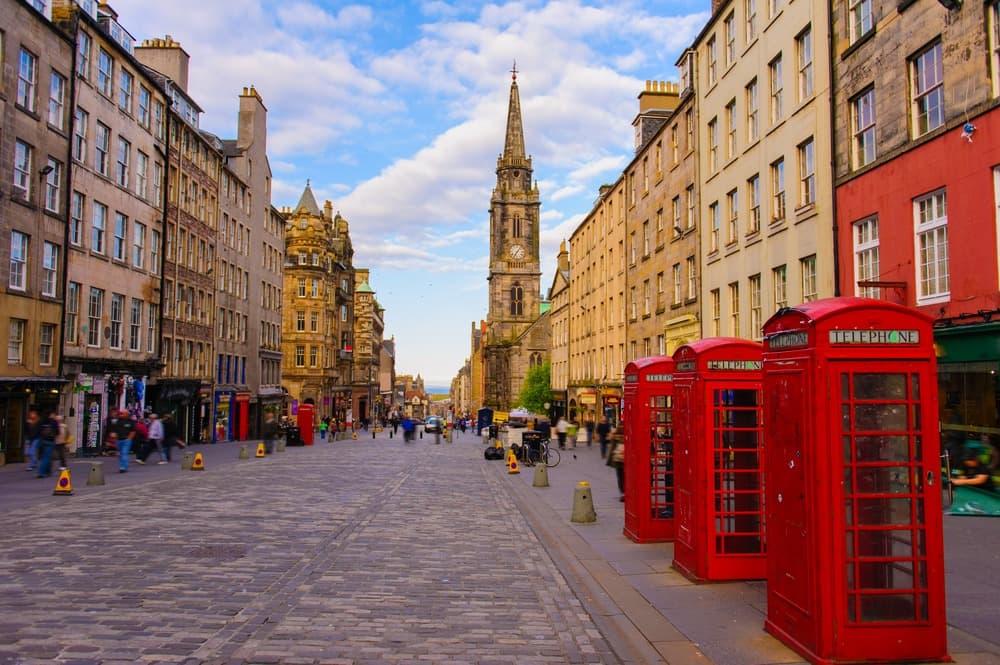
The Royal Mile is the main artery of Edinburgh's Old Town, stretching roughly 1.8 km. It connects the castle perched on its volcanic rock to Holyroodhouse Palace, passing through four successive sections: Castlehill, Lawnmarket, High Street, and Canongate. This backbone of Scotland's capital concentrates a remarkable density of medieval buildings, religious and legal institutions, and cultural venues.
Why visit the Royal Mile
The Royal Mile is the best thread to understand Edinburgh. In a single walk, you traverse nine centuries of history: medieval architecture, narrow lanes (closes and wynds), Renaissance buildings, Victorian monuments. The street connects two major landmarks — Edinburgh Castle and Holyrood Palace — and provides access to the main museums of the historic centre. It is also the stage for Scotland's grandest cultural events, from the Military Tattoo to the Edinburgh Fringe.
History
The Royal Mile's origins trace back to the 12th century. Originally called "Via Regis" (the royal way), it connected Edinburgh Castle to Holyrood Abbey, founded in 1128 by David I. Over the centuries, the street became densely lined with residential buildings (the famous "lands"), taverns, shops, and political and religious institutions, becoming the backbone of the medieval Old Town.
Witness to Scotland's great historical episodes — the Reformation led by John Knox, the execution of the Covenanters, the departure of the court to London in 1603, the Scottish Enlightenment in the 18th century — the Royal Mile has preserved its original layout. Today it stands as one of Europe's best-preserved medieval urban ensembles and, along with the New Town, is listed as a UNESCO World Heritage site.
What to see along the Royal Mile
Castle Esplanade and Castlehill
Originally laid out as a parade ground, the Castle Esplanade is classified Grade A by Historic Scotland. Each August, it hosts the Edinburgh Military Tattoo, an international festival of military bands. You'll notice the Cannonball House, whose cannonball embedded in the wall marks the height of the Comiston water sources, located approximately 4.8 km south of the castle.
Next comes Castlehill, a short section where several notable buildings stand:
- The Hub: the former Tolbooth-Highland-St John's Church, whose Gothic spire is the highest point in Edinburgh's city centre.
- Outlook Tower: a 19th-century museum housing the original Camera Obscura and interactive exhibitions.
- Assembly Hall of the Church of Scotland: home to the Scottish Parliament between 1994 and 2004, during construction of the new building.
- New College: an 1846 building occupied by the School of Divinity at Edinburgh University.
Lawnmarket
Lawnmarket gained its market status by charter in 1447. It once sold "inland goods": thread, hosiery, linen. Several buildings merit a stop:
- Riddle's Court: a 16th-century house, restored and reopened to the public.
- Gladstone's Land: a 17th-century tenement, owned by the National Trust for Scotland, illustrating the life of a prosperous Old Town merchant.
- Justiciary Building: seat of Scotland's supreme criminal court.
High Street
The High Street forms the central section of the Royal Mile. It is crossed by two major bridges: the North Bridge, which overlooks Waverley Station and connects to Princes Street, and the South Bridge, which spans Cowgate and reaches Nicolson Street, where Edinburgh University's Old College stands.
As you approach Canongate, the street narrows at John Knox's House, a 16th-century historic dwelling. Its modern extension, the Scottish Storytelling Centre, offers performances and exhibitions celebrating traditional Scottish tales.
Nearby, Parliament Square houses Parliament House, seat of the Scottish Parliament from 1630 to 1707, and St Giles' Cathedral, whose origins date to 1120 (the current building mainly from the 14th and 15th centuries).
Canongate
The name Canongate means "the way of the canons," referring to the Augustinian canons of Holyrood Abbey who travelled this path. This section, once a distinct burgh of Edinburgh, contains several remarkable buildings:
- Canongate Tolbooth: built in 1591, it now houses a museum of social history (The People's Story).
- Kirk of the Canongate: the parish church of Holyroodhouse Palace.
- The Scottish Parliament Building: a contemporary work by Enric Miralles, inaugurated in 2004.
Abbey Strand
Abbey Strand is the most direct route to Holyroodhouse Palace. You'll see the remains of the palace gate built by James IV, as well as the Queen's Gallery, which displays works from the Royal Collection in rotating thematic exhibitions.
When to visit
The Royal Mile can be explored year-round, but the atmosphere varies greatly with the season. August brings the biggest events:
- Edinburgh Military Tattoo: international military band festival on the Castle Esplanade.
- Edinburgh Fringe: the world's largest arts festival, roughly three weeks, with continuous street performances along the Royal Mile.
Summer remains highly busy; spring and autumn offer interesting light and smaller crowds. In winter, the street takes on a special character with year-end illuminations, though the climate is cold and damp.
Practical information
A complete walk from the castle to Holyrood Palace takes at least 1 hour without stops, but plan for a half-day to a full day if you wish to visit several monuments along the way. The street is permanently accessible, free of charge; only individual sites (castle, palace, museums) have separate admission fees and opening hours.
The gradient is steep between Holyrood (at the bottom) and the castle (at the top): starting from the top makes the walk more comfortable. The ancient paving is slippery in wet weather; wear appropriate footwear.
How to get there
The Royal Mile is just a few minutes' walk from Waverley Station, Edinburgh's main railway station. Several Lothian bus routes serve the street itself (notably lines 1, 8, 19, 35, 37); other lines (23, 27, 41, 42, 45, 67) stop nearby, on George IV Bridge. As routes are subject to change, check the current schedule at the time of your visit. The street is entirely pedestrian or has very limited traffic depending on the section and period.
Nearby
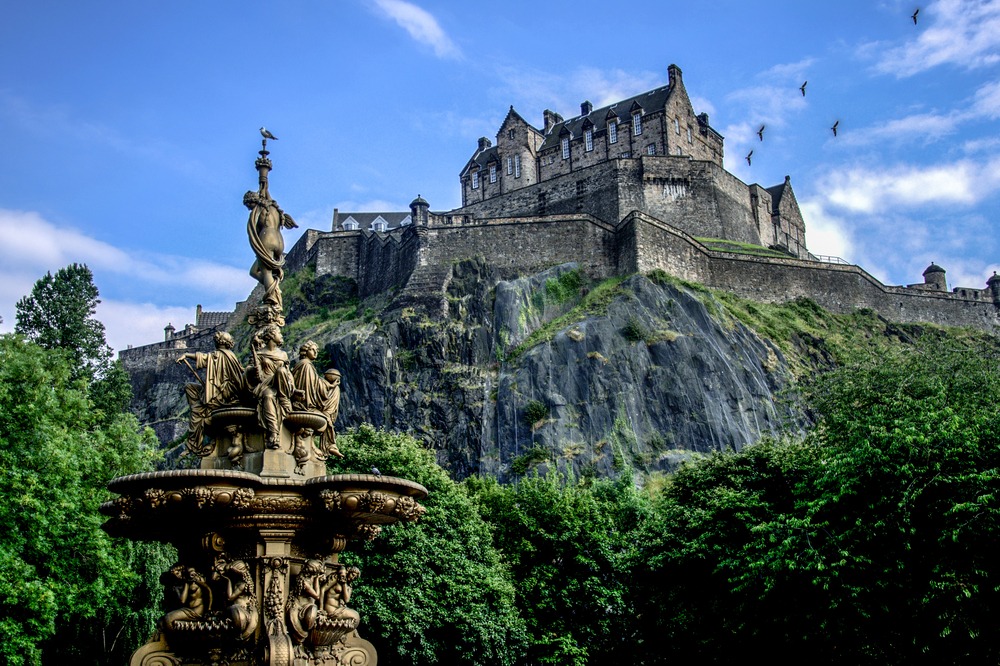
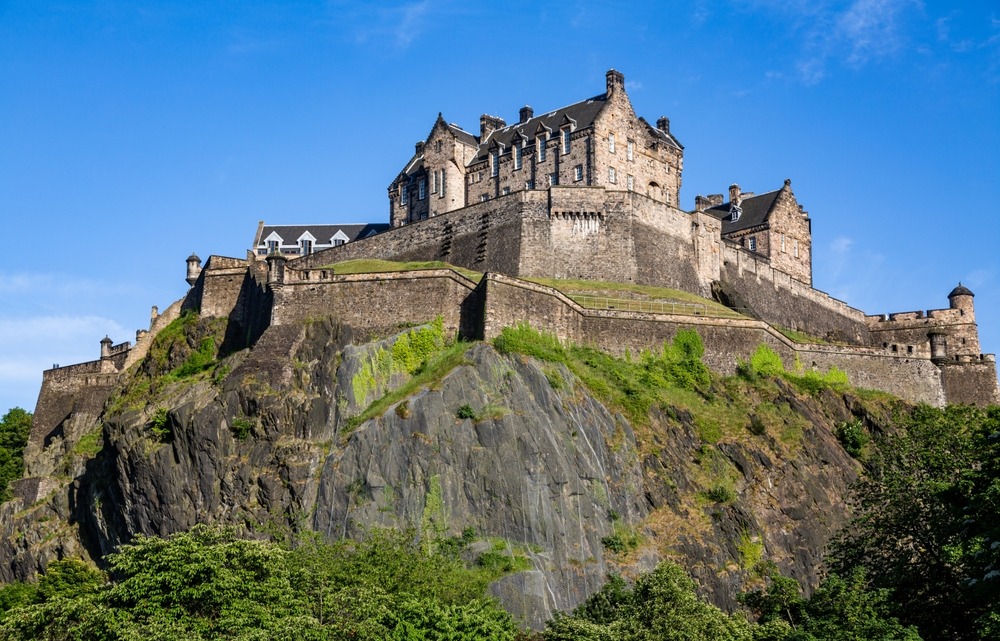
- Edinburgh Castle, at the west end of the Royal Mile.
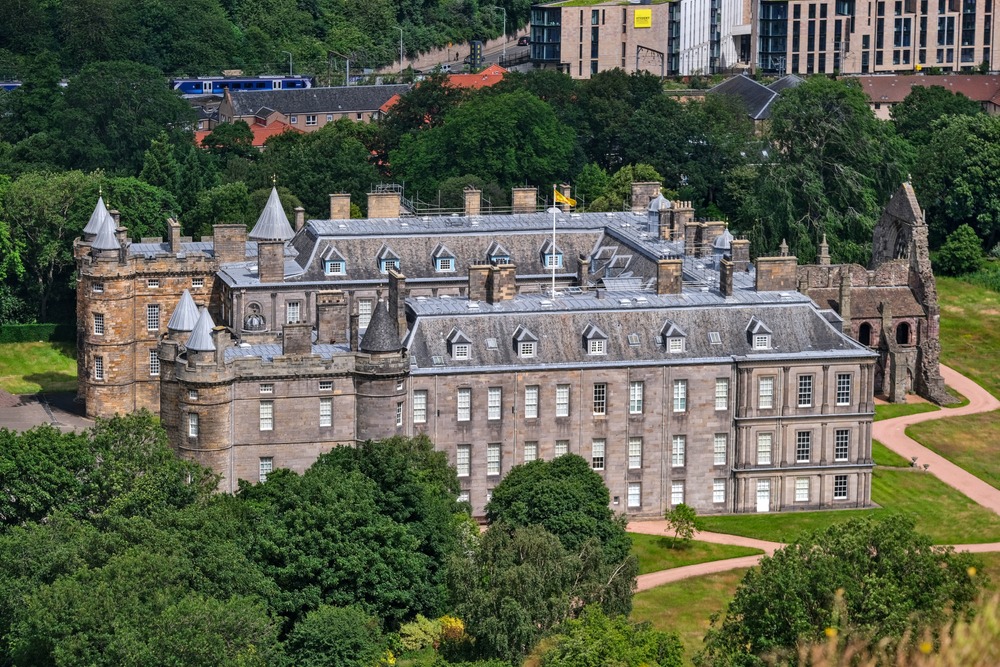
- Holyrood Palace, at the east end, the official residence of the British monarch in Scotland.
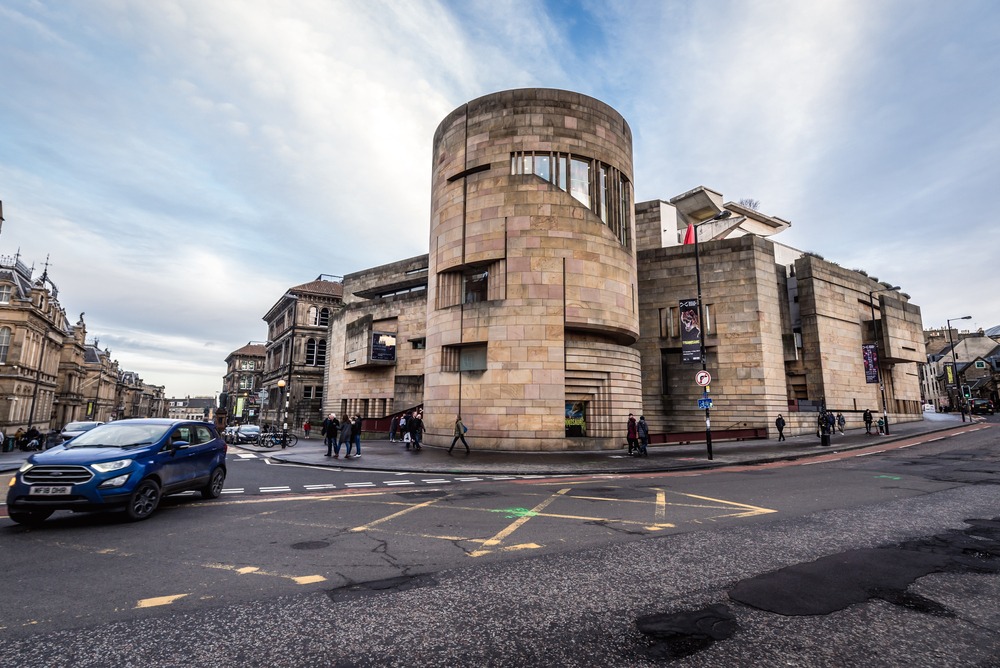
- The National Museum of Scotland, a short distance via George IV Bridge.
Frequently asked questions
Frequently asked questions
It corresponds to a Scottish mile, an old unit of measurement equivalent to about 1.8 km, slightly more than an English mile. The street connects Edinburgh Castle to Holyrood Palace over this distance.
A direct walk takes about 30 to 45 minutes. To visit the main monuments (castle, St Giles, Holyrood Palace), allow a half-day to a full day.
From west to east: Castlehill (with the Castle Esplanade), Lawnmarket, High Street, Canongate, then Abbey Strand to Holyrood Palace.
The Fringe runs each August for about three weeks. The Royal Mile becomes an open stage with continuous street performances. The Military Tattoo takes place simultaneously on the Castle Esplanade.
The station is just a few minutes' walk away. Upon exiting, you reach the High Street via Market Street or Cockburn Street. Many Lothian bus lines also serve the immediate area.
Planning your trip
The Royal Mile naturally fits into any Scottish itinerary centred on the capital, extended to the Highlands or lochs. To build a bespoke journey incorporating Edinburgh, its iconic monuments, and the rest of the country, explore our Scotland trips.
Nearby
Interested in this visit?
We can include it in your personalised itinerary.